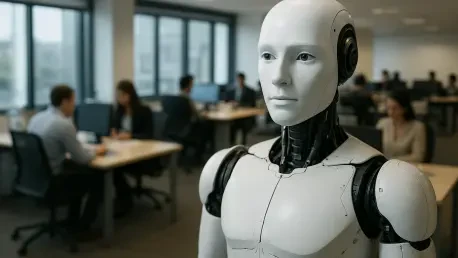

Young professionals like Roy Lim argue that the true value of a job application lies in the injection of personal anecdotes that no algorithm can replicate. As generative artificial intelligence transitions from a novelty to a ubiquitous professional utility, the landscape of recruitment has undergone a fundamental shift toward valuing human idiosyncrasies. In 2026, the ease with which candidates produce flawless cover letters and portfolios has created a ‘sameness’ that recruiters increasingly find uninformative. This digital saturation makes it nearly impossible for talent to differentiate themselves through polished prose alone. Instead, the focus has pivoted to the specific, messy, and non-linear experiences that define a person’s unique professional journey. When every applicant possesses the same level of digital assistance, the only remaining variable is the individual’s ability to communicate their distinct humanity. This paradigm shift requires a move away from the cold efficiency of automated systems toward a more nuanced, narrative-driven approach to career self-presentation.
Redefining Competitive Advantages
The Power of Personal Perspective and Taste
Within the context of a highly automated labor market, the concept of taste has emerged as a primary differentiator for top-tier candidates. Taste is not merely a preference but a sophisticated synthesis of cultural consumption, ethical considerations, and lived history that informs how an individual approaches a problem. While an advanced large language model can simulate an average of available data, it lacks the subjective internal compass required to make bold, original aesthetic or strategic choices. Organizations now look for professionals who can articulate why a particular direction feels right, moving beyond the ‘what’ of a solution to the qualitative ‘how.’ This involves demonstrating a unique perspective that has been honed through years of diverse experiences, ranging from volunteer work to unconventional hobbies. By presenting a worldview that is distinctly their own, candidates signal to employers that they possess a level of creative agency that cannot be programmed into an algorithm or replicated by a competitor.
Intellectual Depth versus Algorithmic Standardization
Intellectual depth in 2026 is measured by the ability to provide original insights rather than simply delivering factual accuracy or standardized outputs. AI systems are remarkably proficient at pattern matching and summarizing existing knowledge, but they struggle with the leap of intuition required for true innovation. Candidates who leverage their personal lens provide a sense of intellectual texture that makes their contributions more memorable and impactful. This depth is often revealed through the way a professional connects disparate ideas from different fields, creating a tapestry of thought that is uniquely human. Employers have realized that while AI can provide a foundation, it is the human employee who must provide the spark of originality that leads to market breakthroughs. Consequently, those who can demonstrate a history of independent thinking and a well-defined personal philosophy find themselves at a significant advantage. The ability to synthesize information through the filter of one’s own values remains a potent weapon.
Social Intuition and Reading the Room
One of the most elusive yet vital skills in the modern workplace is the capacity for social intuition, often referred to as the ability to read the room. This involves picking up on non-verbal cues, sensing shifts in emotional dynamics during a meeting, and understanding the unspoken anxieties of colleagues or clients. While AI can analyze text for sentiment or summarize a transcript, it cannot truly inhabit a physical or virtual space with the same empathetic sensitivity as a human being. Professionals who excel in this area can adjust their communication style in real-time, offering reassurance when a team is stressed or injecting humor to break a tense deadlock. This level of emotional dexterity is crucial for navigating the complexities of high-stakes negotiations and internal office politics. In 2026, as remote and hybrid work models continue to evolve, the demand for individuals who can bridge emotional gaps and foster genuine rapport has skyrocketed. Employers are prioritizing these intuitive capabilities.
Navigating Emotional Temperatures in Professional Settings
Social judgment is increasingly seen as a more valuable asset than raw technical output or data processing speed in the leadership pipeline. The ability to manage a project is no longer just about tracking milestones; it is about managing the human beings who are responsible for those milestones. This requires a nuanced understanding of motivation, conflict resolution, and the psychological safety of the work environment. AI can suggest a project timeline, but it cannot mentor a junior employee through a professional crisis or inspire a team to exceed their own expectations. Successful candidates are those who can provide concrete examples of how they used empathy and social awareness to navigate complex interpersonal challenges. By focusing on these relational aspects, job seekers demonstrate that they are capable of leadership in a way that technology simply is not. The modern recruiter is looking for relational intelligence, a trait that ensures a candidate will contribute positively to the collective health of the organization.
The Evolution of Employer Expectations
Prioritizing Soft Skills and Cultural Fit
The recruitment landscape has shifted its center of gravity toward soft skills, which are now being rebranded as the essential skills for the digital age. Relational intelligence, active listening, and the ability to navigate cultural nuances have become the ultimate deciding factors in hiring decisions across major tech and service sectors. In 2026, technical skills are often viewed as the baseline requirement, while the capacity for authentic human connection determines who actually gets the offer. Recruiters are moving away from traditional assessment metrics and toward conversational interviews that test a candidate’s ability to engage in a spontaneous and meaningful dialogue. This shift acknowledges that while AI can write a script, it cannot authentically participate in the flow of a human conversation. Candidates who can demonstrate genuine curiosity and a high degree of self-awareness are far more likely to resonate with hiring managers. The emphasis is on finding individuals who will enhance company culture.
Human Touchpoints in the Digital Recruitment Era
Human touchpoints are becoming the most critical components of the professional vetting process as organizations seek to avoid the pitfalls of a purely digital workforce. Traditional technical screenings are being supplemented, or even replaced, by scenarios that require complex ethical reasoning and collaborative problem-solving. This evolution reflects a growing understanding that cultural fit is not about finding people who are identical, but about finding people who share a common commitment to the organization’s mission and values. In 2026, the interview process often includes informal settings where a candidate’s natural behavior and social grace can be observed by potential peers. These interactions provide insights that a polished, AI-generated application could never convey. By focusing on these moments of authentic interaction, employers can ensure that they are hiring well-rounded individuals who will thrive in a collaborative environment. Ultimately, the ability to build trust is what distinguishes a top-tier candidate.
Creative Problem-Solving Through Technology
Innovation in the current job market is often defined by how a professional leverages artificial intelligence as a force multiplier rather than as a total replacement for effort. Employers are particularly impressed by candidates who demonstrate a tool-maker mentality, using AI to build bespoke solutions for specific organizational challenges. For instance, a marketing specialist who develops a custom script to automate data collection for niche market trends shows much more initiative than one who simply uses AI to write standard ad copy. This distinction highlights a preference for proactive problem-solvers who see technology as an extension of their own human capabilities. In 2026, the focus has moved toward creative integration, where the human provides the strategic vision and the machine handles the execution of mundane tasks. This approach allows professionals to focus on higher-level thinking and complex decision-making, which are the areas where they can provide the most value.
Logic and Transparency in Algorithmic Workflows
The ability to explain the logic behind the use of technology has become just as important as the technology itself in a professional context. Recruiters are looking for individuals who can articulate why they chose a specific AI tool and how it enhanced the final outcome of a project. This transparency reveals a candidate’s thought process and their ability to think critically about the tools they use. Instead of hiding the use of AI, successful professionals are highlighting it as a component of their problem-solving toolkit, demonstrating their proficiency in the latest digital workflows. This trend is particularly evident in fields like engineering and design, where the integration of human creativity and algorithmic efficiency leads to superior results. By framing AI as a partner in the creative process, candidates can show that they are forward-thinking and adaptable. This level of technical literacy combined with human oversight is exactly what modern organizations need to stay competitive.
Cultivating a Future-Proof Career
Embracing a Continuous Learning Mindset
To maintain relevance in a rapidly shifting economic environment, job seekers must cultivate a mindset centered on continuous learning and intellectual flexibility. This involves more than just attending occasional workshops; it requires a proactive commitment to unlearning outdated practices and embracing new methodologies as they emerge. In 2026, the shelf life of technical knowledge has shortened considerably, making the ability to learn how to learn a critical survival skill. Career success is increasingly linked to metacognition, which is the awareness and understanding of one’s own thought processes. By demonstrating how they approach a new challenge and the steps they take to acquire new skills, candidates provide employers with confidence in their long-term potential. This transparent approach to personal development shows that an individual is not intimidated by technological change but is energized by it. Professionals who can show growth are better positioned.
The Process of Unlearning and Adapting
The process of unlearning has become a vital component of professional development as traditional business models are disrupted by emerging technologies. This requires a level of humility and intellectual honesty that AI cannot simulate, as it involves recognizing when a previously successful strategy is no longer effective. In 2026, the most resilient workers are those who can quickly pivot and apply their core human skills—such as critical thinking and empathy—to entirely new contexts. This adaptability is particularly valuable during periods of organizational transition or market volatility. Employers are looking for evidence of this learning mindset in a candidate’s history, searching for moments where they successfully navigated ambiguity and came out stronger. By focusing on their journey of growth rather than just their current list of achievements, job seekers can illustrate a level of resilience that is highly prized. This ongoing cycle of learning ensures that a professional remains an asset to their firm.
Proactive Networking and Visibility
In an era where digital noise can easily drown out individual voices, the importance of proactive networking and high visibility cannot be overstated. Applying for jobs through traditional online portals has become increasingly ineffective due to the sheer volume of AI-generated applications flooding these systems. To bypass this digital bottleneck, candidates must be proactive in their pursuit of professional connections and direct engagement with decision-makers. This involves attending industry events, participating in niche professional communities, and seeking out informational interviews that can lead to genuine relationships. Visibility is often a prerequisite for opportunity, and those who are seen are more likely to be remembered when a position becomes available. This proactive approach requires a high degree of confidence and the ability to articulate one’s value proposition clearly. By moving beyond the passive application process, professionals can establish the human rapport that is necessary.
Establishing Human Rapport in Digital Markets
Establishing authentic human relationships remains the most effective strategy for career advancement in a market that is increasingly mediated by algorithms. These connections provide a level of social proof and insider knowledge that cannot be found through a standard job search. In 2026, the power of a personal referral is stronger than ever, as it acts as a filter for quality and cultural fit in an overcrowded talent pool. Networking should be viewed not as a transactional activity but as a long-term investment in one’s professional reputation. By offering value to others and building a genuine community, candidates can create a support system that provides access to hidden opportunities. This strategy also helps to humanize the professional experience, making work more meaningful and collaborative. Those who prioritize human connection over algorithmic optimization find that their careers are more stable and fulfilling. Ultimately, the most successful professionals understand that humans keep doors open.
Authenticity as the New Professional Currency
In an era where every digital artifact can be polished to perfection, a significant premium is being placed on raw human authenticity. The most compelling candidates in 2026 are those who use artificial intelligence to automate mundane and repetitive tasks, thereby freeing up their mental bandwidth for high-level creative and collaborative work. This shift allows for a more genuine presence in the workplace, where an individual’s unique character and ethics can shine through without being obscured by administrative overhead. Authenticity is no longer just a buzzword; it has become a tangible professional currency that can be leveraged to build trust and authority. By leaning into their natural empathy and intuition, job seekers can demonstrate a level of engagement that no algorithm can ever simulate. This presence is felt in every interaction, from high-stakes boardroom presentations to casual conversations. Ultimately, showing one’s true self leads to more sustainable career paths.
Final Takeaways for Navigating the Labor Market
As the workforce transitioned toward a landscape dominated by artificial intelligence, the most successful individuals were those who recognized the enduring power of human flair. They embraced a strategy that prioritized authenticity over automated perfection, ensuring that their unique perspectives remained at the forefront of their professional identity. These professionals invested time in developing their emotional intelligence and social intuition, recognizing that these traits were the hardest for machines to replicate. They also took proactive steps to integrate AI into their workflows as a tool for innovation rather than a replacement for creative thought. By focusing on continuous learning and high-visibility networking, they built careers that were resilient to technological shifts. The key takeaway for anyone entering the job market was to lean into the traits that made them distinctively human. This approach allowed them to forge deep connections and demonstrate a level of social judgment.