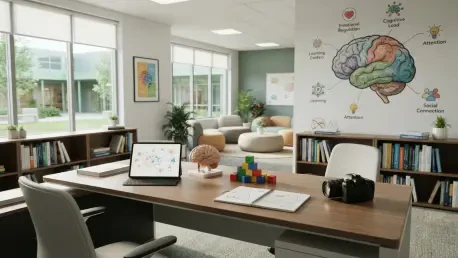

Academic excellence in modern institutions has long been tethered to the quality of digital infrastructure and the sophistication of curriculum software, yet current research suggests that these external factors are secondary to the internal biological state of the student. Professor Ken Purnell of CQUniversity highlighted during the 2026 State Education Week that the human brain operates under specific evolutionary constraints that modern leadership often overlooks in favor of technological trends. When school leaders prioritize neural optimization over traditional metrics, they address the foundational reality that a stressed or isolated brain is physically incapable of high-level cognitive processing. This paradigm shift moves the focus from what students are learning to how their biological systems are prepared to receive that information. By understanding the neurochemical drivers of engagement and the structural requirements for memory retention, administrators can transform schools into environments that naturally facilitate success.
Biological Foundations: Prioritizing Safety and Connection
Psychological and physical safety serves as the non-negotiable prerequisite for any meaningful educational progress because the brain’s survival mechanisms will always override its learning centers in the presence of perceived threat. When a student feels marginalized or faces a hostile classroom environment, the amygdala triggers a stress response that effectively shuts down the prefrontal cortex, the area responsible for executive function and complex reasoning. School leaders are now implementing protocols that emphasize calm routines and respectful correction to keep students in a state of relaxed alertness, which is optimal for neural plasticity. This transition from punitive discipline to neuro-informed behavioral management ensures that the biological hardware for learning remains online throughout the school day. Evidence suggests that even subtle micro-stressors can impede memory formation, making the creation of a predictable and supportive atmosphere a primary administrative duty.
Closely intertwined with safety is the deep-seated neural necessity for belonging, which a recent 2026 review from Monash University identified as a cumulative experience built through consistent care and equitable social structures. Humans are inherently social creatures, and the brain processes social rejection through many of the same neural pathways as physical pain, leading to significant drops in cognitive engagement when students feel alienated. Modern leadership strategies are moving beyond simple anti-bullying policies toward the active cultivation of peer cultures where every individual feels seen and valued by both faculty and classmates. This sense of connection acts as a powerful buffer against the mental health challenges that often derail academic trajectories in various grade levels. By treating belonging as a measurable predictor of academic success, administrators can justify investments in community-building activities and mentorship programs that were previously viewed as extracurricular.
Cognitive Architecture: Balancing AI and Movement
The rapid integration of artificial intelligence across the curriculum in 2026 has introduced a unique challenge where the convenience of automated assistance may inadvertently allow students to bypass the critical thinking processes required for brain development. Research from the Wharton School has demonstrated a stark contrast in outcomes between students who used AI as a passive shortcut and those who engaged with it as a hint-giving tutor to scaffold their learning. Specifically, the study revealed that students relying on unrestricted AI assistance scored nearly 17% lower on unaided assessments compared to peers who used cognitive strategies to solve problems independently. To mitigate this, school leaders are now designing policies that mandate the use of AI as a catalyst for deeper inquiry rather than a replacement for effort. Integrating this with meaningful practice ensures that students revisit concepts over varying intervals, strengthening the neural circuits responsible for long-term memory.
Integrating physical activity directly into the instructional day was identified as a critical facilitator of cognitive function rather than just a break from academic labor. A 2026 meta-analysis confirmed that brief classroom movement breaks significantly enhanced working memory and attentional control, leading school leaders to support active learning environments where students stood or moved during lessons. Administrators successfully transitioned toward low-cost, high-impact strategies that aligned with the biological realities of the brain, rather than relying solely on expensive infrastructure. They included students in conversations regarding their own learning processes, which provided the feedback necessary to refine instructional methods based on real-time engagement. This shift underscored that the most significant improvements in educational outcomes were achieved through an understanding of neural plasticity. These institutions became more resilient by prioritizing the biological link between body and mind.