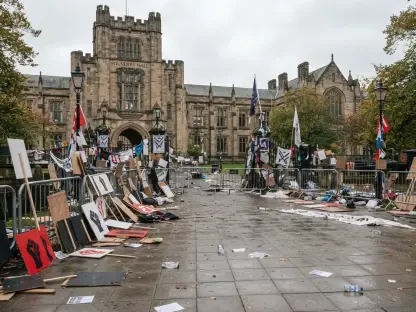

The erosion of traditional academic independence is most visible in the trend of selecting state department heads to oversee major public community colleges and universities. This development comes at a time when American higher education is navigating a period of intense volatility, as evidenced by a significant wave of executive transitions across the country. While some institutions are successfully managing orderly successions to bolster their research capabilities, others find themselves ensnared in scandals or facing the direct encroachment of state politics into their governance. This dual reality highlights a sector in flux, where the traditional pursuit of academic excellence must now compete with the immediate pressures of administrative misconduct investigations and aggressive institutional restructuring. Boards of trustees are increasingly caught between maintaining institutional autonomy and satisfying the demands of state legislatures that are more involved in campus life than ever before. This environment requires a new kind of leadership that can survive both fiscal scrutiny and ideological shifts without losing sight of the core mission of higher education.
Prioritizing Academic Excellence and Research Growth
Strategic Appointments: Securing Institutional Stability
Top-tier universities continue to prioritize candidates with proven track records in expanding research enterprises and securing institutional prestige to remain competitive in the global market. A prime example is the University of Michigan’s selection of C. Cybele Raver, a former provost from Vanderbilt University known for her ability to drive ambitious research initiatives and secure significant grant funding. Such appointments provide much-needed stability, particularly following disrupted search processes, and signal a commitment to maintaining a competitive edge through seasoned, visionary leadership. The focus on research growth is not merely about prestige; it is a vital survival strategy in an era where federal research dollars are increasingly concentrated among a few elite institutions. By selecting leaders like Raver, universities are betting on high-level administrative experience to navigate the complex landscape of 2026 and beyond, ensuring that their academic reputations remain untarnished by the surrounding political turbulence.
Operational Continuity: The Role of Interim Leadership
Internal promotions often serve as a vital bridge during these periods of transition, ensuring continuity while a permanent successor is sought through a rigorous national search process. By appointing experienced provosts to interim roles, universities can maintain their operational momentum and avoid the vacuum of power that often accompanies high-level departures from the executive suite. This strategy allows institutions to conduct thorough searches without sacrificing the daily management of their academic and financial goals, which is critical in a tight fiscal environment. For example, the use of internal veterans helps to calm nervous faculty and donors who may be wary of sudden shifts in institutional direction. These interim leaders act as steady hands, keeping long-term capital projects and enrollment strategies on track while the board of trustees evaluates the broader political and economic landscape. This balanced approach to succession planning has become a hallmark of institutions that value stability over risky, rapid transformations.
Navigating Demographic and Political Volatility
Defensive Postures: Managing the Enrollment Cliff
Many modern college presidents are forced to adopt a defensive posture as they grapple with the enrollment cliff, a sharp decline in the student-aged population that threatens the financial viability of many campuses. At San Francisco State University, the impending retirement of long-term leadership follows a tenure defined by managing a staggering drop in student numbers and dwindling state support. These leaders must balance the necessity of fiscal belt-tightening with the ongoing mission of student inclusion and institutional resilience, often making difficult choices regarding program cuts. The decline in the college-aged demographic is not a temporary dip but a fundamental shift that requires a complete rethinking of the traditional campus model. As state funding becomes more contingent on workforce alignment, presidents are under immense pressure to deliver measurable results with fewer resources. This environment has turned the presidency into a role centered on crisis management and strategic downsizing rather than traditional expansion.
Ideological Realignment: Political Influence in Governance
A burgeoning trend in higher education involves the appointment of political figures with little to no academic background to lead public institutions, particularly in regions like Florida. This movement signifies a departure from the historical independence of academic governance, as the profile of a qualified leader moves away from research and faculty service toward political acumen and state alignment. In these instances, the role becomes less about fostering traditional academic freedom and more about implementing state-mandated reforms that reflect specific ideological values. High-ranking state officials are increasingly selected to replace traditional scholars, creating a leadership class that is more responsive to the governor’s office than to the faculty senate. This political restructuring fundamentally changes the nature of the presidency, making it a focal point for state-level policy battles rather than academic discourse. As political loyalty becomes a key metric for leadership, the long-term impact on institutional autonomy remains a subject of intense national debate.
Strengthening Institutional Integrity and Resilience
Accountability Measures: Implementing Robust Vetting Processes
To ensure future stability, boards developed more robust vetting processes that looked beyond academic credentials to include deep behavioral assessments and cultural fit evaluations. They recognized that the volatility of the mid-2020s required a dual-competency approach, where leaders were trained in both political diplomacy and traditional academic administration. When cases of misconduct or bullying emerged at institutions like Central Connecticut State University, trustees moved more decisively to protect the institutional reputation through immediate investigations and transparent reporting. This shift reflected a broader demand for workplace accountability that prioritized the well-being of the staff over the status of high-ranking officials. Furthermore, universities began sharing vetting data more effectively to prevent controversial leaders from moving between institutions without proper scrutiny. By adopting these measures, boards successfully reduced the frequency of abrupt resignations and created a more predictable environment for long-term strategic planning.
Strategic Firewalls: Preserving Academic Independence
Institutions began establishing clear firewalls between state executive influence and internal curriculum decisions to preserve their accreditation and long-term prestige. They recognized that while political alignment might offer short-term funding benefits, it often jeopardized the institution’s standing with national accreditation bodies and global research partners. To combat this, universities prioritized financial transparency and diversified their revenue streams to rebuild trust with declining student populations and skeptical private donors. By reducing their reliance on direct state appropriations through targeted fundraising and industry partnerships, these colleges gained the leverage needed to resist ideological overreach. This focus shifted toward creating sustainable models that balanced legitimate state demands for workforce readiness with the essential independence of the university system. Ultimately, these actions provided a blueprint for resilience that allowed higher education to thrive despite shifting ideological winds, ensuring that the core mission of teaching and discovery remained protected.