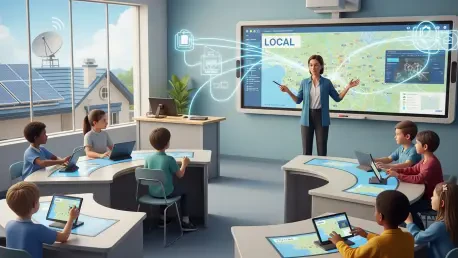

The rapid deployment of interactive flat-panel displays across Kenyan rural and urban schools has fundamentally altered the pedagogical landscape, replacing traditional chalkboards with vibrant, touch-sensitive digital hubs. This evolution represents a core component of the national strategy to align the local education system with global digital standards by the end of 2028. Teachers now utilize these smart boards to project complex biological diagrams or simulate chemical reactions that were previously restricted to textbook illustrations. The integration of high-definition visuals and audio components ensures that diverse learning styles are accommodated within a single classroom session. Furthermore, the ability to record lessons directly onto the board’s internal storage allows students who may have missed a day of school to catch up on specific modules without losing the nuances of the teacher’s explanation. This technological pivot effectively dismantled the barriers of rote memorization, fostering a more inquisitive atmosphere.
Integrating Localized Content and High-Speed Connectivity
Building on this foundation, the effectiveness of this digital transition relies heavily on the synergy between sophisticated hardware and the localized curriculum provided by the Kenya Institute of Curriculum Development. By 2026, many institutions successfully synchronize their smart boards with cloud-based repositories, enabling real-time updates to educational materials across the nation simultaneously. This approach ensures that a student in a remote village in Turkana receives the same high-quality instructional content as a student in a private academy in Nairobi. While power reliability once posed a significant hurdle, the pairing of smart boards with off-grid solar solutions and robust battery storage systems mitigates most downtime. High-speed satellite internet services further amplify these capabilities, allowing classrooms to engage in live virtual exchanges with schools abroad. These interactive sessions provide a window into global cultures, making the smart board a portal for information.
Evaluating the Impact on Teaching and Future Sustainability
Reflecting on these systemic changes, the strategic implementation of digital boards necessitated a comprehensive retraining of the national teaching workforce to ensure that the hardware did not simply gather dust in corners of underutilized classrooms. Educational authorities organized extensive workshops where instructors learned to navigate multi-touch interfaces and integrate third-party educational software into their daily lesson plans. This investment in human capital proved as critical as the physical infrastructure, as it empowered teachers to become facilitators of digital literacy rather than just lecturers. As these smart boards became permanent fixtures, the focus shifted toward establishing sustainable maintenance cycles and developing a local industry for component repairs. Experts recommended that future investments should prioritize the development of more open-source software modules to reduce reliance on expensive proprietary licensing. This ensured a more equitable distribution of resources.