
The lack of state oversight for families choosing to homeschool outside their local districts has raised significant concerns regarding academic accountability and the general welfare of these students. This specific policy gap serves as a window into the complex educational ecosystem of Iowa, a landscape that Margaret Buckton has navigated with precision for more than three decades. As the executive director for the Urban Education Network and a lead representative for Rural School Advocates of Iowa, Buckton has become an indispensable figure in the halls of the state capitol. Her role involves translating the dense, often opaque financial and regulatory data of school districts into actionable insights for lawmakers who are frequently inundated with partisan rhetoric. In an era where the divide between urban and rural needs can seem insurmountable, Buckton serves as a unique intellectual bridge, ensuring that the fundamental requirements of a public education system—transparency, equity, and reliability—remain at the forefront of the legislative conversation even as the political climate continues to shift toward more decentralized models of instruction.
Legislative Landmarks: The Architecture of School Funding
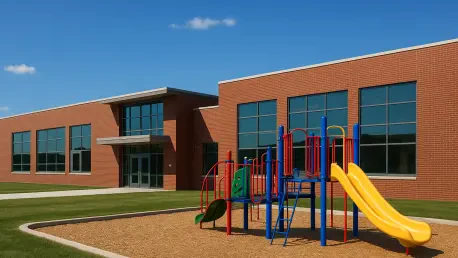
The physical state of Iowa’s schools serves as a permanent testament to the legislative strategies championed by Buckton throughout her tenure. One of the most significant achievements in recent history was the successful implementation and subsequent extensions of the Secure An Advanced Vision for Education (SAVE) act. Before this landmark policy took hold, many districts struggled with crumbling infrastructure, as funding for capital improvements was often tied to local property tax referendums that were difficult to pass. The SAVE act revolutionized this by creating a statewide penny sales tax dedicated specifically to school infrastructure, ensuring that a child’s physical learning environment was not entirely dependent on the wealth of their immediate neighborhood. Billions of dollars have since been funneled into modernizing science labs, improving accessibility, and creating safer, more energy-efficient buildings. For Buckton, this success represents a shift in the state’s philosophy toward viewing school buildings as long-term community assets rather than just temporary overhead costs, providing a stable foundation that allows educators to focus on pedagogy rather than leaky roofs or outdated heating systems.
While the structural improvements funded by the SAVE act have been transformative, the focus has increasingly shifted toward the operational side of the ledger. Buckton often highlights that while a new building provides the space for learning, it does not pay the salaries of the teachers or the costs of the curriculum required to fill those rooms. This distinction is vital in the current economic environment where inflationary pressures and shifting enrollment numbers create a volatile budgetary reality for administrators. The challenge now lies in ensuring that the state’s funding formula, which was designed decades ago, can adapt to the “remodeling” necessary for the 21st-century classroom. This includes addressing the discrepancy between capital wealth and operational poverty, where a district might have a state-of-the-art facility but struggle to offer a full range of Advanced Placement courses or specialized vocational training. By constantly reminding policymakers of the interplay between physical infrastructure and daily operational needs, Buckton ensures that the conversation about school success remains comprehensive rather than being narrowed down to simple aesthetics or isolated line items in a budget report.
Bridging the Divide: Advocacy in a Polarized Environment
Maintaining a reputation for factual integrity is a difficult feat in a legislative environment where party caucuses often finalize their positions behind closed doors long before a bill reaches the floor for public debate. Buckton has managed to sustain a high level of trust across the political spectrum by adhering to a strictly data-driven approach, providing what many lawmakers describe as the “straight story” on how proposed changes will impact local districts. This bipartisan accessibility is a byproduct of her belief that policy should be a tool for student success rather than a vehicle for ideological victory. In a climate where the traditional middle ground has largely evaporated, her ability to present objective analysis allows legislators from both parties to understand the practical consequences of their votes. Whether she is discussing the nuances of the school foundation formula or the impact of property tax caps, her goal is to ensure that the legislative process remains grounded in the reality of the classroom, advocating for the adjustment of any law that acts as a hurdle to educational achievement.
The shift in legislative procedures has necessitated a change in how advocacy is conducted, as the window for meaningful cross-party negotiation has narrowed significantly. In the past, moderate voices from both sides could often find consensus on complex funding issues, but modern trends indicate that the majority party must frequently find its own internal consensus first. This development places a premium on early intervention and the provision of clear, undeniable evidence during the drafting stages of a bill. Buckton’s work with the Urban Education Network and the Rural School Advocates of Iowa allows her to speak for a broad swath of the state’s population, demonstrating that many educational challenges are universal regardless of geographic location. By framing issues such as teacher shortages and student mental health as statewide priorities rather than regional grievances, she helps to build a broader coalition of support that can transcend partisan lines. This strategic approach is essential for protecting the interests of public schools in an environment where competition for state resources is fiercer than it has been in decades.
Identifying the Gaps: From Early Childhood to High-Needs Support
A primary focus of recent advocacy efforts has been the expansion of early childhood education, specifically the push for state-funded full-day preschool. Currently, Iowa provides a half-day program for four-year-olds, which Buckton argues is insufficient for the needs of modern working families. The logistical nightmare of transporting a child in the middle of a workday often prevents the families who would benefit most from participating in the program at all. Furthermore, the academic and social benefits of a full-day curriculum are well-documented, yet the state has been slow to provide the necessary financial commitment to make this a reality for all districts. Buckton’s advocacy on this front is rooted in the idea of “equity of opportunity,” suggesting that the state’s investment in a child should begin long before they reach kindergarten. By addressing these gaps early on, the education system can reduce the need for more expensive remedial interventions later in a student’s career, creating a more efficient and effective path toward graduation and beyond.
Beyond early childhood, the lack of consistent funding for “high needs schools” remains a significant point of contention in the state’s educational policy. Although the legislature legally approved an annual appropriation of $10 million for these schools over a decade ago, the funds have rarely been fully allocated in subsequent budget cycles. These schools often serve high concentrations of students from low-income households, English language learners, and children with disabilities, all of whom require additional resources to meet state proficiency standards. Buckton continuously brings this disparity to the attention of lawmakers, pointing out that failing to fund these approved priorities creates an unfunded mandate for local districts. When the state ranks lower in national per-pupil spending—currently sitting around 34th—it signals a potential decline in the state’s competitive edge. By advocating for “real resources” like summer school programs and specialized support staff, she argues that Iowa can close the achievement gaps that otherwise widen during periods when school is not in session, ensuring that every student has the support they need to succeed regardless of their background.
The Evolution of Influence: From Fiscal Analysis to Public Leadership
The expertise that Buckton brings to the table is the result of a diverse career path that began with a foundation in competitive debate and technical fiscal analysis. Her early years as a researcher for the Iowa Legislative Fiscal Bureau allowed her to master the intricacies of tax policy and school finance from a strictly neutral perspective. However, she eventually realized that neutrality had its limits; while she could explain what a policy would cost, she was prohibited from arguing why it was valuable. This realization prompted her transition into advocacy roles where she could use her technical skills to support the public education system. Her ability to translate complex financial formulas into human-centric narratives is a direct result of this background, allowing her to speak the language of budget analysts while never losing sight of the students and teachers who are the ultimate subjects of those spreadsheets. This duality makes her a formidable presence in committee rooms, where she can challenge flawed data with the authority of someone who helped build the system.
Her commitment to education is not just professional but is deeply informed by her personal experiences as a school board member and a community volunteer. During her time as a soccer coach in a diverse urban environment, she saw firsthand how different life circumstances could lead to vastly different educational outcomes for children with similar potential. This experience served as a catalyst for her run for the Des Moines school board, where she learned the importance of local governance and the need for flexibility in state funding formulas. These roles taught her that while the state provides the framework, the most impactful decisions are often made by the people closest to the students. Consequently, her advocacy today is characterized by a desire to empower local boards and administrators, ensuring they have both the authority and the resources to address the specific needs of their communities. By bridging the gap between high-level policy and grassroots implementation, Buckton has created a model for advocacy that is as practical as it is passionate, focusing on the systemic changes required to foster a more equitable future.
Strategies for Resilience: Future-Proofing the Educational System
As the state of Iowa navigated the middle of the decade, the demographic shift toward an older population required a fundamental reimagining of how public education was presented to the taxpayers. With a significant portion of the population being over the age of 65 and many households no longer having children in the school system, the traditional arguments for school funding needed to evolve. Buckton took the lead in articulating that the health of the entire state economy was inextricably linked to the quality of its public schools. She argued that every citizen, regardless of their family status, paid the price for an undereducated workforce through higher social costs and a less competitive business environment. This narrative encouraged a broader segment of the public to view education as a collective investment rather than a private service, fostering a sense of shared responsibility that was vital for securing the long-term sustainability of the system.
Moving forward, the focus of educational leadership turned toward proactive engagement with the next generation of lawmakers and community leaders to maintain the progress that had been made. Buckton emphasized that school districts must become more transparent and communicative, inviting the community to see the innovations happening within their walls. By encouraging local leaders to build relationships with their representatives early in the legislative cycle, she helped create a more resilient advocacy network that was less reactive and more strategic. The future of Iowa’s K-12 education was seen as depending on this ability to adapt to changing social and economic realities while remaining steadfast in the commitment to provide a high-quality education for every child. The strategies implemented during this period provided a blueprint for how a public institution could thrive in a complex, aging society by focusing on the universal value of knowledge and the shared prosperity that a well-funded school system inevitably produced for all citizens.