
Despite calls for more fiscal authority, only three Maryland counties currently utilize the maximum statutory local income tax rate of 3.3% allowed by state law. This paradox sits at the heart of a statewide debate regarding how jurisdictions can sustain essential services while facing an increasingly rigid fiscal environment. Since its inception in 2024, the Task Force to Modernize County and Municipal Revenue Structures has scrutinized these local frameworks to determine why the current revenue tools no longer match the demands of the mid-2020s. While the state government historically provided a stable backbone for funding, the shifting economic landscape—characterized by varying growth rates across jurisdictions and rising public service expectations—has necessitated a fundamental rethink. This legislative effort aims to ensure that local governments can maintain long-term financial health, especially as they grapple with the complexities of modernizing public utilities and expanding educational services. The challenge is not merely about finding more money; it involves identifying the structural disconnects that prevent efficient resource allocation and leave many municipalities vulnerable to economic fluctuations that are becoming more frequent and severe in the current decade. Furthermore, the reliance on traditional tax models has created a mismatch between the needs of growing suburban areas and the financial constraints of established urban centers, forcing a deep dive into alternative revenue strategies that can adapt to modern consumer behavior and technological changes.
Bridging the Widening Gap: School Infrastructure Challenges
The most pressing issue identified by current fiscal analysis is the staggering deficit in school construction and maintenance funding throughout the state. Data from the Interagency Commission on School Construction reveals a sobering annual funding gap of nearly $2 billion. This shortfall is divided between approximately $1 billion needed for daily operations and maintenance and an additional $940 million required for essential capital renewals. These figures represent a critical baseline that does not even account for recently enacted mandates, such as the statewide expansion of universal pre-K or the aggressive efforts required to decarbonize aging school buildings. Without addressing this nearly $2 billion annual vacuum, jurisdictions risk a steady decline in the safety and functionality of their learning environments. The cumulative effect of this underfunding has already begun to manifest in deferred maintenance schedules that threaten the structural integrity of campuses across several counties. This financial pressure is exacerbated by the fact that the state’s promised cost-share often fluctuates, leaving local budgets to fill the void during a time when other social services are also demanding increased resources and attention.
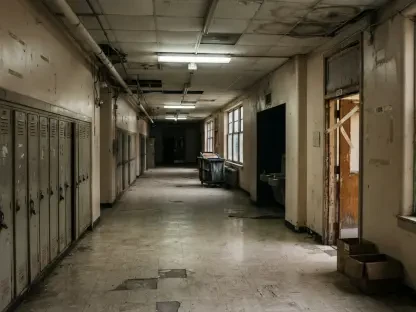
This infrastructure crisis is further compounded by a massive surge in construction costs that has far outpaced general economic inflation over the last two decades. Between 2003 and 2026, school building expenses skyrocketed by 210%, while the Consumer Price Index rose by a comparatively modest 82% during the same period. This hyper-inflation in the construction sector means that every dollar allocated today buys significantly less than it did even five years ago. Currently, over 40% of Maryland’s public schools have reached or exceeded 60% of their projected useful life, indicating a massive wave of necessary replacements on the horizon. The Interagency Commission on School Construction has highlighted that more than 800 HVAC systems and nearly 600 roofs will require complete replacement within the next six years just to keep facilities operational. These are not aesthetic upgrades but fundamental systems required to maintain a healthy and safe environment for students. The disconnect between the rising price of materials and labor and the static nature of local revenue streams has created a perfect storm, where the physical depreciation of assets is moving much faster than the government’s ability to finance their restoration or replacement.
Reevaluating the Fiscal Balance: State and Local Entities
A significant point of contention in recent legislative discussions involves the lopsided cost-sharing balance between state and local government entities. Currently, Maryland counties shoulder approximately two-thirds of all school capital spending, a proportion that local leaders argue has become unsustainable under modern economic pressures. While the state sets rigorous standards for school facilities and educational outcomes, it often classifies large portions of actual project costs as “ineligible” for state reimbursement. This creates a scenario where the official state cost-share percentage is much higher on paper than what is actually delivered in practice. For instance, a county might be promised a 50% state match, but after removing ineligible costs like site preparation or specific technology installations, the state’s actual contribution may drop significantly. This leaves local taxpayers to cover the hidden remainder, often resulting in counties paying a much larger share of the total project cost than the public realizes. This imbalance has led to calls for a more transparent and equitable funding formula that reflects the true costs of modernizing school facilities in a high-cost market.
To address these systemic imbalances, the Task Force has signaled a shift away from “one-size-fits-all” fiscal solutions that treat every jurisdiction as if it has the same economic capacity. Because each Maryland county possesses a distinct economic base—ranging from high-income professional hubs to agricultural and industrial regions—there is a growing consensus that local governments need far more flexibility in how they generate revenue. While some wealthier areas can rely on a robust income tax base, other jurisdictions struggle with stagnant property values and limited commercial growth. This reality has sparked a serious exploration of “user-pay” models and activity-based fees that could diversify revenue beyond the traditional pillars of property and income taxes. By broadening the tax base to include specific economic activities, counties could potentially lower the burden on residents while still meeting their infrastructure obligations. This move toward fiscal diversification is seen as a way to create a more resilient local economy that is less dependent on the volatile swings of the stock market or the real estate sector, providing a more predictable flow of funds for long-term planning.
Assessing Consumption-Based Alternatives: Revenue Growth
One of the most discussed proposals for modernizing Maryland’s revenue structure is the potential implementation of a retail delivery fee. Following the successful implementation of similar models in states like Colorado and Minnesota, Maryland is considering a small, flat fee on items delivered by motor vehicles to consumers. Estimates suggest that a fee ranging from 50 to 75 cents per delivery could generate between $200 million and $300 million annually for the state and its local jurisdictions. This revenue stream is particularly attractive because it captures economic activity that has largely shifted away from traditional brick-and-mortar retail, where sales taxes were more easily collected. However, the proposal is not without its hurdles. Policymakers must still resolve administrative challenges, such as determining how to handle canceled orders, how to apply the fee when a single shipment contains both taxable and exempt goods, and how to prevent “order splitting” where consumers might try to bypass the fee. Despite these logistical questions, the retail delivery fee represents a modern approach to taxation that acknowledges the dramatic shift in how residents consume goods in the 2020s.
Another potential solution gaining traction among fiscal planners is the introduction of a local-option meals tax, which would allow jurisdictions to add a small percentage to food and beverage sales. Projections indicate that a 3% tax could generate as much as $460 million annually if adopted on a statewide basis. This tax would utilize the existing admissions and amusement tax framework, making it relatively straightforward for the state to implement and for businesses to manage. Supporters of this measure point out that it shifts some of the tax burden onto visitors and tourists who utilize local infrastructure but do not pay local property or income taxes. Conversely, the proposal faces substantial pushback from the restaurant industry, which argues that an additional tax could deter customers and harm businesses already struggling with high labor costs and food inflation. There are also concerns regarding the regressive nature of such a tax, as it could disproportionately affect lower-income residents who spend a larger percentage of their earnings on food. Balancing the need for new revenue with the economic health of the hospitality sector remains one of the most delicate challenges facing the Task Force as they finalize their recommendations.
Maximizing Resource Capacity: Strategies for the Future
Despite the vigorous push for new taxing authority, the Task Force also noted that many local governments have yet to fully utilize the revenue tools already available to them under existing law. The fact that only a small handful of counties currently charge the maximum local income tax rate of 3.3% suggests that there is untapped potential within the current system. Additionally, many jurisdictions maintain homestead assessment caps that are significantly lower than the 10% legal limit, effectively restricting the natural growth of property tax revenue even during periods of rising home values. This indicates that while new revenue streams are likely necessary to close the massive infrastructure gap, there is also significant room for local governments to optimize their current tax structures to better reflect their actual fiscal needs. Some analysts argue that before the state legislature grants new taxing powers, local leaders must demonstrate that they have exhausted their existing options. This tension between seeking new authority and maximizing current capacity will likely be a primary theme in the upcoming legislative sessions as lawmakers weigh the political risks of various tax adjustments.
The Task Force concluded its session by establishing a clear roadmap for legislative action through the remainder of the decade. The researchers determined that a strategic shift toward consumption-based taxes provided the necessary flexibility for varying local economies to thrive independently. These deliberations highlighted the critical need for a diversified revenue portfolio that moved away from a singular reliance on income and property taxes, which have become increasingly volatile. The finalized report suggested that granting counties greater autonomy over specific local fees, such as the proposed delivery and meals taxes, was the most viable path to maintaining modern infrastructure and meeting state-mandated educational goals. By analyzing the current fiscal gaps with precision, the body identified several key areas where immediate policy changes offered long-term stability for Maryland’s diverse communities. These findings suggested that a proactive approach to revenue modernization was not merely a financial necessity but a prerequisite for the state to remain competitive and fulfill its commitment to high-quality public education and sustainable development. Moving forward, the focus must remain on implementing these diversified tools while ensuring that the administrative burden on local businesses and residents is kept to a minimum.