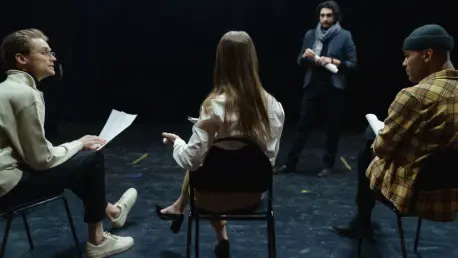

A ‘catch-22’ regarding enrollment persists where administrators refuse to approve specialized drama classes unless students commit to a program that lacks a diverse range of offerings. This structural deadlock has left educators at institutions like Sehome, Squalicum, and Bellingham High School struggling to maintain the robustness of their theatrical departments amidst shifting district priorities. Beyond the footlights, these programs provide a critical environment where students transition from introversion to leadership, frequently emerging as prominent figures in student government. The collaborative nature of a full-scale production demands a level of human connection that is increasingly rare in a society dominated by digital interfaces. Educators argue that the stage offers an authentic experience, forcing adolescents to engage in collective problem-solving and immediate communication. Despite these profound developmental benefits, the current educational climate often prioritizes standardized metrics over the subjective, yet vital, growth fostered within the arts.
Economic Obstacles: The Financial Realities of High School Stage Productions
The internal economy of a high school theater department functions more like a small business than a traditional academic subject, requiring teachers to generate their own capital to keep the curtain rising. Unlike mathematics or history, which receive district-allocated funding for textbooks and basic supplies, drama programs must rely almost exclusively on ticket sales and community fundraisers to survive. These funds are immediately diverted toward significant overhead costs, including the mandatory royalties paid to playwrights and publishers for the legal right to perform copyrighted works. Furthermore, schools are burdened by logistical expenses that often go unseen by the public, such as the mandatory custodial fees required for weekend rehearsals and evening performances. This financial model places an immense amount of pressure on theater directors to choose commercially safe plays that guarantee high attendance, potentially stifling the artistic diversity and challenging material that helps students grow.
Equity and accessibility remain at the forefront of the financial discussion, especially for schools like Options High that serve a wide geographic demographic across the county. Ensuring that every student can participate regardless of their family’s financial status requires dedicated funding for transportation, as late-night rehearsals often extend beyond the hours of standard bus routes. Without these resources, the program risks becoming an exclusive activity for those with the means to provide their own transit, undermining the inclusive mission of public education. Recent budget cuts have exacerbated these issues by eliminating club advisor contracts and triggering seniority-based layoffs that disrupt the continuity of mentorship. When a long-term director is removed due to district-wide fiscal restructuring, the institutional knowledge and community relationships built over years vanish instantly. This instability forces students and remaining staff to constantly reinvent the wheel, diverting energy away from the art.
Community Integration: Collaborative Solutions Through Professional Mentorship
To overcome these stalling points, Bellingham schools have turned to innovative intergenerational partnerships with local professional organizations. A standout example of this strategy is the two-year collaboration between Options High School and Bellingham TheatreWorks, which has redefined the traditional classroom experience. By working directly with industry professionals, students gain access to specialized training in lighting design, sound engineering, and stage management that the school district’s standard curriculum cannot always provide. This intergenerational approach does more than just fill a technical void; it fosters a sense of belonging within the broader regional arts community. Students find that their contributions are valued on a professional level, which significantly boosts their self-esteem and provides a clear vision for potential career paths. These partnerships serve as a lifeline, ensuring that the technical quality of productions remains high even when school budgets are stretched thin.
Similarly, Sehome High School has integrated its advanced costuming curriculum with the local professional scene, allowing students to design and construct garments for productions at the New Prospect Theater. This real-world application of classroom skills ensures that the education provided within the school walls remains relevant and rigorous. By sharing resources, such as tools, fabrics, and workspace, both the school and the professional theaters benefit from a symbiotic relationship that offsets individual costs. These initiatives prove that the sustainability of the arts depends on a community-wide ecosystem rather than isolated school funding alone. Furthermore, these collaborations allow students to see the tangible results of their labor in a public setting, reinforcing the idea that theater is a viable and respected profession. As the 2026-2027 season progresses, these community-integrated models are becoming the blueprint for how drama programs can survive despite the administrative hurdles.
Career Preparation: Reframing the Arts as Essential Workforce Development
A central tenet of the advocacy effort in Bellingham is the reclassification of theater as a rigorous laboratory for career preparation rather than a mere extracurricular luxury. Educators at Bellingham High School argue that the complex environment of a theater production builds essential job skills that are directly transferable to any industry in the modern workforce. Students must navigate high-pressure deadlines, manage complex organizational structures, and apply mathematical principles to technical theater challenges. These soft skills, which include emotional intelligence and collaborative leadership, are frequently cited by employers as the most difficult to find in new hires. By treating the theater as a space for critical thinking and comprehension analysis, teachers are working to dismantle the starving artist trope. They emphasize that the ability to pitch an idea, accept constructive criticism, and work toward a common goal is just as valuable in a corporate boardroom or a laboratory as it is on the stage.
The resolution of the funding challenges in Bellingham required a sustained effort from both the school district and the surrounding community. Decision-makers eventually recognized that the long-term health of the student population was tied to the presence of robust, well-funded arts programs. They chose to implement more flexible enrollment policies that allowed specialized drama classes to thrive even with smaller initial numbers. Support from local businesses and theater-goers provided the necessary bridge to cover production costs while district policies were being overhauled. Educators moved forward by formalizing their professional partnerships, ensuring that every student had access to high-quality technical training. The community took ownership of its local theaters, treating every ticket purchase as a vote of confidence in the developmental potential of the youth. These actions created a stable environment where the arts were no longer seen as a luxury to be cut, but as a foundational pillar of a comprehensive education.