
The transformation of the former Centennial Elementary site into the Centennial Choice Campus required extensive utility improvements that underscore the high cost of repurposing older school buildings. This specific project served as a centerpiece for the Lawrence Board of Education’s recent evaluation of its capital assets and operational hurdles. Deputy Superintendent Larry Englebrick presented a detailed summary of a summer defined by ten major construction initiatives, totaling an $8.5 million investment. While these figures represent a disciplined effort to sustain local learning environments, they simultaneously reveal the daunting financial scale required to maintain aging infrastructure. The meeting acted as a catalyst for a deeper conversation regarding the sustainability of the district’s current funding model. Leaders now face the challenge of reconciling immediate mechanical failures with the ambitious goal of creating modern, energy-efficient spaces that meet the needs of a growing student population.
Recent Infrastructure Milestones and Modernization Efforts
Revitalizing the Centennial Choice Campus
Much of the summer’s budget was dedicated to the Centennial Choice Campus, where renovations focused on structural integrity and long-term functionality. Englebrick detailed several enhancements, such as the replacement of sewer waste lines and an overhaul of the building’s IT infrastructure. These upgrades were paired with the installation of modern phone networks and a complete replacement of the roofing system to ensure durability. While these technical improvements are often invisible, they are foundational to the building’s daily operations and safety. This work ensures that the facility can support modern digital learning tools while maintaining a secure environment for all occupants during the upcoming school semesters.
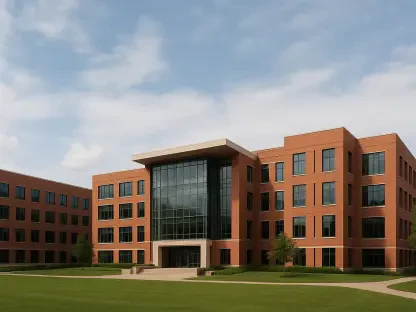
To improve the student experience, the district replaced the lackluster entrance with an inviting new canopy and a redesigned vestibule. The project included an enlarged walkway to create a more welcoming atmosphere for students and visitors. By combining these aesthetic changes with utility work, the district aims to create a contemporary environment that reflects its educational values. This dual focus on infrastructure and accessibility reflects a strategy to modernize older facilities while maintaining their presence within the community. The redesigned entry serves as a symbolic bridge between the building’s historical roots and its future as a specialized campus for diverse learning needs and community engagement.
Prioritizing Sustainability and Essential Maintenance
Sustainability has become a cornerstone of the district’s strategy, highlighted by a new solar energy system at Woodlawn Elementary School. This system, the third of its kind, produced enough energy in a month to power roughly 100 homes for a day. This project reflects a trend to integrate more efficient systems as replacement opportunities arise. By leveraging green technology, the district reduces its footprint and mitigates rising utility costs, allowing more resources to be directed toward student programming and educational innovation. These solar arrays provide a hedge against energy inflation, ensuring that future budgets are less vulnerable to the volatility of traditional power markets.
Summer work also included repairs like replacing chillers at Lawrence High School and renovating the press box at Free State High School. These maintenance tasks demonstrate a commitment to a functional environment. The cycle of replacing worn-out components underscores the difficulty of shifting funds toward innovation. The district prioritizes these systems to prevent failures that could disrupt the academic year, ensuring buildings remain operational and safe for all students. This proactive approach to mechanical upkeep, while costly, prevents the even higher expenses associated with emergency repairs and avoids the loss of instructional time that occurs when critical building systems fail unexpectedly.
Addressing the Financial Deficit and Growing Community Demand
The $65 Million Challenge: The Cost of Inaction
Despite recent investments, a 2025 facility study reveals $73.9 million in infrastructure needs. After the summer’s progress, a $65.4 million deficit remains, creating a hurdle for development. Board member Kelly Jones expressed concern that current spending only manages a “status quo” existence, failing to provide for the innovations required for a modern education. Without a capital infusion, the district risks falling behind in providing students with the modern environments necessary for success. The scale of this deficit suggests that incremental adjustments to the annual budget will be insufficient to close the gap, requiring a more radical rethinking of how the district finances its long-term assets.
President Bob Byers warned that a reactive maintenance strategy is far more expensive than proactive stewardship. He noted that delaying upgrades leads to higher costs and interruptions. The board is weighing immediate repairs against a comprehensive modernization plan. This highlights the need for a community conversation about the investment required to move beyond maintenance toward an innovative school system that meets the needs of all students and staff members. Failing to address these systemic issues now will likely result in a compounding financial burden, as aging systems become more prone to failure and the cost of construction materials continues to rise across the national economy.
The Crisis in Early Childhood Education Capacity
The district was also grappling with a surge in demand for preschool services following the closure of the Hilltop Child Development Center. Although seven new preschool classrooms were opened this fall, the district’s capacity was immediately maxed out, leading to a significant waitlist. Superintendent Jeanice Swift articulated a vision of providing a quality preschool seat for every child, but she admitted that current facilities cannot yet meet this demand. This shortage created a bottleneck that affected both student readiness and the local workforce’s ability to access reliable childcare. The pressure on these programs underscored the urgent need for flexible facility space that can be quickly adapted for early learners.
To address this, the district leadership emphasized a community-backed investment plan that integrates early childhood needs into facility discussions. The board looked at ways to transform underutilized spaces into licensed preschool environments, though this required meeting strict safety standards. Families were encouraged to stay engaged as the district sought new ways to expand capacity. The session concluded by acknowledging that bridging the facility gap and expanding services are goals that will define success. By focusing on public-private partnerships and advocating for state funding, the board aimed to create a roadmap that would eventually transform these persistent deficits into real opportunities for local growth.