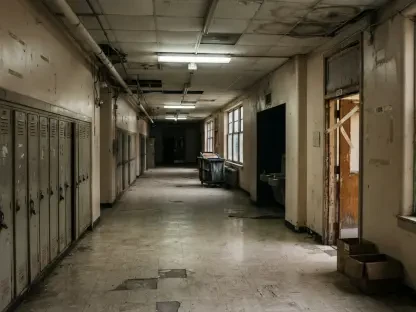

The modern educational campus has evolved far beyond its traditional role as a closed institution for daytime instruction, transforming into a vibrant pulse of neighborhood activity. Traditional school security was designed to exclude outsiders, but the new mandate for community integration requires a system that safely manages the influx of diverse public groups. This transformation is largely driven by a growing demand for public recreational spaces, leading governments to rethink how academic infrastructure can serve the broader population. In regions like South Korea, the Ministry of Education is aggressively expanding school complexes in 2026 to meet the rising demand for sports and social spaces that were previously inaccessible during evenings and weekends. While utilizing school gymnasiums as community centers benefits public health, it places an immense administrative burden on school staff who are not trained for facility management. This new paradigm necessitates a technological shift to maintain safety without overwhelming human resources.
Overcoming Operational Barriers with Automation
Solving the Management and Liability Gap: Addressing Institutional Risks
The primary obstacle to opening school facilities to the public remains the significant management burden that manifests during non-academic hours. When schools operate as community hubs on nights, weekends, and holidays, they often do so without the immediate presence of faculty or traditional security personnel. This lack of active supervision creates a vacuum where risks of accidents, unauthorized intrusions, and mechanical failures increase exponentially. For school administrators, these risks translate into daunting legal and administrative liabilities that can stall community programs before they even begin. To mitigate these concerns, security firms have developed safety management solutions that allow for unmanned operation while providing a level of oversight traditionally reserved for high-security sites. By automating the monitoring process, schools can ensure that every individual on the property is accounted for and that the facility itself is protected against liability claims that often arise from unsupervised use.
Furthermore, the shift toward these automated systems represents a fundamental change in how institutional responsibility is perceived and managed. Instead of relying on a physical guard to patrol hallways, digital systems provide a persistent, unblinking eye that can document every interaction within the school grounds. This shift effectively transfers the burden of proof and the necessity for constant physical presence from the school staff to a centralized digital framework. Such frameworks are designed to be proactive rather than reactive, identifying potential issues before they escalate into legal or physical crises. By implementing these professional-grade oversight protocols, educational institutions can finally bridge the gap between open access and institutional safety. This environment fosters a sense of trust between the school and the community, as residents see that the facilities are well-managed and safe for all ages. Consequently, the transition to a community-focused model becomes a sustainable long-term strategy for local officials.
Streamlining Access: The Evolution of Unmanned Gym Systems
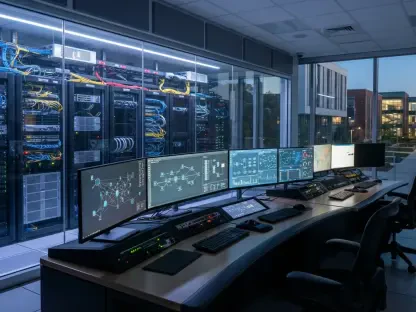
Modern unmanned management systems have fundamentally revolutionized how school facilities operate by integrating sophisticated entry control with building automation. These systems are governed by pre-registered schedules that dictate the building’s operational state with minute-by-minute precision, ensuring no overlap between student and public use. During the standard academic day, the system remains in a high-security student-only mode, keeping all external access points locked and strictly monitored. However, once the school day concludes, the infrastructure automatically transitions into a public-access mode, activating electronic locks and adjusting climate control systems for the arriving community groups. This automation eliminates the need for a physical key-holder to be present, reducing the risk of lost keys or unauthorized duplication. The seamless transition between these two distinct modes allows schools to maximize their utility without requiring constant manual intervention from custodial or administrative staff.
Beyond simple entry and exit, the sophistication of these systems is best demonstrated during the automated closing procedures that occur at the end of public hours. To ensure the building is entirely empty before the high-security nighttime mode is engaged, the system utilizes a combination of voice announcements and sensor-based occupancy verification. These automated announcements inform users that the facility is closing, providing ample time for a safe departure without the need for a security guard to confront loiterers. High-sensitivity motion sensors then scan the interior to confirm that no individuals remain in restrooms or hidden corners. If the system detects any remaining presence, it alerts remote monitors instead of locking the premises with someone inside. This level of automated diligence ensures that the school is secure before the perimeter alarms are set, providing a foolproof method of facility clearance that human error often overlooks. This creates a cycle of reliable operation that builds confidence in the community.
Intelligent Monitoring and Infrastructure Integrity
Enhancing Safety: Leveraging AI Video Analytics
The evolution of school security goes beyond simple gatekeeping, as intelligent safety packages now utilize AI-powered Smart Video Management Systems (SVMS) to monitor environments in real time. Unlike traditional cameras that merely record footage for later review, these advanced AI systems are programmed to recognize specific abnormal behaviors as they happen. Algorithmic detection can identify physical violence, loitering in sensitive areas, or unauthorized entry into restricted zones such as laboratories and commercial kitchens. This real-time analysis allows for immediate intervention, often before an incident escalates into a serious security breach. For schools acting as community hubs, this means that different security profiles can be applied depending on the time of day and the nature of the occupants. The system can distinguish between a basketball game in the gym and a suspicious individual wandering through a restricted hallway. By automating this level of scrutiny, schools provide a safer environment for the public.
Moreover, this algorithmic approach provides schools with a high degree of customization, allowing administrators to focus on specific hazards without the need for massive hardware overhauls. AI video analytics can be specifically tuned for fire detection in high-risk areas like chemistry labs or to send intrusion alerts when motion is detected near expensive athletic storage facilities. This specialized monitoring is particularly valuable during hours when the building is sparsely populated by community members, as it replaces the need for continuous human surveillance. The efficiency of AI video systems also reduces the number of false alarms, which are a common nuisance in traditional security setups. By filtering out non-threatening movements, such as a bird flying past a window or shadows changing in a hallway, the system ensures that security personnel are only alerted to genuine threats. This precision maximizes the effectiveness of local law enforcement and school security teams, ensuring that their response is always targeted.
Protecting Facilities: Deploying IoT Sensors for Integrity
As educational infrastructure ages, the physical integrity of the school building becomes a significant liability, especially when opened for public use. The Internet of Things (IoT) provides a critical defense against the invisible threats that can compromise a facility, such as electrical fires or plumbing failures. Solutions like BlueScan addressed these risks by attaching specialized sensors to electrical panels and water systems to detect abnormal signals that indicated a problem was brewing. These sensors monitored for spikes in electrical current, unusual temperature rises, or sudden changes in water pressure that often preceded catastrophic failures. In an unmanned environment, these small signs would normally have gone unnoticed until significant damage occurred. However, IoT sensors provided a preemptive defense, continuously gathering data and analyzing it for patterns of wear or impending failure. This proactive stance on maintenance was essential for schools that balanced the wear and tear of public use with academic resources.
The implementation of these IoT solutions ultimately transformed the way educational facilities were managed after hours. Real-time alerts sent directly to managers’ smartphones allowed for a rapid response that prevented minor mechanical issues from escalating into significant renovation projects. This immediate connectivity meant that if a pipe began to leak or a circuit breaker started to overheat during a weekend community event, the relevant personnel were notified instantly, regardless of their physical location. Furthermore, the data collected by these sensors over time was used to predict when systems required service, allowing for scheduled maintenance that did not interfere with academic or public activities. This proactive stance on maintenance ensured that the school remained a safe and functional environment for everyone, preserving the longevity of the infrastructure. By integrating these sensors into the broader security network, schools successfully moved from a strategy of disaster recovery to one of permanent disaster prevention.