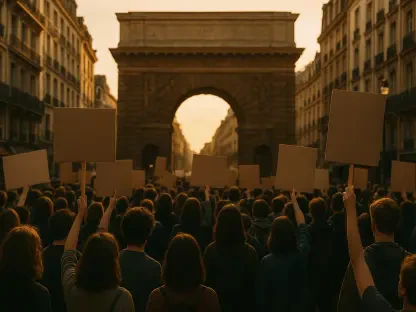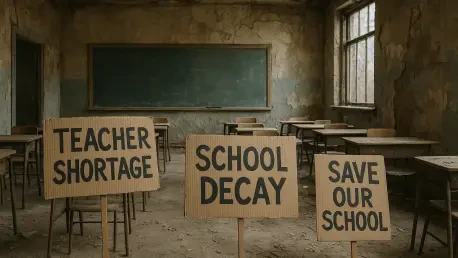

Hard-left leader Jean-Luc Melenchon has publicly championed the student movement, framing the protests as a necessary stand against police brutality and systemic school neglect. Across France, high school hallways that should be centers of learning have instead become flashpoints for a national crisis entering its third consecutive week of intense blockades. These demonstrations were fueled by a visceral frustration over chronic teacher shortages and the physical deterioration of educational facilities, ranging from leaking roofs to broken heating systems. The visual of students standing before barricades of trash bins and pallets became a daily occurrence in major urban centers. While the unrest highlighted a fundamental demand for robust social services, it also exposed a deepening rift between the youth and a government currently hamstrung by massive national debt. As international bond markets exerted pressure for fiscal austerity, the state found itself caught in a precarious balancing act.
Government Responses and Political Polarization
Prime Minister Sebastien Lecornu attempted to cool the rising temperatures by promising concrete and fully funded responses to be unveiled by late October, yet the lack of specific details left the student body largely unconvinced. In an effort to bypass traditional protest channels and engage directly with the youth, the administration launched an online consultation platform that remarkably garnered over 43,000 responses within its first two days. This digital outreach illustrated the sheer scale of engagement among the youth, but the reality on the ground remained far more volatile. Recent clashes led to hundreds of arrests, and the heavy-handed nature of the police response only served to galvanize the movement further. In a calculated move to de-escalate these tensions, the interior ministry recently suspended the use of stun grenades by riot police, recognizing that visual evidence of force often acts as a recruitment tool for those organizing the ongoing school blockades.
The current crisis evolved into a primary focal point for political maneuvering as the nation approached its next major election cycle. Marine Le Pen, currently leading in several far-right polls, took a hardline stance by condemning property damage and demanding financial accountability from the families of those involved in the unrest. She used the chaos to argue for even deeper spending cuts, suggesting that the state could not afford to reward disruptive behavior with increased funding. In stark contrast, the left-wing opposition viewed the situation as a byproduct of years of neoliberal erosion of the public sector. Public sentiment reflected this deep division, with polling data indicating that while 72% of the population viewed the students’ demands as fundamentally legitimate, a majority of 55% believed the disruptive blockades should end to restore normalcy. This dissonance created a complex political landscape where every policy decision was scrutinized for its impact on voters.
Regional Disruption and Institutional Modernization
This wave of educational unrest was not an isolated French phenomenon, as similar student-led demonstrations began to ripple through Belgium, Spain, and Portugal, suggesting a broader European discontent with post-pandemic social infrastructure. In Belgium, authorities already implemented stricter measures, including bans on large public gatherings, following reports of significant property damage and concerns regarding the infiltration of protests by outside political activists. These regional parallels underscored a shared challenge across the continent: the difficulty of balancing generational spending priorities. Finance Minister Roland Lescure publicly acknowledged the administrative struggle of prioritizing the modernization of schools when a massive portion of the national budget was non-negotiably consumed by healthcare and aging pensions. The friction between investing in the future through education and maintaining the commitments of the past through social security became the defining economic debate.
As labor unions coordinated with student groups to plan even larger demonstrations for mid-October, the necessary path forward shifted from reactive policing toward proactive institutional investment. It was determined that addressing the physical decay of schools required a dedicated modernization fund that operated independently of short-term fiscal fluctuations, perhaps through specialized green bonds aimed at retrofitting aging campuses. Beyond infrastructure, the teacher shortage crisis demanded a structural overhaul of the recruitment process, including competitive salary adjustments and better working conditions to attract high-quality candidates to the profession. Policymakers also recognized the need for permanent mechanisms for student representation in school governance to ensure that facilities management remained transparent and accountable. Transitioning from the state of deadlock to a sustainable model proved that fiscal responsibility did not have to exclude the safety of the next generation.