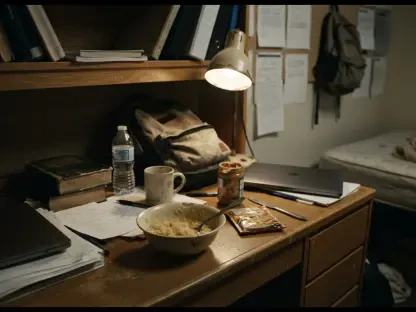

The filmmaker observed student reporters conducting meticulous interviews and taking detailed notes with a level of professionalism that rivals many seasoned adult journalists. Michael Kofsky, a seasoned producer based in Los Angeles, has recently focused his lens on the high-intensity atmosphere of Iowa City’s student-led media. Alongside cinematographer Andria Chamberlin and the News Literacy Project, Kofsky is developing a “proof of concept” video that highlights the rigors of modern youth journalism. This short production is designed as a high-caliber pitch for major streaming platforms such as Netflix and HBO, aiming to capture the essential spirit of a newsroom where the stakes are as high as any professional outlet. The project specifically spotlights the storied rivalry between Iowa City West’s West Side Story and City High’s The Little Hawk. This long-standing competition, traditionally celebrated on the football field in the famous “Battle for the Boot,” has migrated into the digital and print domains of school newsrooms. Kofsky’s work explores how these student-run publications push each other toward editorial excellence, serving as a vital training ground for the next generation of truth-seekers in an increasingly complex information landscape. By focusing on these young “main characters,” the documentary seeks to illuminate the broader importance of news literacy in a digital age where the lines between fact and opinion are frequently blurred.
Capturing the Rigor of Young Reporters
Professionalism: Beyond the Classroom
The methodology employed by Kofsky involves a fly-on-the-wall observation of “hard journalism” practiced by minors who operate with a level of dedication that far exceeds typical extracurricular expectations. One of the most striking scenes documented involves student reporters from West Side Story working well past midnight in the school parking lot. After the school building had officially closed for the night, these reporters were seen sitting in their car trunks, using their laptops to write and publish game coverage by 1:00 a.m. This level of commitment illustrates that for these students, journalism is not merely a hobby or a line on a college application, but a profound responsibility to their audience. The documentary captures the raw, unpolished moments of deadline pressure, showing that the drive to get the story right—and to get it out first—is a primary motivator that mirrors the fast-paced environment of a major metropolitan daily.
Building on this observation of dedication, the film contrasts the public perception of high school students with the reality of their editorial workflows. Kofsky noted that these young professionals do not just cover school spirit or social events; they manage complex production schedules, coordinate multi-platform releases, and maintain a consistent voice across print and digital media. The rivalry between the two schools serves as a catalyst for this high standard, as each newsroom monitors the other’s output with a critical eye. This competitive spirit ensures that neither publication becomes complacent, leading to a self-sustaining cycle of innovation and quality. By highlighting the physical and mental exhaustion that often accompanies their work, the documentary provides a rare glimpse into the sheer labor involved in maintaining a free and active student press in a mid-sized American city.
Ethical Navigations: The Pursuit of Truth
Central to the documentary’s narrative is an exploration of how young journalists navigate the murky waters of ethics and objectivity. Kofsky’s interviews with the students reveal a sophisticated understanding of the “watchdog” role that the press must play within a community. These reporters are often caught between their status as students and their duties as journalists, sometimes having to report on the very administration that oversees their education. The film examines whether these students feel intimidated by school officials or if they feel empowered to pursue stories that might cause friction. This transition from being a student who follows rules to a journalist who questions authority represents a significant developmental milestone. The narrative focus remains on how these young people manage the balance of being objective observers while remaining deeply embedded in the social fabric of their schools.
Furthermore, the documentary delves into the internal debates that occur within the newsroom regarding what stories are deemed “newsworthy” and how to approach sensitive topics with empathy. The students are shown discussing the potential impact of their reporting on their peers, weighing the public’s right to know against the privacy and well-being of their classmates. This ethical maturity is a cornerstone of Kofsky’s project, as it suggests that the next generation of truth-seekers is being formed in an environment that prizes integrity over clicks. By documenting these discussions, the film provides a compelling argument for the necessity of news literacy education. It shows that when young people are given the tools to analyze information critically, they become more than just consumers of news; they become responsible producers who are capable of handling the weight of public discourse with grace and precision.
The Influence of Legal Protections and Leadership
Security: Through Legislative Freedom
A significant factor contributing to the high caliber of journalism in Iowa City is the robust legal framework that protects student expression. Iowa is home to one of the oldest “New Voices” laws in the United States, a piece of legislation passed in 1989 that specifically shields public school student journalists from administrative censorship. This legal shield is a recurring theme in Kofsky’s work, as it explains why students in Iowa City are able to tackle controversial subjects that might be off-limits in other states. Without the fear of being silenced by principals or school boards, these reporters are free to investigate “hard-hitting” social issues, such as rising substance use among the student population or the academic repercussions of new district-wide reassessment policies. The documentary highlights how this independence fosters a sense of agency and civic responsibility that is rare among high school students nationwide.
This legislative protection does more than just prevent censorship; it fundamentally changes the relationship between the students and the school administration. Instead of being seen as subordinates, the student journalists are often treated as independent entities with a legitimate mandate to inform the public. This environment allows for a more transparent dialogue within the school community, where students feel safe to voice concerns and challenge the status quo. The documentary features interviews with school officials who acknowledge the importance of this free press, even when the reporting is critical of their decisions. By showcasing the positive outcomes of the “New Voices” law, the film suggests that editorial freedom is not a threat to school order, but rather a vital component of a healthy educational environment. This legal independence serves as a model for what student journalism can achieve when it is granted the same protections as the professional press.
Profiles: Leadership Within the Newsroom
The documentary profiles several key student leaders who embody the professional spirit that Kofsky seeks to highlight. Among them is Colin Wehrle, the editor-in-chief of the print edition of West Side Story, who views the late-night sessions and parking lot reporting as evidence that the work is fulfilling and socially important. Wehrle’s focus on policy-driven editorials demonstrates a sophisticated understanding of how journalism can influence the cultural and academic landscape of a school. Similarly, Nicolas Vergara-Vanegas, the co-executive editor of City High’s The Little Hawk, emphasizes the necessity of building trust with the audience. His approach is rooted in the belief that a journalist’s primary duty is to ensure the community is well-informed, which in turn fosters a more engaged and active citizenry. These students are portrayed not as typical teenagers, but as leaders who are deeply committed to the democratic ideals of the First Amendment.
In addition to these top editors, the film explores the roles of specialized editors like Lydia Cruce, who manages human-interest and investigative content. These profiles reveal a diverse array of perspectives and motivations, yet they all share a common thread of dedication to the craft. The leadership in these newsrooms is characterized by a collaborative spirit, where experienced seniors mentor younger staff members, ensuring that the standards of excellence are passed down through successive classes. This internal mentorship program is vital for the long-term sustainability of the publications, as it creates a pipeline of talented reporters and editors. Kofsky’s focus on these “main characters” allows the audience to see the human faces behind the headlines, making the abstract concepts of journalism and news literacy feel personal and relatable. These student leaders represent the potential for young people to make a tangible impact on their communities through the power of the written word.
Mentorship and the Impact of News Literacy
Guidance: The Influence of Faculty Advisers
The success of the journalism programs at West High and City High is heavily attributed to the mentorship of their faculty advisers, Sara Whittaker and Jonathan Rogers. Whittaker, who advises the West Side Story staff, instills a philosophy of healthy skepticism in her students, teaching them the classic journalistic maxim: “If your mother tells you she loves you, check it out.” This focus on verification and fact-checking is a crucial skill in an era where misinformation can spread rapidly across social media. Whittaker’s approach ensures that her students are not just producing content, but are producing credible, evidence-based reporting that can stand up to scrutiny. The awards and accolades her students receive are viewed as secondary to the goal of gaining the trust of adult sources and experts within the community, such as those at the University of Iowa.
On the other side of the rivalry, Jonathan Rogers of City High describes the “magic” of the newsroom as the students’ ability to take ownership of the entire production process. He views his role as a facilitator who pushes students out of their comfort zones, encouraging them to conduct more interviews and get people “on the record.” Rogers identifies the student journalist’s role as that of a community “watchdog,” noting that their work has the power to effect change by telling stories that might otherwise go unheard. The “friend-rivalry” between Whittaker and Rogers mirrors the competition between their respective student bodies, creating an environment where both advisers push each other to stay current with industry trends and technology. This mentorship provides the necessary foundation for the students to operate with such a high degree of independence and professionalism, demonstrating the vital role that educators play in fostering a free and active student press.
Engagement: Fostering a Resilient Journalistic Future
The involvement of the News Literacy Project in Kofsky’s documentary underscores a broader societal theme: the urgent need to teach young people how to consume and produce information responsibly. Iowa City serves as a unique “lab” for this type of education, largely due to its proximity to the University of Iowa, which provides a wealth of professional sources and academic experts. The students take full advantage of this environment, often interviewing high-level sources that national publications might seek out for similar stories. This proximity to a major research institution allows the student journalists to ground their reporting in data and expert opinion, elevating the quality of their work far beyond typical high school journalism. The film portrays this interaction as a model for how educational institutions can collaborate with student media to create a more informed and media-literate public.
The documentary project ultimately concluded that when students were provided with legal protection, professional mentorship, and a competitive environment, they were capable of producing journalism that rivaled professional outlets in integrity and impact. The findings suggested that the future of the free press depended on the ability of schools to foster these qualities in the next generation. As the project moved toward its final stages of production, it offered a clear path forward for other districts looking to strengthen their news literacy programs. Actionable steps identified included the adoption of “New Voices” legislation in more states and the integration of professional journalistic standards into high school curricula. The experience of these Iowa City students demonstrated that high school newsrooms could serve as essential pillars of community information. By validating the hard work of these young reporters, the documentary provided a compelling vision for a more resilient and transparent media landscape.