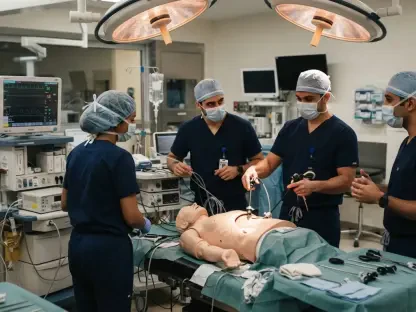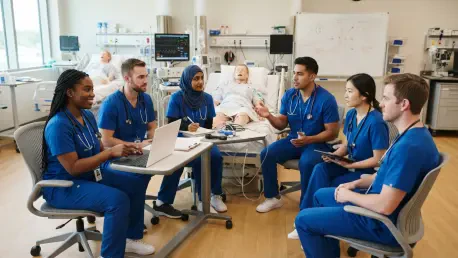

Organizational hierarchies and rigid clinical schedules often prevent trained student facilitators from applying their new debriefing skills within the healthcare environment. Despite these systemic challenges, the integration of simulation-based training has evolved into a vital pillar of modern medical education, where the demand for qualified leaders frequently outstrips the supply. To address this widening gap, a pivotal study published in October 2026 within the journal Advances in Simulation examined the potential of training master’s students as peer facilitators to bolster educational capacity. By moving beyond traditional instructor-led models, this research highlights how entry-level facilitator training serves as a catalyst for professional transformation among graduate students. These individuals represent a previously untapped resource capable of driving cultural shifts within clinical settings if properly supported. The investigation provides a nuanced understanding of how such roles influence the academic trajectory and clinical readiness of emerging healthcare leaders.
Professional Development: Confidence and Skill Transfer
The research focused on seventeen master’s students specializing in midwifery and prehospital critical care, all of whom participated in the SimBegin® Level 1 course to acquire foundational facilitation competencies. This specific program was designed to move students from passive learners to active leaders capable of guiding their peers through complex clinical simulations. To ensure the findings captured lasting behavioral changes rather than temporary enthusiasm, the researchers conducted focus group interviews eight months after the training concluded. This duration allowed the participants sufficient time to test their new skills in diverse clinical placements and academic scenarios. By focusing on these specific high-pressure disciplines, the study highlights how facilitator training provides a scaffolding for leadership that is often missing from traditional clinical curricula. The results suggest that the early introduction of these skills creates a ripple effect, influencing how students interact with their peers and senior colleagues long after the initial workshop has finished.
One of the most significant outcomes identified in the 2026 study was the dramatic surge in facilitator confidence among the master’s students. Prior to the SimBegin® training, many participants viewed the role of a facilitator as an intimidating task reserved exclusively for senior faculty or expert practitioners. However, the structured framework provided by the course demystified the process, breaking down complex debriefing techniques into manageable, actionable steps. This empowerment allowed students to feel more comfortable managing the inherent uncertainties of simulation-based learning. As they became more adept at steering conversations and managing group dynamics, their self-efficacy increased, leading to a greater willingness to take initiative in educational settings. This growth in confidence proved essential for overcoming the initial hesitation students felt when stepping into leadership roles. The training effectively lowered the barrier to entry, demonstrating that with the right tools, graduate students can excel as facilitators and mentors for their peers.
Strategic Evolution: Reflection and Systemic Integration
Beyond the gain in technical proficiency, the training fostered a deep-seated reflective mindset that fundamentally altered how students viewed learning. A core component of the SimBegin® curriculum involves the use of debriefing to encourage self-analysis and critical thinking. The 2026 research found that participants internalized these principles, shifting their focus from purely technical performance to a broader understanding of cognitive and social learning processes. Instead of focusing solely on what went wrong, students began to ask why certain decisions were made, leading to a more sophisticated level of clinical reasoning. This transition toward reflection-in-action allowed the students to become more self-aware practitioners who are capable of identifying their own learning needs. By valuing the process of discovery over the mere correction of errors, these emerging facilitators began to view every clinical encounter as an opportunity for professional growth. This shift is vital for developing a resilient workforce that can adapt to the evolving demands of modern medicine.
In conclusion, the qualitative investigation demonstrated that entry-level facilitator training was a powerful catalyst for professional growth, yet its full impact required organizational alignment. The researchers suggested that for healthcare programs to maximize this untapped potential, they needed to restructure clinical schedules and educate senior staff on the value of peer-led debriefing. The study proposed that providing students with a clear pathway to exercise their competencies was the only way to ensure the long-term sustainability of facilitation capacity. By investing in these master’s students, institutions fostered a generation of professionals who viewed clinical care through a more reflective and collaborative lens. Ultimately, the research showed that the SimBegin® course successfully bridged the gap between being a learner and a leader, but only when the clinical environment supported such a transition. Future initiatives focused on reducing these contextual barriers to ensure that the reflective mindset cultivated in the simulation lab could flourish in high-stakes environments.