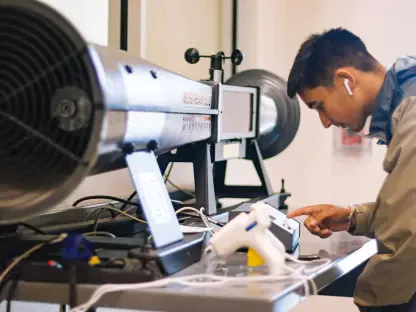

Governor Gavin Newsom’s latest economic strategy prioritizes the growth of emerging industries by investing in workforce training that aligns with the State Economic Blueprint for high-tech leadership. The California Workforce Development Board has recently operationalized this vision by announcing a substantial $5,744,665 allocation through the Workforce Accelerator Fund 14. This specific funding cycle is dedicated to pioneering projects that bridge the gap between academic research and industrial application within the quantum technology and fusion energy sectors. As these fields transition from theoretical physics to viable commercial markets, the state is positioning itself as a global leader by securing the necessary human capital. By investing in these high-growth areas, the administration ensures that the local economy remains resilient and competitive in an increasingly automated world. This effort is not merely about job placement but about establishing a comprehensive ecosystem where innovation and labor expertise grow in tandem.
Strategic Initiatives: Workforce Development in Emerging Tech
Regional Hubs: Democratizing Access to Specialized Education
The geographical distribution of these grants reflects a commitment to statewide development, ensuring that innovation is not localized to a single region. Two of the five awarded projects are concentrated in the San Francisco Bay Area, while additional initiatives are strategically located in Sacramento, Santa Barbara, and San Diego. For example, Valley Vision, Inc. is utilizing its award of $746,040 to define the quantum economy within the Greater Sacramento region, specifically focusing on aligning K-12 education with the specialized requirements of modern technology employers. This regional approach allows California to tap into diverse talent pools and ensures that high-tech opportunities are accessible to residents regardless of their location. By embedding these programs within existing community frameworks, the state fosters an inclusive environment where regional economic drivers are directly supported by local workforce pipelines that meet immediate hiring needs.
Furthermore, these programs are designed to be accessible to a wide range of educational backgrounds, from ninth-grade students to postgraduate researchers. By offering “stackable” credentials and intensive training modules that can be completed in as little as 8 to 13 weeks, the state is dismantling traditional barriers to entry in the scientific community. This flexible model allows individuals who may not have a four-year degree to gain industry-recognized skills in superconductivity, photonic integrated circuits, and quantum optics. For instance, the University of California, Santa Barbara is focusing its $993,900 award on training hardware technicians to fill critical roles that support the physical infrastructure of quantum systems. This strategy moves away from the historical reliance on long-term academic tracks and toward agile, practical certifications that allow Californians to enter the high-wage technical workforce much faster than previously possible.
Technical Pipelines: Advancing Hardware and Energy Solutions
The technical focus of the awards highlights the complexity of the systems being built in California. San Jose State University Research Foundation has received $1.5 million to develop a three-tier certificate program centered on quantum computing hardware design. This initiative addresses the pressing need for engineers and technicians who can design, build, and maintain the physical processors that define next-generation computation. Meanwhile, the University of California, Berkeley is establishing a pipeline from grades 9 through 16, creating a verified credential system that ensures a steady flow of talent into the quantum sector. These programs are specifically engineered to provide the hands-on expertise required for the commercialization of quantum processors. By focusing on hardware, California is building the tangible components of the future economy, moving beyond software development into the physical manufacturing and maintenance of revolutionary technological devices.
Simultaneously, the fusion energy sector is gaining significant momentum through the “Fusion CAL Career Pathway” at the University of California, San Diego. With a $1.48 million investment, this program offers a 13-week certificate designed to prepare workers for the unique challenges of the fusion power industry. As fusion technology approaches the threshold of commercial viability, the demand for technicians who understand high-energy physics and reactor operations is increasing rapidly. This program serves as a pilot for how specialized energy training can be scaled to meet climate goals while providing quality jobs. By aligning educational outcomes with the specific technical needs of fusion startups, the state ensures that the transition to clean energy is supported by a workforce capable of maintaining complex power systems. This proactive investment in energy careers reflects a broader commitment to climate resilience and long-term industrial sustainability.
Collaborative Growth: Sustaining the High-Tech Ecosystem
Scaling Impact: Lessons from the Accelerator Fund
The current round of funding is part of a larger historical context of state investment, with the Workforce Accelerator Fund having distributed over $40 million since 2018. As the state moves through the 2026 to 2028 period, the focus has evolved from testing individual concepts to scaling proven workforce solutions that can be integrated into the broader economy. This success is largely attributed to the robust public-private partnerships that have emerged, where educators and employers collaborate to ensure curricula remain current with industry standards. By utilizing the fund to pilot innovative training modules, California has developed a blueprint for how to respond to rapid technological shifts. The iterative nature of these grants allows the state to identify which educational models provide the highest return on investment in terms of job placement and wage growth. This data-driven approach ensures that public funds are utilized effectively to build a sustainable and adaptable workforce.
Building on these foundations, the state has prioritized the creation of quality jobs that offer long-term career growth rather than temporary employment. The focus on quantum and fusion technology is a strategic choice aimed at industries that are likely to define the global economy for decades. These sectors offer high-paying, stable roles that are less susceptible to automation and provide clear paths for advancement. By fostering equity within these programs, the California Workforce Development Board is ensuring that workers from underrepresented communities have the support needed to succeed in elite technical fields. This commitment to social mobility is integrated into the technical training, providing wraparound services and industry mentorship to participants. The result is a more inclusive tech sector that benefits from a wider range of perspectives and experiences, ultimately driving more creative and resilient innovation across the state’s research and development landscape.
Future Resilience: Recommendations for Workforce Integration
To maintain this momentum, industrial stakeholders and educational institutions must focus on the permanent integration of these training modules into the state’s standard educational offerings. One primary recommendation is the expansion of apprenticeship programs that allow students to apply their 8-to-13-week certifications in real-world lab and factory settings. While the state-funded programs provide the necessary theoretical and technical foundation, on-the-job experience is critical for refining the skills required for complex hardware assembly and reactor maintenance. Additionally, establishing a statewide registry for quantum and fusion credentials would allow employers to easily verify the skills of potential hires, streamlining the recruitment process for emerging startups. Maintaining a constant feedback loop between the California Workforce Development Board and private industry leaders will be essential to ensure that training remains aligned with the latest technological breakthroughs in photonics and physics.
The investment in these specialized career pathways established a significant milestone for the state’s economic development strategy. By prioritizing the human element of the quantum and fusion revolutions, the administration demonstrated that technological leadership required more than just capital—it required a skilled and adaptable workforce. These programs successfully bridged the gap between traditional education and the high-speed demands of the modern tech market, proving that intensive, short-term training could yield high-quality employment results. Furthermore, the regional distribution of funds ensured that the benefits of the new energy and computing economies were accessible to a broad demographic. As these initiatives moved toward full implementation, they provided a scalable framework for future investments in other emerging sectors. This proactive approach ultimately secured California’s role as a global hub for technological innovation and provided residents with the specialized skills necessary for long-term economic prosperity.