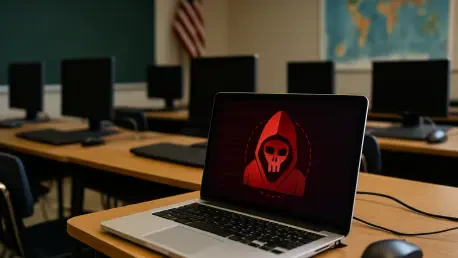

The recent data breach at Adelaide’s Reynella East College serves as a chilling reminder that no institution is too small or too sacred to be spared by international ransomware syndicates like “The Interlock” as they aggressively target the Australian education sector. While schools were once considered off-limits by many early hackers who adhered to a loose moral code, the modern cyber landscape is defined by cold, calculated exploitation where sensitive student data is the ultimate currency. These criminal enterprises are no longer loosely organized groups of amateurs but are instead highly disciplined organizations that leverage sophisticated tools to infiltrate networks and exfiltrate massive amounts of personal information. As educational institutions become increasingly dependent on digital platforms for every facet of learning and administration, they inadvertently create a vast attack surface that is difficult to monitor and even harder to defend. This shift represents a fundamental change in the threat environment, requiring a total reassessment of how schools protect the privacy of their staff and the futures of their students.
The Changing Nature of Digital Crime
The Erosion of Ethics: Predatory Mindsets in the Modern Era
A significant shift in the cybercrime landscape is the disappearance of the informal moral code that once protected schools, hospitals, and non-profit organizations from the most aggressive forms of digital extortion. In the past, many hacking groups avoided targeting essential social services out of a sense of misguided ethics, but modern criminals have adopted a purely predatory mindset that views schools as easy targets with poorly protected databases. These attackers prioritize financial gain above all else, seeing educational institutions not as sacred spaces for learning and personal development, but as vulnerable repositories of valuable personal information. This lack of restraint means that no data is considered too sensitive to be leaked, and no institution is considered too important to be disrupted. Consequently, schools must now operate under the assumption that they are being actively scouted by syndicates that do not care about the social or emotional fallout of their actions.
The disappearance of these ethical boundaries has emboldened criminal groups to use more aggressive tactics, including the public shaming of victims and the direct harassment of parents and staff during the negotiation process. When a school refuses to meet a ransom demand, these syndicates often release samples of student records on the dark web to prove their capabilities and increase the pressure on administrators. This shift toward total digital warfare suggests that the education sector is now on the front lines of a global conflict where the rules of engagement have been completely discarded. As schools struggle to keep up with this evolving threat, they find themselves fighting against adversaries who are unconstrained by law, borders, or any sense of human decency. This predatory reality requires a defensive posture that moves beyond simple firewalls and focuses on the resilience of the entire community against psychological and financial manipulation.
The Professionalization of Ransomware: Syndicates as Corporate Entities
Modern criminal syndicates now operate with the efficiency of legitimate global corporations, using advanced technology and structured workflows to maximize their financial returns from every breach. Before making a formal ransom demand, these attackers often use sophisticated artificial intelligence to analyze a school’s internal financial records and insurance policies to determine exactly how much they can squeeze from the victim. This data-driven approach allows them to set prices that are high enough to be profitable but low enough that the institution might consider paying to avoid a total disaster. They even manage their reputations within the criminal underground by providing “proof of life” for stolen data, ensuring that future victims believe that paying the ransom is a reliable way to prevent a public leak. This level of professionalization makes them far more dangerous than the lone-wolf hackers of the past, as they have the resources to conduct prolonged campaigns.
Beyond their analytical capabilities, these syndicates often provide support services that mimic the customer service departments of major software companies, offering technical assistance to victims on how to purchase cryptocurrency. They maintain dedicated leak sites where they showcase their successful breaches, effectively using their past crimes as marketing tools to intimidate current targets into compliance. This corporate structure extends to their recruitment as well, with syndicates hiring specialists in negotiation, network penetration, and data analysis from all over the world. By treating cybercrime as a business, these organizations can scale their operations to target dozens of schools simultaneously, overwhelming the capacity of local law enforcement to respond. The transition from chaotic hacking to professionalized extortion means that Australian schools are no longer just facing individual threats, but a global industry dedicated to exploiting their digital vulnerabilities for profit.
Institutional Vulnerabilities and Technical Hurdles
Managing Data Sensitivity: The Risk of Lifelong Identity Theft
The frequency of these incidents is rising sharply across the country, with approximately one in four Australian schools now reporting at least one significant cyberattack every year under current conditions. This trend is especially concerning because schools store what security experts call “cradle-to-grave” data, which includes sensitive information like passport scans, tax file numbers, and healthcare records. Unlike a stolen credit card that can be easily canceled or replaced, the theft of permanent personal information can have lifelong consequences for students, making the education sector a goldmine for identity thieves. If a student’s healthcare or tax information is compromised before they even enter the workforce, they may face decades of financial complications and administrative hurdles that are nearly impossible to fully resolve. This makes the protection of student records a matter of long-term social safety.
Furthermore, the aggregation of this data within school systems creates a single point of failure that can compromise the privacy of thousands of individuals in a single successful network intrusion. Identity thieves value school records because they often contain a complete profile of a minor, allowing criminals to open fraudulent accounts or apply for loans in a child’s name that may go unnoticed for years. By the time the victim discovers the fraud as an adult, the damage to their credit and reputation can be extensive and difficult to untangle. This creates a high-stakes environment where a single oversight by a school IT administrator can result in a lifetime of vulnerability for an entire cohort of students. The unique nature of this data requires a higher standard of care than typical commercial information, yet many schools still lack the specialized resources and infrastructure necessary to provide that level of protection.
Digital Complexity: Navigating the Technical Barriers of Security
Educational institutions face unique technical barriers that make the implementation of robust cybersecurity measures significantly more difficult than in the corporate or government sectors. Schools must manage digital access for thousands of students with a very small IT staff, creating a level of administrative complexity typical of a large corporation but without the necessary budget or headcount. Furthermore, standard security measures like Multi-Factor Authentication are often impossible to deploy universally because many schools have strict policies against the use of mobile devices in the classroom. Without a secondary device to receive an authentication code, students and teachers are often forced to rely on simpler passwords that are easily bypassed by modern brute-force attacks. This creates a fundamental tension between the needs of the educational environment and the requirements of a modern security stack.
The problem is exacerbated by the diverse range of hardware and software used in schools, from personal student laptops to legacy administrative servers that may no longer receive security updates. Maintaining a consistent security posture across such a fragmented environment is an immense challenge that requires constant monitoring and frequent system patching. Many schools also rely on third-party vendors for learning management systems and cloud storage, which introduces additional layers of risk if those external partners do not adhere to the same security standards. When these technical hurdles are combined with a lack of centralized oversight, individual schools are often left to navigate a complex landscape of software vulnerabilities and configuration errors on their own. This lack of a unified technical framework makes the entire sector more susceptible to the automated scanning tools used by cybercriminals to find the weakest link in a network.
Strategic Paths Toward Resilience
Proactive Security Models: Moving Toward Zero Trust Architecture
To combat these escalating threats, security experts recommend a fundamental shift toward a “Zero Trust” architecture, where access to all sensitive data is strictly limited and constantly verified by the system. By segmenting school networks so that financial records and student files are not stored in the same digital areas as general teaching resources, administrators can prevent an attacker from moving through the entire system. In a traditional network, once a hacker gains access to a single student’s account, they can often navigate laterally to find more valuable administrative data. A segmented approach ensures that even if one part of the network is compromised, the most sensitive information remains isolated behind additional layers of security. This strategy effectively limits the “blast radius” of any successful intrusion, protecting the core assets of the institution from being completely exposed during a breach.
Building on this technical foundation, proactive steps such as regular phishing simulations and third-party risk assessments are becoming vital for identifying vulnerabilities before criminals have the chance to exploit them. These simulations help educate staff and students about the latest social engineering tactics, turning the human element of the school into a defensive asset rather than a liability. Additionally, performing regular audits of third-party service providers ensures that every entity with access to school data is maintaining a high level of security. This holistic approach to resilience recognizes that technology alone cannot solve the problem; it requires a combination of architectural changes and a culture of constant vigilance. By integrating these practices into the daily operations of the school, administrators can create a defensive environment that is much harder for attackers to penetrate. This transition to a proactive model is essential for staying ahead of the rapidly evolving tactics used by global criminal syndicates.
A Coordinated Future: Strengthening the National Educational Framework
The transition toward a more resilient education sector necessitated a fundamental shift in how digital infrastructure was funded and prioritized across Australia. It became clear that schools could no longer operate as isolated islands of data, but instead required a unified national defense strategy that provided centralized technical expertise and financial support. Authorities recognized that the protection of student information was as vital to overall welfare as physical security, leading to the establishment of stricter mandated standards for data handling. Schools that adopted these comprehensive measures earlier were better equipped to withstand the evolving tactics of global criminal syndicates, proving the value of proactive investment. Ultimately, the lessons learned from these high-profile attacks drove a necessary evolution in governance, ensuring that the educational environment remained a safe space for learning despite the persistent threats of the digital age.
Future considerations in the sector were increasingly focused on the development of state-managed security operations centers that provided 24-hour monitoring for all public and private schools. This centralized approach allowed for the rapid sharing of threat intelligence, where a suspicious login attempt at one school could trigger an immediate alert for every other institution in the region. Furthermore, the integration of cybersecurity education into the national curriculum played a significant role in reducing the success of social engineering attacks. By teaching students the importance of digital hygiene from an early age, schools not only protected their current networks but also prepared a new generation to be more resilient in an increasingly hostile online world. These coordinated efforts transformed the Australian education system from a high-value target into a difficult-to-penetrate fortress, setting a global standard for how to protect the digital futures of young people.