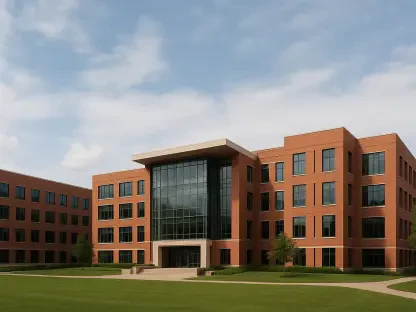

Artificial intelligence tools like ChatGPT have created a crisis of authenticity, making it increasingly difficult for educators to verify the origin of student assignments. This challenge has sparked a significant institutional shift at prestigious academies like Townsend Harris High School, where administrators are deliberately moving away from digital-first pedagogy in favor of traditional, handwritten methods of notetaking and assessment. This pivot serves as a reflective critique of the rapid digitization that occurred during the early 2020s, a period that fundamentally altered the dynamics of the American classroom. By reintroducing physical handwriting, educational leaders are not merely rejecting modern technology; they are actively working to safeguard the intrinsic value of a diploma and the cognitive development of their students. The current academic landscape in 2026 demands a return to verifiable intellectual labor to counter the rise of passive transcription and academic dishonesty that often accompanies constant access to internet-connected devices.
The Cognitive Connection: Why Handwriting Enhances Memory
Educational psychology increasingly highlights the profound neurological advantages that analog writing holds over digital typing in a learning environment. The physical act of forming letters by hand helps the brain synchronize various regions that are essential for deep learning and long-term memory retention. Unlike the rapid and often mindless transcription that occurs when a student types a lecture word-for-word on a laptop, handwriting requires a specific type of tactile feedback that engages the motor cortex. This engagement is crucial for the encoding of information, as it forces the brain to process the material more slowly and deliberately. Researchers have observed that students who utilize pens and notebooks demonstrate a superior ability to recall complex concepts days after the initial exposure. By slowing down the input process, handwriting effectively builds stronger neural pathways, ensuring that the information becomes a permanent part of the student’s knowledge base rather than a fleeting digital record.
Beyond the biological benefits, handwriting serves as a foundational tool for active synthesis, forcing students to engage in critical decision-making during every lecture. Because writing by hand is naturally slower than typing, it is impossible for a student to capture every single word spoken by an instructor. This limitation is actually a significant pedagogical strength, as it necessitates the real-time evaluation of information to determine what is truly important. Students must listen, interpret, and then summarize concepts in their own unique voices, a process known as generative notetaking. This mental labor stands in stark contrast to the verbatim copying typical of digital devices, which often leads to a shallow understanding of the subject matter. When students are required to translate thoughts onto paper, they are developing the analytical skills necessary to identify core themes and supporting evidence. This shift toward analog methods ensures that the classroom remains a space for intellectual processing rather than a simple data entry center.
Digital Plagiarism: Closing the Generative AI Gap
The pervasive threat of digital plagiarism has been significantly amplified by the ubiquity of generative artificial intelligence and constant classroom connectivity. In the modern educational environment, the line between a student’s original thought and machine-generated content has become increasingly blurred, creating an uphill battle for teachers tasked with authenticating student work. When assignments are completed at home on tablets or computers, the temptation to bypass the rigorous thought process by using AI tools becomes a substantial hurdle to academic integrity. Many students have fallen into a pattern of academic dependence, relying on external interpretation and automated summaries rather than engaging with the actual source material. This reliance undermines the ethical framework of the educational system, as grades often reflect a student’s ability to manipulate technology rather than their true intellectual capacity. Removing devices from the equation during the drafting phase is now seen as a necessary defense.
Addressing the AI loophole requires a fundamental change in how high schools approach the construction of essays and research projects. By transitioning to analog methods, institutions are eliminating the primary vehicle for academic dishonesty and restoring the focus on individual effort. The physical presence of a device in the classroom often acts as a persistent temptation for students to look up answers or seek unauthorized assistance, even during supervised study periods. When students are limited to using paper and pen, they are forced to rely entirely on their own preparation and the materials provided within the classroom. This change not only discourages cheating but also fosters a sense of pride in one’s own work, as students see the tangible results of their own labor on the page. The return to analog work is not simply a disciplinary measure; it is a way to ensure that the educational journey remains authentic. It reinforces the idea that the process of learning is just as important as the final product, helping to build a culture of honesty and self-reliance.
Classroom Assessments: Solving the Homework Dilemma
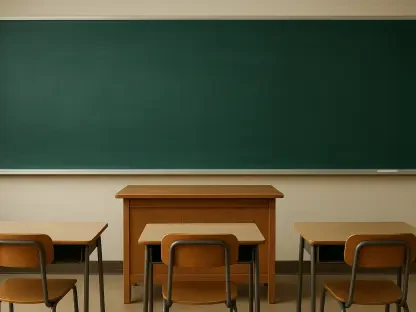
A growing consensus among educators suggests that the most effective way to combat digital plagiarism is to move high-stakes writing assignments back into the physical classroom. This strategy directly addresses the homework dilemma, where assignments submitted through online portals are most vulnerable to external interference or AI generation. By conducting essays and exams as handwritten, in-person tasks, schools can guarantee that the work produced is a direct reflection of a student’s unassisted capabilities. This shift turns the classroom into an analog sanctuary where original thought can flourish without the noise of the digital world. Teachers are once again able to observe the writing process in real-time, providing a level of oversight that is impossible to achieve in a remote or digital setting. This return to supervised, handwritten assessments ensures that the core of a student’s grade is based on their real-time intellectual agility and their ability to articulate complex ideas under specific constraints, which are essential skills for higher education.
While the shift toward analog methods is gaining momentum, it is important to distinguish between the rejection of technology and the strategic prioritization of learning objectives. Proponents of digital tools often point to the vast resources and personalized instruction that tablets can provide, which are undeniably valuable in a modern research context. However, the current trend suggests that while digital devices may have a place in the preparation phase, they should not necessarily be the primary tool for the final synthesis of knowledge. Schools are finding success in a hybrid model where students conduct research using digital databases but are required to maintain a physical notebook for their reflections and drafting. This approach ensures that students still have access to the information they need while protecting the integrity of the creative and analytical process. By establishing clear boundaries for when and how technology is used, educators can harness the benefits of the digital age without sacrificing the cognitive depth and ethical standards that define a traditional, high-quality education.
Educational Sovereignty: Reclaiming Independent Thought
The broader goal of reducing classroom technology is to restore the capacity for independent thought in a generation that has grown up in a state of constant digital mediation. When students are forced to develop ideas without the immediate crutch of a search engine or an AI assistant, they regain the ability to think critically and solve problems autonomously. This cognitive independence is vital for success in the professional world, where the ability to synthesize information and form unique perspectives is highly valued. The transition back to analog notetaking and handwriting is essentially a reclamation of the human element in education. It encourages students to be more present in the moment and more deeply engaged with their peers and instructors during the learning process. As schools move forward, the focus remains on equipping students with the mental discipline required to navigate a complex world. By fostering these skills in an analog environment, institutions are ensuring that their graduates are not just proficient users of technology, but are actually creative and critical thinkers.
The implementation of analog-first policies eventually proved that students were capable of achieving higher levels of synthesis when removed from the distractions of digital platforms. Educators determined that the most effective path toward restoring academic integrity involved designating specific deep-work zones where electronic devices were strictly prohibited during the initial ideation phase. This realization led to the development of curricula that prioritized physical documentation over digital submission for all major assessments. By establishing these clear boundaries, institutions successfully reinforced the idea that technology should serve only as a supplementary resource. Administrators emphasized that protecting the authenticity of the educational process required a return to verifiable, human-centric methods of evaluation. These combined efforts restored public confidence in high school assessments and ensured that students possessed the cognitive discipline necessary to navigate an automated landscape. The strategic move away from screens facilitated a renewed appreciation for the rigor of the writing process, ultimately securing the legacy of the academic journey.