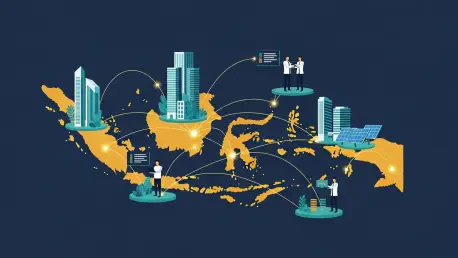

Indonesia currently stands at a historic crossroads where its vast demographic potential intersects with an era of unprecedented technological disruption and artificial intelligence evolution. This unique alignment of resources presents a rare window of opportunity for the Southeast Asian nation to solidify its position as a dominant force in the global digital economy. As the government steers the country toward the “Golden Indonesia 2045” vision, the focus has shifted from mere labor volume to the cultivation of high-caliber human capital. Achieving this milestone requires more than just infrastructure; it demands a radical overhaul of how the nation perceives and develops its workforce. Without a concerted effort to upskill millions of citizens, the country risks being left behind in a world where data and automation define the hierarchy of power. The stakes are incredibly high, as the gap between existing capabilities and the requirements of the labor market continues to widen. Prosperity hinges on turning a massive population into a skilled engine of innovation.
Navigating Economic Projections and Labor Challenges
The disparity between the nation’s lofty economic goals and its current technical capacity represents a significant hurdle for sustained development. While current projections suggest the domestic digital economy could reach a valuation of approximately six hundred billion dollars by 2030, the underlying human infrastructure remains surprisingly thin. Recent data indicates that individuals employed specifically in information and communication technology roles account for less than one percent of the total workforce. This shortage creates a bottleneck that limits the growth of local tech startups and hinders the digital transformation of traditional industries like manufacturing and agriculture. Without a dramatic influx of specialized professionals, the nation may find itself unable to fully capitalize on the massive shift toward cloud computing, cybersecurity, and data science. Closing this gap is not just an educational goal but a core economic imperative that requires immediate and massive intervention from both the public and private sectors to succeed.
Capitalizing on the Shrinking Demographic Window
Time is of the essence as the demographic window that has favored Indonesia for years begins to show signs of transition toward a more mature structure. Statistical analysis suggests that the proportion of the working-age population is reaching its zenith during the current period from 2026 to 2030. Following this peak, the nation will face a steady demographic shift where the elderly population grows faster than the youth entry rate, leading to a potential labor shortage in the decades leading to 2045. This reality necessitates an urgent focus on productivity per worker rather than total labor volume. By empowering the current workforce with advanced digital tools and automated workflows, the nation can ensure that economic output remains high even as the population begins to age. Failure to act during these high-participation years would result in a missed opportunity that might never return, leaving the country with a large but under-equipped labor force at a time when global competitors are rapidly automating their industries.
Transitioning From Passive Consumers to Creative Architects
Moving Indonesia from its current role as a major consumer of global technology to a proactive architect of digital solutions is a critical step for economic sovereignty. For too long, the local market has relied on platforms and hardware designed in foreign innovation hubs, which results in a significant outflow of capital and data. By incentivizing the development of local intellectual property and investing heavily in domestic research and development, the nation can capture a larger share of the technology value chain. This transition involves encouraging the workforce to build proprietary systems that address local challenges, from logistics in an archipelago to financial inclusion for the unbanked. When the labor force transitions into a role of digital creation, it fosters a more self-sustaining ecosystem that is less vulnerable to global supply chain disruptions or shifts in foreign licensing agreements. This strategic pivot ensures that the economic benefits of the digital revolution are retained within the country, fueling further internal growth.
Implementing Systemic Educational and Industrial Reform
In a landscape where artificial intelligence and machine learning are rapidly automating routine technical tasks, the definition of an essential worker is undergoing a fundamental transformation. Modern employers no longer prioritize rote memorization or basic coding skills; instead, they seek individuals who possess high levels of cognitive flexibility and analytical problem-solving abilities. Developing a workforce that can work alongside sophisticated algorithms requires a shift in focus toward soft skills, such as resilience and lifelong learning. This approach ensures that workers remain adaptable even as specific software platforms or programming languages become obsolete. By fostering an environment where curiosity and critical thinking are valued as much as technical expertise, the nation can build a resilient labor pool capable of navigating the unpredictable waves of technological change. This cultural shift toward agility is vital for maintaining a competitive edge in a global market where the only constant is the rapid evolution of digital tools.
Integrating Foundational Literacy Into Primary Education
The journey toward becoming a digital powerhouse starts in the classroom, where the foundational principles of technology and ethics must be integrated into the early childhood curriculum. Recent government initiatives have emphasized that digital literacy is no longer an optional extracurricular activity but a core competency on par with reading and mathematics. By introducing children to the basics of data privacy, cyber hygiene, and responsible online behavior, the education system creates a generation of citizens who are both tech-savvy and ethically grounded. These early interventions are crucial for building a safe and secure digital environment where innovation can thrive without compromising individual rights or national security. Furthermore, exposing students to the logic of algorithms and computational thinking at a young age demystifies technology, making it a natural part of their problem-solving toolkit. This bottom-up approach ensures that the talent pipeline is filled with individuals who possess the inherent curiosity and basic skills required for advanced training.
Strategic Priorities: Building a Sustainable Ecosystem
The objective of transforming the nation into a global digital hub was pursued through a series of strategic priorities that integrated education, policy, and industrial cooperation. To ensure long-term sustainability, the government established a national AI ethics board and expanded high-speed connectivity to rural school districts as essential phases of the developmental journey. Investment was channeled specifically into specialized research centers and funding mechanisms that supported local innovation while simultaneously protecting the digital rights of citizens. These efforts were complemented by a commitment to regional inclusivity, ensuring that digital opportunities were accessible to workers across the entire archipelago, thereby preventing a widening of the wealth gap. By focusing on high-value roles within the global supply chain, the nation successfully positioned itself as a creator of transformative technologies. This emphasis on adaptability provided a stable foundation for growth that remained resilient against market volatility.