
In the quiet, dusty corridors of primary schools across the Nakonde district, a young girl named Chanda represents thousands of children who enter the academic system with high hopes but very few of the necessary tools for success. While the Zambian government has successfully expanded access to free primary and secondary education, a profound and systemic readiness gap continues to undermine the potential of the country’s youngest citizens before they even finish their first week of Grade 1. For many children in rural provinces, the transition into formal schooling is not a gateway to opportunity but a sudden wall of academic alienation because they have never held a book or a pencil. Chanda’s experience of immediate confusion during her first literacy lesson is a microcosm of a larger national crisis where the absence of early childhood development programs sets children on a permanent downward trajectory. This deficit is most pronounced where poverty and isolation intersect, leaving a generation of learners to struggle with the basic cognitive demands of the modern curriculum.
The Linguistic Barrier: Navigating Language and Literacy
One of the most significant hurdles facing early learners in the Zambian education system is the complex linguistic landscape that requires children to navigate dozens of local dialects while being taught in English. Most households communicate primarily in native tongues, yet the official medium of instruction for government schools remains a language that many students have never heard before their first day of class. Veteran teachers frequently observe that students arrive in the classroom fluent only in their mother tongue, creating an immediate and often insurmountable wall between the teacher’s instructions and the student’s comprehension. This linguistic divide essentially forces a six-year-old to master a foreign language and grasp fundamental academic concepts like numeracy and literacy simultaneously, which is a daunting task for even the most gifted child. Without a pre-school environment that introduces English in a supportive way, the classroom becomes a place of silence and misunderstanding rather than active and healthy engagement.
This “double burden” of learning creates a cycle of academic exclusion that often has nothing to do with a child’s inherent cognitive ability or their desire to succeed in a professional environment. When a student struggles with basic mathematics or science in the early grades, it is frequently a symptom of a deeper lack of English literacy rather than a lack of subject-matter aptitude or intelligence. This linguistic barrier acts as a rigid gatekeeper, effectively sidelining students from lower-income backgrounds who did not receive early exposure to the national language through private pre-schools or educated parents. Consequently, these children remain perpetually behind their more privileged peers, and the gap only widens as the curriculum becomes more specialized and demanding in later years. Bridging this gap requires a structural shift in how language is introduced, ensuring that the mother tongue is used as a bridge to English proficiency rather than being treated as an obstacle that must be immediately abandoned.
Socioeconomic Hurdles: The Reality of Rural Early Education
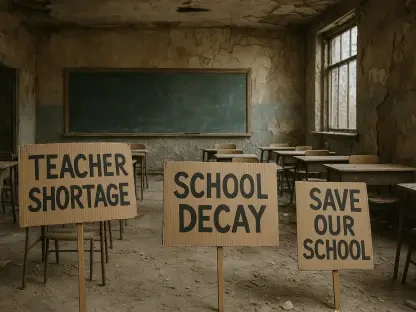
While the government has celebrated the implementation of free education policies, the foundation of the entire academic system remains critically neglected in rural and impoverished areas. Data suggests that as recently as the start of 2026, only about 37% of Year 1 learners had access to any form of early childhood education (ECE), leaving two-thirds of the population without “learning to learn” skills. This top-heavy investment strategy prioritizes secondary and tertiary achievements while ignoring the cognitive window where the most significant brain development occurs. The current infrastructure for ECE is remarkably insufficient, and the lack of government-funded pre-schools means that the earliest years of development are left to chance or private entities that are unaffordable for most families. Without a state-led mandate to integrate pre-schooling into the free education framework, the readiness gap will continue to function as a filter that disproportionately removes the most vulnerable children from the path of long-term academic success.
Socioeconomic realities further complicate the situation, as many parents in rural farming communities are “time-poor” and must prioritize subsistence labor over early educational engagement. There is also a recurring cycle of inherited educational deficits, where guardians who did not receive pre-schooling themselves may lack the resources or the confidence to foster a literacy-rich environment at home. In many traditional settings, a cultural belief persists that education is the sole responsibility of the school system, which overlooks the vital role that parental stimulation plays between birth and age five. This disconnect means that even when a school is available, the child may not be receiving the vocabulary building and sensory stimulation required to prepare the brain for the rigors of Grade 1. Addressing this issue requires more than just building classrooms; it necessitates a comprehensive community outreach strategy that empowers parents to become the first teachers their children encounter in life.
Strategic Interventions: Building a Resilient Educational Foundation
The ongoing failure to address the readiness gap results in a massive drain on national potential and hampers the economic growth that Zambia seeks to achieve in the global market. When children fall behind in their very first year, the disparity between high and low performers becomes an entrenched divide that leads to higher dropout rates and a workforce lacking advanced technical skills. This loss of human capital is not merely a social issue but an institutional failure that reduces the country’s overall competitiveness and increases the long-term cost of social safety nets and remedial programs. To secure a prosperous future starting from 2026 and extending into the next decade, the nation must treat early childhood education as a non-negotiable economic priority on par with infrastructure or healthcare. Investing in the youngest learners ensures that the billions of kwacha spent on secondary education are not wasted on a student body that was never properly prepared to handle the curriculum in the first place.
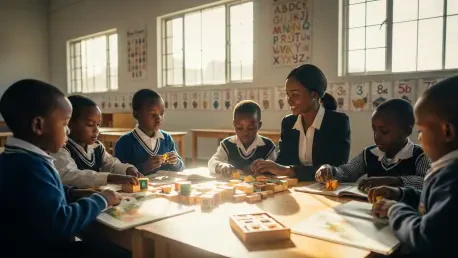
Effective solutions are already being piloted by organizations like the Zambia Open Community Schools and Lubuto Library Partners, which focus on creating inclusive and accessible learning spaces. These initiatives emphasize the development of bilingual instructional materials that help children transition from their mother tongue to English in a more natural and less intimidating manner. By utilizing digital learning aids and community-based libraries, these programs have demonstrated that it is possible to bridge the literacy gap even in areas with limited traditional resources or infrastructure. Furthermore, empowering local communities to take ownership of early childhood centers ensures that the programs are culturally relevant and sustainable over the long term. These models provide a blueprint for a national strategy that combines government oversight with the flexibility of community-led grassroots action. Focusing on these early years is the only way to ensure that every Zambian child has a fair and equitable start at the beginning of their academic journey.
Future Outlook: Actionable Steps for National Transformation
To move forward, the Zambian government formally integrated early childhood education into the national budget with the same level of commitment seen in primary and secondary sectors. This transition required a shift toward localized curriculum development where regional languages were used alongside English to build a solid foundation for literacy and cognitive growth. Training for teachers also needed to be reimagined to include specialized ECE certifications that focused on the unique developmental needs of children under the age of six. By establishing standardized benchmarks for school readiness, the Ministry of Education could better track which districts required additional resources and intervention before the school year began. These policy shifts were not just about adding more years of schooling but about ensuring the quality of the years already provided. The integration of technology, such as solar-powered tablets pre-loaded with local language literacy games, offered a scalable way to reach the most remote villages.
Ultimately, the path to bridging the readiness gap involved a multifaceted approach that combined legislative reform with a deep respect for the cultural and linguistic diversity of the nation. It was discovered that when communities were given the tools to support early learning, the academic outcomes for Grade 1 students improved significantly across all socioeconomic demographics. Parents were encouraged to participate in literacy circles, which broke the cycle of educational neglect and fostered a new national culture that valued cognitive development from the earliest possible age. The success of these initiatives proved that the readiness gap was not an inevitable consequence of poverty, but rather a solvable problem that required political will and strategic investment. By 2026, the focus shifted toward ensuring that no child was forced to play catch-up from their very first day of school, thereby securing the intellectual future of the country. This systemic overhaul transformed the educational landscape, ensuring the promise of free education was fulfilled.