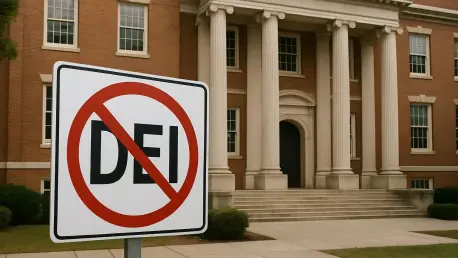

The fundamental pillars of the American academy are currently bracing for a regulatory earthquake as federal procurement rules move from technical bookkeeping to the front lines of the culture war. At the heart of this storm is a proposal by the General Services Administration (GSA) to overhaul the System for Award Management (SAM), the digital gateway through which every university must pass to secure federal research grants and student aid. This roundup examines how a seemingly minor administrative update has become a flashpoint for the future of diversity, equity, and inclusion (DEI) on campus.
Federal Funding and the New Battleground for Campus Diversity
The proposed regulatory shift centers on a new mandate for institutions to certify their adherence to specific executive interpretations of civil rights law. While universities have always agreed to follow federal statutes, this change introduces a requirement to align with “relevant executive orders” that target specific campus initiatives. This move transforms the SAM registry from a simple administrative database into a tool for ideological enforcement, forcing schools to choose between their inclusive programming and the financial lifeblood provided by the federal government.
Stakeholders view this as a pivotal moment because it links the survival of academic institutions to their willingness to adopt a specific administration’s view of the Constitution. For many colleges, federal grants account for a massive portion of their operating budgets. Consequently, the stakes are not merely academic; they are existential. The core conflict arises from the fact that non-binding guidance—traditionally meant to offer clarity—is being weaponized as a mandatory condition for financial stability, effectively bypassing the legislative process to reshape campus life.
Navigating the Legal and Administrative Minefield
The Weaponization of Non-Binding Federal Guidance
Academic associations are sounding the alarm over the elevation of Department of Justice “suggestions” to the status of enforceable law. Traditionally, guidance documents are intended to help institutions navigate complex civil rights landscape without the force of a formal statute. However, by requiring formal certification of compliance with these interpretations, the GSA proposal effectively creates new legal obligations. Critics argue this sidesteps the traditional lawmaking process, allowing the executive branch to dictate campus policy without congressional approval.
Moreover, this shift creates a profound chilling effect on legitimate equity programs. Many university leaders fear that even programs previously deemed lawful by the courts, such as specific mentorship initiatives or faculty recruitment strategies, could now be flagged as violations. The resulting atmosphere of uncertainty encourages self-censorship, as institutions may choose to dismantle successful diversity frameworks rather than risk the loss of federal funding through an “inaccurate” certification.
The Impossible Burden of Real-Time Legal Monitoring
The administrative reality of this proposal is equally daunting, as it requires schools to track a fluid and often contradictory legal landscape. With circuit courts across the country frequently issuing conflicting rulings on executive orders, university administrators are being forced to act as full-time legal analysts. The burden of maintaining real-time compliance is staggering, especially for smaller institutions that lack the legal staff to monitor every shift in federal interpretation.
This logistical nightmare forces a difficult risk assessment for every provost and dean. The trade-off between institutional autonomy and federal support has never been more lopsided. As schools struggle to interpret what constitutes a “relevant executive order” on any given day, the focus shifts away from education and research toward a defensive posture of constant legal surveillance. This environment threatens to stifle the very innovation that federal funding is intended to support.
The Shadow of the False Claims Act and Criminal Liability
The threat of legal action under the False Claims Act adds a layer of severe financial and criminal peril to the certification process. Because SAM registrations are signed under penalty of perjury, any statement later deemed “inaccurate” could trigger massive fines or even federal prosecution. This puts specific campus practices, such as race-conscious scholarships or identity-based spaces, directly under the federal microscope.
Institutional leaders are realizing that the price of dissent is remarkably high. The assumption that a college can easily balance its core values with federal demands is being shattered by the threat of litigation that could bankrupt even well-endowed universities. This high-stakes compliance environment ensures that the federal government maintains a direct hand in the internal policies of the American academy, fundamentally altering the relationship between the state and higher education.
A Coalition of Resistance: The Attorneys General Counter-Strike
In response to these pressures, a coalition of state attorneys general has launched a legal counter-strike based on three pillars of opposition. They argue that the GSA is violating the Paperwork Reduction Act by imposing redundant and burdensome requirements that serve no administrative purpose. Furthermore, they contend that the GSA has exceeded its statutory authority, asserting that a procurement portal cannot be used to unilaterally redefine civil rights law or target historically lawful DEI initiatives.
This clash between state and federal authority highlights a deep concern over due process. The attorneys general argue that the proposal is unconstitutionally vague, failing to provide institutions with clear notice of what conduct is actually prohibited. By leaving the definitions open to interpretation, the federal government creates a trap for the unwary, where the rules of the game can change without warning based on the political winds in Washington.
Strategic Responses and Safeguards for Institutional Integrity
The major risks to campus autonomy are now clearly defined, ranging from administrative overload to the threat of criminal prosecution. Institutions must begin documenting their lawful practices with rigorous detail while simultaneously engaging in collective legal challenges. Strengthening resilience in this environment requires a proactive approach that emphasizes transparency and the reinforcement of educational missions that are independent of shifting political mandates.
University leaders are encouraged to foster partnerships with legal experts to build frameworks that satisfy compliance without abandoning the inclusive excellence that defines modern higher education. By joining forces with national associations and state-level allies, colleges can create a unified front against what many perceive as a regulatory overreach. Resilience will depend on the ability to maintain institutional integrity while navigating the complex technicalities of federal procurement.
The Future of Inclusion in the Face of Regulatory Pressure
The tension between administrative procedure and ideological shifts in federal oversight reached a fever pitch, signaling a fundamental change in the relationship between the executive branch and the American academy. As institutions began to adapt, it became clear that protecting the integrity of the federal funding process was not just about money, but about the democratic future of education itself. Leaders recognized that while compliance was necessary, the long-term health of the university system depended on resisting the use of procurement rules as a tool for social engineering.
Moving forward, the focus shifted toward establishing permanent legislative protections that would insulate research and student aid from the volatility of executive orders. Stakeholders across the country started advocating for clearer definitions of civil rights compliance that could survive changes in administration. This collective effort aimed to ensure that the pursuit of knowledge remained the primary goal of the American university, unburdened by the threat of arbitrary federal interference. The resolution of this dispute eventually paved the way for a more stable and predictable framework for campus diversity and inclusion.