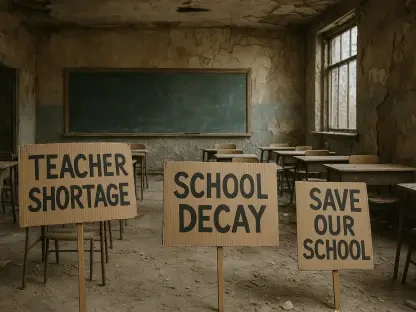

The American public education system has reached an unprecedented financial milestone as total annual expenditures for K-12 schooling officially climbed past the one-trillion-dollar mark for the first time in history. According to recent data released by the National Center for Education Statistics, the total investment for the current academic cycle reached approximately $1.014 trillion, signaling a significant shift in how the nation resources its youngest citizens. This massive figure is composed of $917 billion from state and local municipalities, bolstered by another $121.2 billion in federal contributions, representing a 2.3 percent increase after adjusting for inflation compared to the previous fiscal year. While these numbers reflect a deep societal commitment to the infrastructure of learning, they also highlight a growing complexity in administrative oversight and fiscal management. The sheer scale of this investment suggests that the conversation regarding school quality must now pivot toward efficiency and the direct impact of these vast sums on individual student outcomes.
The Disconnect: Reality Versus Public Perception
A profound gap exists between the actual financial health of the school system and the general understanding held by the average taxpayer, including many parents and educators. On a national average, the total revenue available per pupil has risen to $21,065, while the “current spending” category—which covers daily operations but excludes long-term capital construction and debt service—averages $17,644 per student. Despite these record-breaking numbers, survey data consistently indicates that most Americans estimate school spending to be roughly one-third of the actual amount being distributed. This cognitive dissonance creates a challenging environment for policy debates, as public support for increased funding often hinges on the mistaken belief that schools are operating under extreme scarcity. When citizens were presented with the actual expenditure data, their inclination to support further tax increases dropped significantly, revealing that current advocacy efforts often rely on a widespread lack of financial transparency.
This lack of awareness is further complicated by the extreme geographic variation in how resources are allocated across the different states and jurisdictions within the country. While the national average provides a broad snapshot, it masks the reality that areas like the District of Columbia, New York, and Vermont are spending well over $30,000 per student annually. In stark contrast, states such as Utah and Idaho operate with budgets that fall below $12,000 per student, illustrating a fragmented landscape where the cost of education is influenced heavily by local economic conditions and political priorities. Such disparities often lead to national debates that fail to account for the specific needs of individual regions, as a funding crisis in one state might look like an administrative surplus in another. Understanding these nuances is essential for a more honest dialogue about whether the trillion-dollar investment is being distributed equitably or if the current system primarily rewards those already in high-tax jurisdictions.
Fiscal Accountability: Toward a More Transparent Future
Reframing education spending through the lens of a typical classroom provides a much clearer picture of the resources currently managed by local school districts and administrators. When the current average spending is applied to a standard classroom of twenty students, the total annual operating budget for that single room equates to approximately $340,000. This perspective shifts the burden of proof from those asking for more money to those responsible for managing existing allocations, as the public begins to question how such substantial sums are partitioned between teacher salaries, administrative overhead, and instructional technology. By focusing on resource allocation rather than just the total dollar amount, communities can begin to hold their local boards of education accountable for the specific ways these funds are utilized. This approach naturally encourages a shift toward evidence-based spending where every dollar is tracked to ensure it directly contributes to academic achievement and student well-being.
The realization of this trillion-dollar threshold prompted a necessary reevaluation of how education budgets were communicated to the public to ensure long-term sustainability. Policy experts advocated for standardized reporting tools that allowed taxpayers to see exactly where their contributions were being directed within the district hierarchy. It was determined that increasing transparency was the most effective way to restore trust in the public school system and to justify the continued high levels of investment from both state and federal sources. Moving forward, the focus moved away from simple requests for more funding and toward rigorous analysis of return on investment, ensuring that the highest possible share of these resources reached the classroom. By prioritizing financial literacy among stakeholders, the education system began to align its massive spending power with the specific goals of improving literacy rates and workforce readiness. This shift ensured that the historic investment served as a foundation for genuine reform rather than just a growing administrative burden.