
Starting the decade-long journey to revitalize an urban educational landscape requires a level of fiscal courage that few major metropolitan districts have demonstrated in the current economic climate. The School District of Philadelphia’s Board of Education recently greenlit a massive $3 billion facilities plan that seeks to overhaul a crumbling physical infrastructure while navigating the sensitive political waters of school closures. This sweeping initiative, which was narrowly approved in a six-to-three vote, outlines a ten-year strategy starting from the 2026-2027 academic year to modernize classrooms and consolidate resources. While the headline figure is staggering, the core of the proposal involves the immediate shuttering of seventeen educational facilities to address a widening gap between building capacity and actual student enrollment. Beyond the closures, the board intends to modernize 169 campuses, ensuring that the remaining physical structures meet modern safety standards and provide a conducive environment for learning in a rapidly changing world.
The Strategic Shift: Addressing Infrastructure Decay
Superintendent Tony Watlington has positioned this aggressive restructuring as an essential response to the systemic deterioration that has plagued Philadelphia’s schools for decades. The district faces a complex reality where underutilized buildings drain precious financial resources that could otherwise be spent on extracurricular activities and specialized academic programs. Data indicates that while total citywide enrollment showed a slight uptick recently, the traditional public school sector experienced a twelve percent decline over the last decade. This shift is largely attributed to the meteoric rise of cyber charter schools, which saw their enrollment numbers surge by more than 2,500 percent during that same timeframe. By aligning the district’s physical footprint with contemporary enrollment patterns, officials hope to create a more equitable distribution of resources, providing every student with access to high-quality facilities regardless of their specific neighborhood or socioeconomic background.
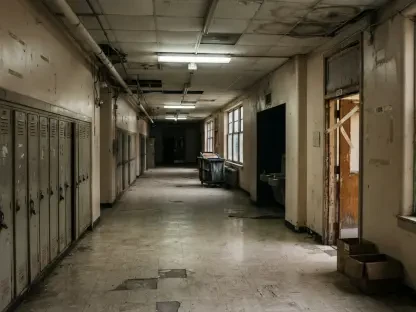
Modernizing nearly 170 campuses involves a technical and logistical undertaking of unprecedented scale for the city, requiring a mix of state-of-the-art climate control systems and digital infrastructure updates. Many of the current buildings lack the wiring necessary for high-speed internet or the ventilation required for health safety, issues that became glaringly apparent during recent heatwaves and public health crises. The plan also includes the co-location of six schools, a strategy designed to share administrative costs and specialized spaces like laboratories and gymnasiums between smaller student bodies. This consolidation reflects a pragmatic acknowledgment that keeping half-empty buildings operational is no longer financially sustainable. Educators argue that modern classrooms are not just about aesthetics; they are fundamental tools for closing the achievement gap. By investing in physical spaces that mirror professional environments, the district intends to better prepare students for the technical demands of the modern workforce.
Community Conflict: Weighing Fiscal Reality Against Local Identity
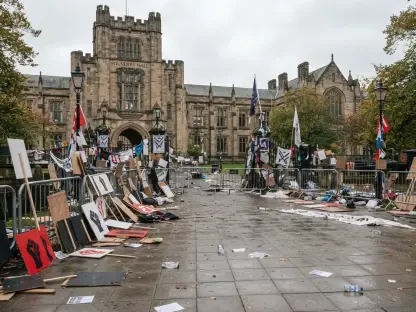
Despite the administrative justifications, the proposal has encountered a wall of community resistance, highlighted by protests that forced recent board meetings to transition from in-person to virtual formats. Critics point to the traumatic legacy of the 2013 mass school closures, which many residents believe caused a downward spiral in neighborhood stability and student retention. Arthur Steinberg, president of the Philadelphia Federation of Teachers, has been a vocal opponent, suggesting that the current plan risks repeating historical mistakes that alienated families and staff. There is a deep-seated fear that closing a school does not just remove a building but tears a hole in the social fabric of the community. Opponents argue that the district should instead focus on creative ways to repurpose underused spaces for community services rather than abandoning them entirely. This tension highlights the difficult balance between the cold logic of fiscal solvency and the emotional value people place on local institutions.
Funding for this multi-billion-dollar endeavor rests on a precarious mix of public tax revenue and anticipated contributions from philanthropic organizations. The district has committed $1.1 billion from its own long-term capital budget, leaving a $1.9 billion gap that must be filled through external partnerships and state-level grants. This reliance on private-sector generosity introduces a level of uncertainty that makes some stakeholders nervous about the project’s long-term viability. However, education finance experts suggest that the alternative to this plan—continued inaction—could lead to a complete depletion of operational funds or a state-mandated takeover. Across the country, major urban districts are facing similar crossroads as enrollment drops and legacy infrastructure costs skyrocket. Philadelphia’s move is seen as a high-stakes experiment in whether a city can proactively shrink its physical footprint to save its educational soul. Success will depend on the district’s ability to maintain public trust while managing such a massive financial burden.
Future-Proofing Education: Navigating the Path to Long-Term Stability
The Philadelphia Board of Education’s decision marked a definitive turning point in the city’s approach to urban school management and fiscal responsibility. Leaders recognized that maintaining the status quo was no longer an option if the district wanted to provide a competitive education in a landscape dominated by diverse school choice. Moving forward, the focus shifted toward transparent implementation and consistent community engagement to ensure that the transition did not disproportionately impact vulnerable populations. Establishing a rigorous oversight committee became a vital next step to track the allocation of the $1.9 billion in external funding and to hold contractors accountable for modernization timelines. District officials also began exploring adaptive reuse projects for the seventeen closed buildings, transforming them into community hubs or affordable housing to mitigate neighborhood blight. By treating the facilities plan as a dynamic process rather than a static document, the city moved to secure its academic future while respecting its complex social history.