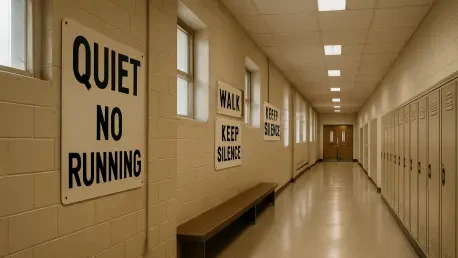

The escalating confrontation between rigid disciplinary frameworks in Cornwall’s secondary schools and the mental health of the student population has reached a significant turning point as local authorities begin a comprehensive review of current practices. Recently, Cornwall Council moved to address what many local representatives and families describe as “draconian” behavior policies implemented by several multi-academy trusts (MATs), including entities like the Athena Learning Trust. These organizations oversee prominent institutions such as Launceston College and Camborne Science and International Academy, where “zero-tolerance” environments have become the standard. The central question of this inquiry is whether these high-control settings truly foster academic excellence or if they inadvertently suppress the natural development of young people. By prioritizing strict compliance over individual student needs, these institutions may be contributing to a surge in stress-related issues. The council’s decision to intervene marks a pivotal shift in the regional approach to educational governance, seeking to balance the necessity of school order with the fundamental psychological well-being of the youth.
The Structural Gap: Addressing the Lack of Local Authority
A significant administrative obstacle identified during recent proceedings is the disconnect between local democratically elected officials and the governance of academy trusts. Because these trusts operate under the direct oversight of central government regulations rather than local education departments, Cornwall Council currently lacks the statutory power to force immediate policy changes within individual schools. This specific bureaucratic structure has historically left the council in an advisory capacity, creating a sense of frustration among parents who feel their local representatives are unable to intervene in cases of perceived injustice. To navigate this challenge, the council recently voted to establish a formal advisory group tasked with investigating school environments and compiling a detailed report for the Education Secretary. This move is a strategic effort to reclaim a degree of local accountability by using collective advocacy to influence national policy and ensure that the unique challenges faced by Cornish families are recognized at the highest levels of government.
The lack of direct local oversight has fostered an environment where a “one-size-fits-all” disciplinary model can persist despite growing community opposition. This model, while intended to drive up standards and provide consistency, often lacks the flexibility required to address the diverse social and emotional needs of a rural student population. Some council members argue that the insulation of academy trusts from local feedback has led to a transparency crisis, where parents feel their concerns regarding isolation rooms and excessive punishments are disregarded by distant boards of directors. The ongoing review aims to scrutinize these internal governance structures to determine if they are sufficiently responsive to the communities they serve. By examining how these trusts interpret national guidelines, the council hopes to create a more integrated system where the institutional goals of an academy do not supersede the collective welfare of the local population. This initiative represents a vital step toward reconciling the autonomy of academy trusts with the democratic expectations of the public.
Punitive Environments: The Controversy of Isolation and Compliance
At the core of the community’s grievance is the disproportionate nature of punishments administered for minor infractions that occur during the standard school day. Reports from various institutions indicate that students are frequently placed in “reflection” or “reset” rooms—often described as isolation environments—for issues as trivial as running out of ink, glancing out of a window, or failing to maintain a perfectly tucked-in shirt. Critics of these methods argue that such extreme focus on minute technical details shifts the educational priority from learning to total behavioral submission. These isolation rooms, where students may sit for hours without active instruction, are increasingly viewed as counterproductive spaces that prioritize attendance metrics over actual academic engagement. For many families, this atmosphere resembles a “boot camp” rather than a place of intellectual growth, leading to a situation where children are more afraid of making a minor error than they are motivated to learn. This rigid approach risks alienating students and creating a lasting negative association with the formal education system.
The consequence of this high-pressure environment is increasingly visible in the rising trend of Elective Home Education (EHE) throughout the region. A growing number of families are choosing to withdraw their children from state-funded secondary schools, citing the need to protect their children’s mental health from what they perceive as a toxic school culture. This exodus suggests that for many, the current state of school discipline has reached a breaking point where the perceived harm of staying within the system outweighs the benefits of traditional schooling. Parents who have opted for homeschooling frequently point to the lack of flexible alternatives within the academy structure, noting that the “attendance at all costs” mentality often forces students to remain in school even when they are emotionally unable to function. By exploring these trends, the council’s review will attempt to quantify the relationship between strict disciplinary policies and the decline in school retention rates. Understanding this correlation is essential for developing a more inclusive educational strategy that supports student retention while maintaining an orderly and safe learning environment.
Future Considerations: Realigning Educational Values
The discourse surrounding the council’s review is characterized by a sharp divide between traditionalist views on discipline and more modern, psychologically informed approaches. Proponents of strict frameworks, including some educators and community members, argue that rigorous boundaries are essential for preparing children for the demands of the adult workforce. From this perspective, teaching students the importance of punctuality, professional appearance, and strict adherence to rules provides a stable foundation that benefits the majority of the student body. They contend that a structured environment minimizes distractions and allows teachers to focus on curriculum delivery rather than constant behavioral management. Furthermore, some defenders of the current system suggest that recent declines in student mental health are more closely linked to external factors such as social media influence and a general lack of parental responsibility, rather than school policies themselves. They believe that weakening school rules would only lead to a breakdown in order, ultimately hurting the very students the council intends to protect.
The formal review process initiated by the council concluded that the status quo was unsustainable for the long-term health of the community. In response to the testimonies from distressed families and the data regarding rising home education rates, officials moved to develop a set of recommended guidelines for behavior management that emphasize restoration over isolation. These recommendations urged schools to implement “trauma-informed” practices and to limit the use of reset rooms to extreme cases rather than routine infractions. Furthermore, the council established a permanent liaison role to facilitate ongoing dialogue between multi-academy trust leaders and parental advocacy groups. This proactive stance was designed to ensure that future policies are developed with a greater degree of empathy and awareness of the diverse challenges faced by modern adolescents. By taking these concrete steps, the local government aimed to restore trust in the education system and ensure that the pursuit of academic excellence does not come at the cost of a child’s spirit. The transition toward a more balanced approach served as a vital acknowledgment that the ultimate success of a school is measured by the well-being of its students.