
Deeply ingrained beliefs regarding self-reliance often lead university students to view seeking help as an admission of personal weakness or academic failure. In the modern educational landscape of 2026, universities have invested unprecedented capital into mental health initiatives, advanced tutoring centers, and multifaceted financial aid departments. Despite these efforts, a striking paradox remains: as resources expand, the psychological and administrative hurdles preventing students from crossing the threshold into these offices seem to grow more complex. This phenomenon is not merely a matter of awareness, but a deeply rooted issue involving social identity, institutional trust, and the fundamental ways in which higher education is marketed to young adults. The contemporary student often navigates a high-pressure environment where the cost of perceived failure is high, and the act of asking for help is frequently interpreted as a deviation from the expected path of total independence. Consequently, a significant portion of the student body suffers in silence, balancing the weight of academic rigor and personal struggle against the fear of institutional judgment or social ostracization.
Psychological Barriers: The Weight of Stigma
The Conflict: Self-Reliance and the Burden of Independence
The contemporary university experience is often framed as the ultimate test of an individual’s transition into adulthood, where success is equated with a solitary struggle toward mastery. Many students arrive on campus with a narrative firmly established by their secondary education and social circles: that true intelligence and resilience are demonstrated through the ability to overcome obstacles without external intervention. This internalized pressure creates a psychological barrier where the student views the utilization of a tutoring center or a counselor as a signal that they have failed to meet the basic requirements of adulthood. This “self-reliance” myth is particularly damaging because it treats the academic journey as a zero-sum game, where those who require assistance are seen as fundamentally less capable than those who do not. The irony of this situation is that the very skills required for academic excellence—collaboration and resource management—are the ones being suppressed by this outdated focus on rugged individualism.
Furthermore, the transition from the highly structured and monitored environments of previous schooling to the radical autonomy of the 2026 university setting often exacerbates these feelings of inadequacy. In high school, students are frequently surrounded by a safety net of teachers and parents who proactively offer help, but in the university environment, the burden of initiation rests entirely on the student. For someone who has spent eighteen years being praised for their independence, the shift toward needing help feels like a regression. They may experience a sense of cognitive dissonance, where their identity as a “high achiever” clashes with their current reality of being overwhelmed. Instead of seeing campus support as a tool for optimization, they see it as a crutch, leading them to delay seeking help until the situation has escalated beyond their control, which only serves to reinforce the negative association between support and crisis.
Professional Consequences: The Fear of Labeling and Repercussions
Beyond the internal struggle with self-identity, students face very real fears regarding how their help-seeking behavior might be documented and interpreted by future employers or licensing boards. This is especially prevalent among students in high-stakes pre-professional tracks such as law, medicine, and engineering, where the competitive atmosphere is thick with rumors about the impact of mental health records on professional standing. There is a persistent, though often unfounded, belief that a history of seeking psychological counseling will be flagged during a background check or disclosed during a licensure process, potentially barring a student from their chosen career. In an era where data privacy is a constant concern, many students are wary of any institutional record that might suggest they were once “unstable” or “unable to cope,” preferring to manage their distress privately rather than risk a permanent digital footprint that could follow them into their professional lives.
This fear of labeling extends to the social and academic hierarchy within the university itself. Students often worry that if their professors or peers discover they are utilizing support services, they will be treated with a subtle form of condescension or that their academic achievements will be viewed as less legitimate. This fear is not entirely baseless; despite massive public awareness campaigns, the stigma surrounding mental health and learning disabilities remains a potent force on many campuses. Students may fear being labeled as “difficult” or “high maintenance” by departmental staff, which they worry could lead to being passed over for research opportunities, internships, or glowing letters of recommendation. The result is a culture of secrecy where the students who might benefit the most from campus resources are the ones most likely to hide their struggles, effectively opting out of the very support systems designed to ensure their success and long-term well-being.
Relative Suffering: The “Not Sick Enough” Phenomenon
A recurring theme in modern student discourse is the tendency to minimize personal struggles through a process of comparative suffering. Many students look at the limited capacity of campus counseling centers or the long lines at academic help desks and decide that their problems do not warrant a share of those resources. They convince themselves that because they are not experiencing a total psychological breakdown or failing every single class, they should step aside for peers who are in “real” trouble. This gatekeeping of care is often fueled by social media, where students see extreme examples of trauma and hardship, leading them to feel that their own anxiety, loneliness, or academic confusion is trivial by comparison. This internal minimization prevents students from engaging with preventative care, which is widely recognized as the most effective way to manage the stressors of university life before they transform into life-altering crises.
This minimization of need is also a defensive mechanism against the vulnerability required to seek help. By telling themselves they are “not sick enough,” students can avoid the potentially uncomfortable experience of sitting across from a professional and articulating their needs. It allows them to maintain a facade of normalcy while their academic performance and mental state slowly deteriorate. This phenomenon is particularly dangerous because it ignores the reality that support services are most effective when utilized as a form of maintenance rather than an emergency intervention. When students wait until they are in an undeniable state of emergency to reach out, they often find that the resources they need are overextended, further reinforcing the idea that help is only for those at the absolute brink. Breaking this cycle requires a fundamental shift in how universities communicate the purpose of their services, moving away from crisis-oriented language toward a model of holistic student development.
Structural Challenges: Administrative and Navigational Hurdles
Systemic Friction: Administrative Complexity and Red Tape
Even when a student successfully overcomes the psychological barriers to seeking help, they are frequently met with a maze of administrative requirements that can discourage even the most determined individual. Universities are notoriously bureaucratic, often operating as a collection of siloed departments that do not always communicate effectively with one another. A student looking for academic accommodations might be sent from the registrar to the dean of students, only to be told they need a specific medical sign-off from a health center that is fully booked for weeks. For a student who is already operating under a heavy cognitive load due to stress or exhaustion, the requirement to navigate a complex web of forms, portals, and conflicting instructions can feel like an insurmountable barrier. This administrative friction acts as a filter, where only the students with the most “navigational capital” or parental support are able to access the help they need.
The digital landscape of 2026 has, in some ways, made this navigation more difficult rather than easier. While many institutions have moved their services online, the proliferation of disparate apps, websites, and login portals has created a fragmented user experience. A student might have to use one platform for tutoring, another for mental health, and a third for financial aid advising, each with its own set of rules and communication styles. When these systems are not integrated, the burden of coordinating care falls entirely on the student. If a link is broken, a form is confusingly worded, or an automated email goes to a spam folder, the student may perceive this as a sign that the university is not truly interested in their success. This “administrative runaround” is not just a minor inconvenience; it is a significant structural obstacle that reinforces the student’s hesitation and contributes to a feeling of institutional abandonment.
Resource Gaps: Scarcity and Extended Wait Times
One of the most persistent complaints among students in the 2026 academic landscape is the significant gap between the demand for support and the institutional supply of resources. While campus marketing materials often highlight a wide array of services, the reality on the ground is frequently defined by scarcity. Long wait times for counseling appointments, which can sometimes stretch into several weeks or even months during peak periods like midterms and finals, send a clear message to students that the university is unprepared to handle their needs. When a student finally reaches the point where they are willing to ask for help, being told that the first available slot is a month away can be a devastating blow. This delay often results in a “why bother” attitude, where students decide that the effort required to secure an appointment is not worth the eventual payoff, especially if their need is immediate.
This scarcity of resources is not limited to mental health services; it also affects academic support such as writing centers and subject-specific tutoring. In many cases, these centers operate on a first-come, first-served basis or have limited hours that do not accommodate the large numbers of students requiring assistance. When a student sees a line out the door or a fully booked online calendar, they may internalize the idea that the support is not meant for them. This creates a high-barrier environment where only those who are proactive enough to book weeks in advance can get help, leaving those who experience sudden or unexpected challenges without a safety net. The institutional failure to scale these services to meet the actual needs of the student body undermines the credibility of the university’s commitment to student success, turning support services into a source of frustration rather than a source of relief.
Temporal Inaccessibility: Scheduling and Operational Hours
The standard operating hours of university support services often reflect an outdated model of the “traditional” student—one who lives on campus and has no responsibilities outside of their coursework. However, the reality of 2026 is that a vast number of students are juggling full-time or part-time employment, family caregiving duties, and long commutes. When counseling centers, tutoring labs, and financial aid offices operate strictly from nine to five, they effectively exclude a significant portion of the population they are meant to serve. For a student who works an evening shift or has classes all day, the lack of evening or weekend availability is a physical barrier that no amount of psychological readiness can overcome. This mismatch between institutional hours and student realities suggests a lack of awareness regarding the lived experiences of modern students, particularly those from lower socioeconomic backgrounds.
This temporal inaccessibility is often compounded by the location of these services. If a student only has a small window of time between a lab and a shift at work, they cannot afford to spend twenty minutes walking across a sprawling campus to reach a centralized support hub. The concentration of resources in a single administrative building may be efficient for the university, but it is highly inefficient for the student. Without flexible scheduling or decentralized locations, the institution inadvertently prioritizes the convenience of the staff over the needs of the students. To truly bridge the gap between availability and usage, universities must rethink their operational models, moving toward a 24/7 support framework that utilizes both physical and digital resources to meet students whenever and wherever they are. Failing to do so ensures that the students with the most complex lives remain the ones with the least access to support.
Cultural Nuances: Diversity and Inclusion in Support Services
The Representation Gap: Staffing and Lived Experience
A significant factor in student hesitation is the perceived lack of cultural competency and representation among the staff providing support services. Students are far more likely to engage with a counselor, advisor, or tutor if they believe that person understands their background, values, and specific challenges. In many institutions, the demographics of the support staff do not reflect the diversity of the student body, particularly in terms of race, ethnicity, sexual orientation, and socioeconomic status. For a student from a marginalized community, walking into an office where no one looks like them or shares their lived experience can be an isolating and intimidating experience. They may fear that their struggles will be misunderstood, dismissed, or viewed through a biased lens, which leads them to conclude that the support service is not a “safe space” for them to be vulnerable.
This representation gap is particularly acute for first-generation college students, who are navigating an environment that is often entirely foreign to their families. If the staff members in support offices use academic jargon or assume a level of institutional knowledge that the student does not possess, it reinforces the student’s feeling that they do not belong. For these students, the act of seeking help is not just about solving a specific problem; it is about finding a guide who can help them decode the hidden curriculum of the university. When that guide is missing, or when the existing staff seems disconnected from the student’s reality, the student is likely to retreat. Building a diverse and culturally competent workforce is not just a matter of institutional policy; it is a fundamental requirement for creating a support system that is truly accessible to all students, regardless of their starting point.
Cultural Barriers: Family Expectations and the Privacy of Struggle
In many cultural contexts, the idea of discussing personal or academic problems with a stranger is fundamentally at odds with deeply held values regarding family loyalty and privacy. For many international students and those from collectivist cultures, an academic or mental health struggle is often viewed as a reflection on the entire family rather than just the individual. There may be an immense pressure to “save face” and maintain the appearance of success at all costs, as seeking external help could be seen as an admission that the family has failed to provide adequate support. This cultural expectation of privacy creates a profound internal conflict for the student, who may feel that they are betraying their heritage or their parents’ sacrifices by reaching out to a campus professional. These students often suffer in silence, fearing that any disclosure will lead to shame or disappointment within their home communities.
Furthermore, the “model minority” myth continues to exert a powerful and damaging influence on the behavior of many students, particularly those of Asian descent. This stereotype suggests that these students are naturally high-achieving and do not experience the same struggles as their peers, creating an environment where they feel they must suppress their needs to live up to the expectation. When institutional outreach fails to acknowledge these specific cultural pressures, it leaves many students without a clear path to help. Generic messaging about “wellness” often falls flat when it does not address the nuance of cultural shame or the specific ways in which different communities conceptualize mental health and academic achievement. To be effective, campus support must be tailored to these diverse perspectives, providing pathways that allow students to seek help in ways that are respectful of their cultural identities and family dynamics.
Communication Failures: Information Overload and Messaging
The Signal-to-Noise Ratio: Information Fatigue
In the hyper-connected campus environment of 2026, students are subjected to a constant barrage of information from every direction. Between university-wide emails, social media notifications, flyers in the student union, and announcements on learning management systems, the sheer volume of content is overwhelming. In this noisy environment, critical information about support services often gets buried or ignored. This is known as information fatigue, where students become so desensitized to institutional communication that they stop paying attention to it altogether. When a student is in a state of stress, their ability to filter through this noise and find specific details about how to access a tutor or a counselor is significantly diminished. The result is a paradox where the university believes it is over-communicating its resources, while the students remain unaware of how to actually use them.
The problem is not just the quantity of information, but also the delivery methods. Many institutions still rely on lengthy emails or static websites that are difficult to navigate on a mobile device, which is the primary tool for most students. If a student cannot find the answer to a question in a few clicks, they are likely to move on. Moreover, the timing of these communications is often poorly synchronized with the student’s actual needs. Bombarding students with information about counseling services during orientation, when they are already overwhelmed by new experiences, is far less effective than reaching out during the high-stress weeks of the semester. To cut through the noise, universities must move toward a more targeted and personalized communication strategy that delivers the right information to the right student at the precisely right moment, rather than relying on broad, impersonal broadcasts.
The Problem of Tone: Clinical and Impersonal Outreach
The tone and language used in university outreach can also act as a significant deterrent to students who are seeking a human connection. Many “wellness” campaigns in 2026 employ a clinical, corporate-style language that feels sterile and disconnected from the student’s actual emotional state. When support is framed as a series of “interventions,” “assessments,” or “resources,” it can feel like the university is treating the student as a problem to be solved rather than a person to be supported. This impersonal tone can be particularly off-putting for students who are feeling lonely or vulnerable; they are not looking for a “service provider,” but for a genuine connection with someone who cares about their well-being. When the messaging feels like it was written by a marketing firm or a legal department, it fails to build the trust necessary for a student to reach out.
Furthermore, there is a tendency for institutional outreach to focus heavily on “crisis” language, which inadvertently reinforces the idea that support is only for extreme situations. If all the flyers for the counseling center feature people in obvious distress, a student who is “only” feeling a bit overwhelmed or sad may feel that they do not qualify for those services. This focus on the pathological rather than the proactive creates a narrow definition of who is entitled to help. To reach a broader audience, universities need to adopt a more conversational and empathetic tone in their communication. By framing support as a natural and positive part of the educational journey—something that “everyone uses” to reach their full potential—they can dismantle the clinical barriers that keep students at a distance. The messaging should emphasize the human element of the support staff, showcasing them as approachable allies rather than distant administrators.
Economic Factors: Time and Financial Constraints
The Invisible Cost: Opportunity Cost of Seeking Help
For a large segment of the student population in 2026, time is the most valuable and scarce resource they possess. Students who are working multiple jobs to cover rising tuition costs and living expenses must make difficult decisions about how to allocate every hour of their day. In this context, the act of seeking help is not just an emotional or academic decision; it is an economic one. Spending an hour in a tutoring session or a counseling appointment represents an hour that the student is not earning wages or focusing on other critical assignments. This “opportunity cost” is a major factor in the hesitation of low-income students, who may feel they cannot afford the luxury of taking time for their mental health or academic improvement if it does not have an immediate and tangible financial return.
This economic pressure often leads to a short-term survival mindset, where students prioritize their immediate obligations over long-term wellness or academic growth. If a university does not make the benefit of its support services clear and immediate, these students are likely to view them as a distraction from the urgent task of making ends meet. Furthermore, the lack of compensation for the time spent in these services can feel like a penalty for being in need. Some innovative institutions have begun to address this by integrating support services into paid work-study positions or offering academic credit for wellness-related activities, acknowledging that for many students, “free” services are only truly free if they don’t cost the student their livelihood. Without such interventions, the most economically vulnerable students will continue to be the ones who are least able to access the support they desperately need.
Financial Uncertainty: Fear of Hidden Costs
Even when campus services are advertised as free, many students remain hesitant due to a deep-seated fear of hidden costs and unexpected financial burdens. This skepticism is often rooted in previous experiences with the American healthcare system, where “transparent” pricing is notoriously rare. Students may worry that an initial free consultation at a campus clinic will lead to expensive referrals to outside specialists, costly diagnostic testing for learning disabilities, or long-term therapy that is not covered by their insurance. For a student living on a razor-thin budget, the mere possibility of an unexpected bill is enough to prevent them from taking the first step toward seeking help. Without explicit, upfront information about exactly what is covered and what might incur a cost, students will often choose the “safe” path of avoiding the service altogether.
This fear of financial repercussion is compounded by the confusion surrounding student health insurance plans. Many students do not fully understand the nuances of their coverage and are wary of using services that might trigger a claim or a co-pay they cannot afford. Furthermore, for students who are still on their parents’ insurance, there is the added fear of a “breath of confidentiality” through the insurance statement, which might reveal to their family that they are seeking mental health support. This intersection of financial and privacy concerns creates a significant barrier. To overcome this, universities must provide radical transparency in their financial communication, offering clear, plain-language guides on the costs of care and providing “no-cost” pathways for students who are uninsured or underinsured. Ensuring that students feel financially safe is a prerequisite for ensuring they feel psychologically safe enough to ask for help.
Strategic Solutions: Normalizing and Integrating Support
From Crisis to Maintenance: Normalizing the Support Experience
To effectively reduce student hesitation, institutions must shift their framing of support services from reactive crisis management to proactive personal maintenance. In the most successful campus models of 2026, help-seeking is integrated into the standard student experience, much like using the campus gym or the library. This shift is achieved by making support services highly visible and routine for all students, regardless of their academic standing or mental health status. For example, some universities have implemented “wellness check-ins” as a requirement for all first-year students, which removes the stigma of initiation. When everyone is expected to engage with a mentor or a counselor, the act of doing so no longer signals that something is “wrong.” It becomes a tool for optimization and growth rather than a remedy for failure.
This normalization also involves rebranding academic support centers as “centers for excellence” or “success hubs” that cater to high achievers as much as to those who are struggling. By highlighting stories of successful students who utilize these resources to push their grades from a B to an A, universities can dismantle the idea that tutoring is only for those who are failing. This “high-performance” framing appeals to the competitive nature of modern students and aligns help-seeking with their existing goals of success and achievement. When support is viewed as a competitive advantage rather than a shameful necessity, the psychological barrier to entry is significantly lowered. The goal was to create a campus culture where the use of resources was the norm, and those who did not use them were seen as the ones missing out on a valuable component of their education.
Seamless Navigation: The “No Wrong Door” Policy
A critical strategy for overcoming structural barriers is the implementation of a “No Wrong Door” policy, which ensures that any faculty or staff member a student approaches can provide an immediate and “warm hand-off” to the appropriate service. This approach recognizes that students are most likely to seek help from the people they already trust—their professors, resident advisors, or club coaches—rather than from an anonymous administrative office. By training all campus employees to recognize the signs of struggle and to know exactly how to guide a student to help, the university creates a seamless web of support. This eliminates the “administrative runaround” and ensures that the student’s initial moment of courage is not wasted by being told they are in the “wrong place.”
A “warm hand-off” is more than just a referral; it involves the staff member actively helping the student make the connection, such as walking them to the office or staying on the phone while an appointment is booked. This level of support reduces the cognitive and emotional load on the student and provides a sense of continuity in their care. In the digital realm, this means having integrated systems where a professor can flag a concern in a central portal that immediately triggers a follow-up from an advisor or a counselor. This integrated approach ensures that no student falls through the cracks and that the institutional response is unified and efficient. By simplifying the path to help, universities demonstrated their commitment to student well-being as a shared responsibility rather than a localized administrative task.
Proactive Engagement: The Role of Intrusive Advising
Moving beyond waiting for students to reach out, many forward-thinking institutions have adopted a model of “intrusive” or “proactive” advising. This strategy uses data analytics to identify students who may be starting to struggle—marked by missed classes, a sudden drop in quiz scores, or a decrease in engagement with online learning platforms—and reaching out to them before they even realize they need help. This shift in responsibility from the student to the institution is a powerful way to bypass the hesitation caused by stigma or shame. When an advisor reaches out with a supportive message like, “I noticed you missed a couple of labs; how can we help you get back on track?” it normalizes the struggle and offers a clear, low-pressure path forward.
This proactive outreach is particularly effective for students who are too overwhelmed to take the first step themselves. It sends a message that the university is paying attention and that the student’s success matters to the institution. However, for this model to be successful, it must be executed with a focus on care rather than surveillance. The tone of the outreach must be supportive and non-punitive, framing the intervention as an offer of help rather than a disciplinary action. When done correctly, proactive advising can catch small problems before they become major crises, significantly improving retention and graduation rates. This model was widely adopted as a standard practice because it recognized that the most vulnerable students are often the ones least likely to ask for help on their own.
The Human Connection: Faculty and Peer Interventions
Faculty as First Responders: Bridging the Gap
Faculty members are arguably the most important link in the campus support chain, as they have the most consistent and direct contact with the student body. In the classroom setting, professors are often the first to notice changes in a student’s demeanor, attendance, or performance. However, for a long time, many instructors felt that their role was strictly academic and that intervening in a student’s personal or mental health struggles was overstepping a professional boundary. This institutional silence was often misinterpreted by students as a lack of concern or empathy. In recent years, there has been a significant push to train faculty in “mental health first aid,” equipping them with the tools to have sensitive conversations and make effective referrals without feeling like they are acting as unlicensed therapists.
When a professor takes the time to include a “wellness statement” in their syllabus or mentions campus resources during a lecture, it signals to students that the instructor is approachable and that help-seeking is a legitimate part of the academic process. A direct, private conversation between a professor and a student—acknowledging their struggle and pointing them toward a specific resource—can be the catalyst that finally pushes a hesitant student to seek help. This human connection is far more powerful than any flyer or email. By empowering faculty to act as compassionate bridges to professional services, universities have moved away from a model where academic and personal well-being are treated as separate entities, recognizing instead that they are deeply and irrevocably intertwined.
The Power of Peers: Relatability and Credibility
One of the most effective ways to dismantle the social barriers to help-seeking is through the use of peer-to-peer support models. Students are statistically much more likely to disclose their struggles to a classmate or a peer mentor than to an authority figure or an administrator. Peer support programs capitalize on this natural trust, using trained student leaders to act as relatable guides who can normalize the experience of struggle. When a senior student shares their own story of overcoming academic probation or managing a mental health challenge, it provides a powerful “proof of concept” that seeking help is a viable and successful strategy. This peer-level communication has a credibility that institutional messaging can never achieve, as it comes from someone who is currently navigating the same pressures and environments.
Peer mentors also serve as a low-pressure entry point for students who are intimidated by the clinical nature of professional services. A conversation over coffee with a peer mentor feels much less daunting than a formal appointment with a counselor. These mentors can help students navigate the administrative hurdles, explain the different types of support available, and even provide emotional support as the student prepares to take the next step toward professional help. By building a robust network of peer-led wellness organizations and mentorship programs, universities have successfully reached demographics that were previously resistant to traditional campus support. The peer-led approach was found to be a critical component in creating a campus culture where students look out for one another and where seeking help is viewed as a collective strength.
Modernizing Access: Technology and Environment
Digital Horizons: The Role of Tele-Therapy and AI
The integration of technology into campus support has provided a vital “soft entry” for students who are paralyzed by the fear of being seen entering a physical office. In 2026, tele-therapy platforms and AI-driven chatbots have become standard tools for providing initial support and triage. These digital resources offer a high degree of anonymity and convenience, allowing students to explore their needs from the safety and privacy of their dorm rooms. For a student dealing with social anxiety or the weight of cultural stigma, the ability to text a trained peer counselor or interact with an AI that provides evidence-based coping strategies can be the first step in a longer journey toward comprehensive care. These tools help bridge the gap for those who are not yet ready for face-to-face interaction but who desperately need someone to talk to.
However, the challenge for institutions is to ensure that these digital tools are integrated into a broader, human-centered system rather than being used as a cheap alternative to hiring necessary professional staff. While an AI chatbot can provide immediate relief for minor stressors, it cannot replace the depth and empathy of a human therapist for a student in crisis. The most successful models use technology as a supplement—a 24/7 “front door” that can provide immediate support and then facilitate a seamless transition to a human professional when needed. This hybrid approach respects the student’s need for privacy and immediate access while ensuring they are not left without the human connection that is so vital to long-term recovery and success. Technology, when used thoughtfully, was shown to be a powerful equalizer in providing support to students who might otherwise have remained invisible.
Spatial Psychology: The Impact of Environment and Visibility
The physical design and location of campus support services play a subtle but profound role in determining how likely students are to use them. For decades, many campus counseling and tutoring centers were tucked away in the basements of administrative buildings or located on the fringes of campus, reinforcing the idea that these services were meant to be hidden or were peripheral to the “real” university experience. In the 2026 academic environment, there is a clear trend toward the creation of “wellness hubs”—bright, open, and centrally located spaces that combine social activities with support services. By co-locating a coffee bar or a student lounge with a counseling office, universities have masked the purpose of a student’s visit, allowing them to enter the space without signaling to the world that they are “in trouble.”
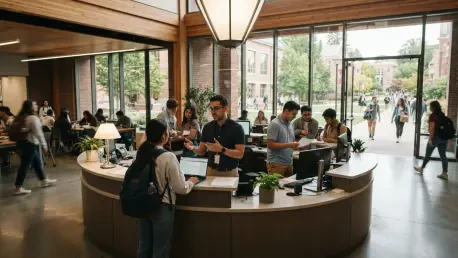
This “spatial normalization” reduces the social friction associated with help-seeking. When the tutoring center is located in the middle of the main library or the student union, it becomes a natural part of the student’s daily routine. The architecture itself—using glass walls, comfortable seating, and natural light—can convey a sense of welcome and transparency that counters the clinical, intimidating vibe of older offices. Furthermore, the use of decentralized “pop-up” services in residence halls and dining areas brings the help directly to the students’ territory, further lowering the barrier to entry. By treating the physical environment as a key component of their support strategy, universities have demonstrated that they understand the psychological impact of space. The goal was to make support so deeply embedded in the fabric of campus life that “seeking help” no longer felt like a separate, daunting task, but a natural part of the educational journey.
Strategic Outcomes: Future Considerations for Student Success
The multi-dimensional approach to reducing student hesitation achieved significant milestones as universities moved toward more integrated and empathetic support models. By 2026, many institutions successfully dismantled the rigid silos that previously separated academic, financial, and psychological services, creating a more holistic experience for the student body. The transition from a reactive, crisis-driven framework to one of proactive maintenance was central to these advancements. Institutional leaders recognized that the burden of accessing help must shift from the vulnerable student to the robust university infrastructure. This shift was supported by the widespread adoption of data-driven insights, which allowed for earlier and more effective interventions that respected the diverse cultural and economic backgrounds of the contemporary student population.
As these systems evolved, the focus moved toward ensuring that the human element remained at the core of all technological and administrative improvements. Actionable next steps for institutions involve the continuous diversification of staff to mirror student demographics and the expansion of operational hours to accommodate the non-traditional student reality. The future of campus support lies in its ability to be both invisible and ever-present—a safety net that is so well-integrated into the collegiate experience that students no longer feel the weight of stigma when they reach out. Success was measured not just by the number of students who utilized a service, but by the overall resilience and persistence of the student body. Moving forward, the emphasis was placed on creating an environment where the act of seeking help was celebrated as a sign of high institutional literacy and personal strength, fundamentally changing the narrative of the university experience for generations to come.