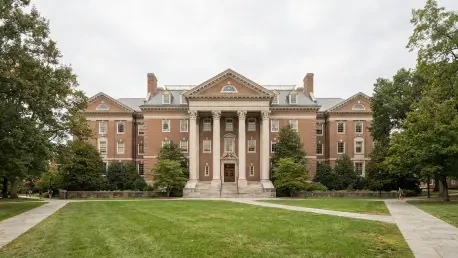

Dr. Michael Eric Dyson’s lecture, titled “Who Gets to Belong?”, explored the unfinished promise of American democracy and the systemic exclusion that still hinders national progress. This session, which took place at Livingstone College on October 29, served as a cornerstone of an ongoing residency aimed at fostering intellectual bravery among the next generation of scholars. As the college continues to build on its foundation of social justice and academic excellence, the presence of a public intellectual of this caliber provides a vital catalyst for deep communal reflection. The event was not merely a passive academic exercise but a rigorous examination of the structural barriers that continue to define the Black experience in the United States. By situating these complex conversations within an HBCU environment, the institution is effectively bridging the gap between historical scholarship and the immediate demands of contemporary advocacy. This residency underscores the college’s commitment to ensuring that its students are equipped to navigate a political landscape that is increasingly complex and often hostile to minority narratives.
Exploring the Dynamics of American Democracy
How Does Belonging Shape a Republic: Part 1
A primary focus of the discourse centered on the concept of “belonging” as the most critical metric for assessing the overall health of a democratic republic. Dr. Dyson posited that the integrity of a nation is reflected in the extent to which all its members feel a genuine sense of inclusion and agency. He challenged the audience to look beyond the surface-level rhetoric of American ideals and to critically examine the “unfinished promise” of the country. This promise is often obscured by a collective historical memory that fails to account for the systemic exclusion of marginalized groups. For the students, this perspective shifts the understanding of citizenship from a simple legal status to an active, social, and emotional engagement with the broader community. By emphasizing this metric, the lecture prompted listeners to consider the structural renovations necessary to achieve a truly inclusive society. The degree to which a society includes its most vulnerable members is, in Dyson’s view, the ultimate test of its democratic viability.
How Does Belonging Shape a Republic: Part 2
Building on the concept of inclusion, the discussion moved toward the necessity of historical honesty in defining who is allowed to participate in the democratic process. Dyson argued that a republic that ignores its history of exclusion cannot hope to build a sustainable future of belonging. He encouraged a move away from celebratory narratives that gloss over systemic failures, urging instead for an appraisal that acknowledges the ongoing struggle for equity. This honest look at history is a prerequisite for any meaningful progress in the current era, as it allows for the identification of the root causes of modern inequality. For those in the academic community, this serves as a call to use scholarship as a tool for dismantling the frameworks of exclusion. The lecture emphasized that belonging is not a gift granted by the state, but a fundamental right that must be continuously defended through informed civic action. This perspective helps scholars understand how historical injustices continue to influence modern-day access to representation.
Redefining Meritocracy Through Historical Context: Part 1
The second half of the inquiry into democracy involved a rigorous deconstruction of the American meritocracy, particularly how it has been complicated by historical realities. Dr. Dyson argued that the romanticized notion of success based purely on individual effort is fundamentally flawed when one considers the legacies of slavery and patriarchy. These systemic forces have historically dictated the distribution of opportunity, creating a playing field that was never level. By identifying these failures, the address encouraged students to perform a clear-eyed appraisal of how wealth, education, and political power are actually acquired. This historical analysis provides a necessary framework for scholars to understand that modern achievement is often tethered to historical advantage. It challenges the “bootstraps” narrative that frequently blames the marginalized for their lack of progress while ignoring the structural obstacles in their path. The lecture aimed to equip students with the intellectual tools to recognize and articulate these nuances in their future professional lives.
Redefining Meritocracy Through Historical Context: Part 2
Furthermore, the critique of meritocracy highlighted the need for systemic interventions to rectify long-standing inequities that individual effort alone cannot overcome. Dr. Dyson suggested that the acknowledgment of past failures is the only way to create a true meritocracy where opportunity is distributed based on talent rather than historical proximity to power. This realization is crucial for young leaders who will eventually hold positions of influence in policy, law, and education. It encourages them to advocate for institutional changes that prioritize equity and access for those who have been systematically left behind. The lecture framed this as a moral and civic obligation, moving the conversation from abstract sociological theory to the practical demands of social engineering. By understanding the complexity of merit, students are better prepared to challenge the status quo and to build systems that reflect the diverse potential of the entire population. This session reinforced the idea that education is a powerful tool for social renewal and the eventual fulfillment of democratic promises.
Empowering Students Through Civic Action
Why Is Local Governance Critically Important: Part 1
Transitioning from theoretical analysis to practical politics, the discussion turned toward the vital importance of local governance and grassroots involvement. Dr. Dyson emphasized that while national elections often dominate the public consciousness, the most immediate decisions affecting daily life are made at the local level. From the drawing of voting districts to the selection of library books, the front lines of democracy are found in municipal and county institutions. This shift in focus transforms the student from a distant observer of federal policy into an active participant in their own community’s governance. It highlights the power of the individual to effect change through oversight of local school boards, police departments, and city councils. By focusing on these accessible levels of power, young leaders can see the tangible results of their advocacy and build the skills necessary for larger-scale involvement. This perspective reinforces the idea that civic duty is a continuous and local responsibility that extends far beyond the four-year election cycles.
Why Is Local Governance Critically Important: Part 2
The emphasis on local engagement also serves as a defensive strategy against modern threats to democratic integrity, such as gerrymandering and voter suppression. Dr. Dyson framed community involvement as a necessary tool for self-defense, noting that the systematic removal of certain narratives from school curricula is a local political choice. He urged students to recognize that the protection of their own history and rights begins with the accountability of local public institutions. This call to action highlighted the importance of being well-versed in the mechanics of policy and the specific strategies used by local officials to shape the social landscape. By engaging in these local battles, the community can prevent the erosion of civil liberties that often starts in small, overlooked administrative sessions. The lecture concluded that a robust democracy is built from the bottom up, requiring a vigilant and informed citizenry at every level of society. This approach ensures that the “unfinished promise” of America is addressed where it matters most: in the daily lives of its citizens.
The Inaugural Cohort of Dyson Fellows: Part 1
A pivotal moment of the residency was the formal introduction of the inaugural Dyson Fellows, a group of ten student leaders selected to bridge scholarship and action. These scholars, including Dylan Tate, Lazaria Burgess, and Rick Lee, were chosen based on their academic excellence and a demonstrated commitment to social justice. The fellowship program is designed to move beyond the traditional lecture format, empowering students to engage directly with the residency’s themes through independent research and projects. This initiative reflects the broader trend of “readiness and relevance” at Livingstone College, ensuring that students are not just consumers of knowledge but creators of solutions. The fellows will work closely with the material provided by Dr. Dyson to develop capstone projects that address contemporary challenges in their communities. This investment in student leadership demonstrates the institution’s belief that the classroom should serve as a laboratory for social change. By providing a structured platform for advocacy, the college is cultivating a new generation of leaders who are intellectually rigorous.
The Inaugural Cohort of Dyson Fellows: Part 2
The inaugural residency of Dr. Michael Eric Dyson successfully integrated philosophical inquiry with the practical development of student leadership through the Dyson Fellows. This program provided a structured pathway for students to translate complex ideas about democracy and belonging into actionable research and community service. By engaging directly with these themes, the college reaffirmed its role as a critical intellectual hub for the development of Black excellence and civic responsibility. The interaction between the visiting scholar and the student body demonstrated a profound readiness among the younger generation to confront historical injustices and to advocate for a more equitable future. Looking ahead, the institution focused on sustaining this momentum by providing the fellows with the resources needed to complete their projects and to influence the political landscape at the local level. The focus remained on developing a permanent infrastructure for student-led advocacy that prioritized long-term community resilience and historical honesty. Through these efforts, the college established a blueprint for how higher education institutions could foster bravery and civic renewal.