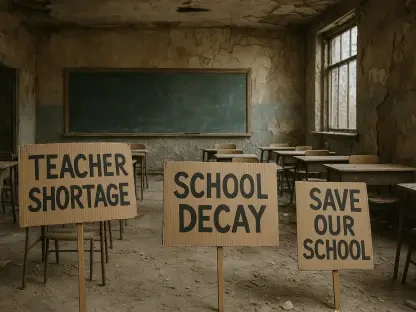

Declining student enrollment in rural and industrial regions has driven per-pupil infrastructure costs to levels that many county boards find fiscally impossible to sustain. This economic reality is reshaping the landscape of West Virginia, where public schools have traditionally served as the foundational bedrock for local neighborhoods and remote townships alike. Beyond their primary role in academic instruction, these facilities act as centralized providers for essential services, including nutritional programs, mental health support, and specialized vocational training that many families cannot access elsewhere. When a school building is shuttered, the immediate loss extends far beyond the classroom walls, effectively dismantling a vital civic hub that hosts municipal elections, athletic competitions, and community theater. This systematic withdrawal of educational infrastructure threatens to unravel the social and economic fabric of the Mountain State, disproportionately affecting the youth who depend on these institutions as a primary bridge to future opportunity and regional stability.
Socioeconomic Drivers of Educational Consolidation
The current wave of school consolidations is the result of a multifaceted crisis that combines long-term demographic shifts with immediate budgetary shortfalls. While a shrinking general population has steadily reduced student counts, the recent expiration of federal relief funds—which previously offered a temporary financial cushion during turbulent periods—has left a significant void in local district budgets. State funding mechanisms, often based on antiquated formulas, have failed to keep pace with these modern economic pressures, resulting in a system where even a minor dip in enrollment can trigger a disproportionately sharp reduction in revenue. Because fixed operational costs for heating, maintenance, and administrative staffing remain relatively constant regardless of the number of students, small rural districts find themselves trapped in a cycle of insolvency. This environment necessitates difficult decisions that prioritize short-term fiscal survival over the long-term accessibility of localized education.
Policy initiatives have introduced further complexity into the public school funding landscape, most notably through the expansion of the Hope Scholarship voucher program. By allowing public tax dollars to follow individual students into private institutions or home-schooling environments, the state has fundamentally altered the competitive market for educational resources. This diversion of funds effectively reduces the total pool of capital available to maintain the traditional public system, creating a scenario where public schools must do more with increasingly limited means. Advocates argue that this siphoning of resources places an undue burden on the remaining student body, as those who remain in the public system are often those with the highest needs and the fewest alternative options. The cumulative effect of these policy choices is a landscape where the financial viability of community-based schools is constantly undermined, forcing a move toward larger, centralized campus models that lack the intimacy of local institutions.
Regional Impact and County Closures
The physical manifestation of these financial pressures is most evident in counties like Logan and Boone, where several established institutions are currently slated for closure or consolidation. In Logan County, a concentrated effort to streamline operations involves the proposed shutdown of South Man Elementary, Justice Elementary, and Hugh Dingess Elementary, with the intent of merging these student bodies into centralized facilities such as Man Elementary and Logan Grade School. Similarly, Boone County officials are moving forward with proposals to close Van Junior-Senior High School and Whitesville Elementary, transitioning these students to larger regional hubs like Madison Middle and Scott High. These administrative decisions represent a significant departure from the decentralized model of community education that once defined the region. The transition to larger campuses often results in the loss of institutional history and a fracture in the support systems that have historically connected local families to their schools through multiple generations.
Mingo and Raleigh counties are also navigating similar transitions, as regional superintendents explore the consolidation of several elementary facilities to mitigate rising operational costs. In Mingo, Dingess Elementary is specifically targeted for merger with Lenore K-8, a move that local residents fear will lead to significantly longer commute times for young children in isolated areas. Meanwhile, in Raleigh County, discussions surrounding the potential closure of Mabscott Elementary and Cranberry-Prosperity Elementary highlight the fluidity and uncertainty of the current educational climate. While these consolidations are frequently framed as administrative necessities to ensure modern facilities and diverse curricula, the practical consequences include a decrease in local employment and the erosion of a town’s unique identity. The loss of a local school often means the loss of the only professional employer in a small community, further depressing the local economy and making it increasingly difficult for these rural areas to retain young families.
Strategic Pathways for Systemic Recovery
Correcting the trajectory of widespread school closures requires a fundamental shift in how the state prioritizes its educational investments and modernization efforts. Legislative advocacy groups have called for an immediate pause on all proposed consolidations until the state’s funding formula can be overhauled to better reflect the realities of rural geography and economic depression. A more equitable model would prioritize the stabilization of schools in isolated regions, ensuring that per-pupil funding reflects the actual cost of providing high-quality services in low-density areas. Furthermore, introducing strict oversight and enrollment caps on the Hope Scholarship program could prevent the further erosion of the public school budget, ensuring that tax dollars remain focused on supporting the broadest number of students possible. By linking school funding to community health metrics rather than just raw enrollment numbers, the state could foster a more resilient educational system that values the social role of schools as much as their administrative efficiency.
The resolution of the school closure crisis necessitated a comprehensive strategy that prioritized systemic stability over short-term savings. It was determined that the state had to implement a modernized funding formula that accounted for the fixed costs of maintaining infrastructure in geographically isolated regions. Leaders found that capping voucher programs was essential to maintaining a robust public system capable of serving all students regardless of their socioeconomic status. Communities that successfully preserved their schools were those where residents actively participated in Local School Improvement Councils and utilized data transparency tools to hold decision-makers accountable. This period of transition taught that the most effective solutions involved viewing schools as multi-functional community centers rather than isolated academic buildings. By adopting these forward-looking policies, the state ensured that the educational system remained a resilient anchor for future generations, fostering a sense of place and opportunity in every corner of the region.