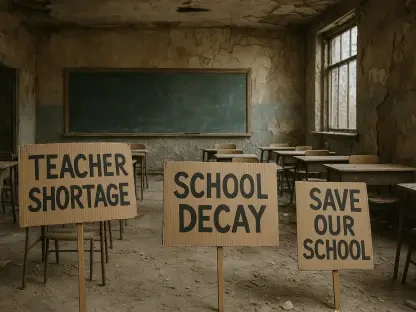

High rates of tax delinquency and a large percentage of government-owned land leave districts like Granger with few options for increasing local revenue independently. This stark reality has placed rural administrators in a precarious position as they prepare for the 2028 expiration of the Local Effort Assistance (LEA) enhancement. Often referred to as levy equalization, this state-funded mechanism serves as a vital bridge between districts with varying property wealth across Washington. Without it, the disparity between affluent urban centers and remote agricultural communities will widen into a chasm that threatens the stability of the entire educational system. For many districts in the Yakima County region, this funding is not a luxury but a fundamental necessity for basic operational survival and staffing. As the sunset date approaches, the focus has shifted from academic growth to the stark reality of fiscal insolvency. The quiet hallways of rural schools often mask this financial storm that threatens thousands of students.
The Mechanics of Educational Inequity
Structural Disparities: Property Tax Reliance
Washington’s educational funding model remains tethered to a system that inherently favors regions with high real estate values, creating a landscape where a student’s resources are dictated by their zip code. In wealthier districts, a modest tax rate can generate twice the revenue per student compared to the same rate applied in a rural, property-poor area. This structural disparity means that while some districts can easily fund modern laboratories and specialized programs, others struggle to maintain basic classroom standards. The reliance on local levies to supplement state funding creates a volatile environment for districts where property values have stagnated or where much of the land is non-taxable. This cycle of inequity forces rural school boards to ask more from their residents for less return, often leading to voter fatigue and failed levies. Consequently, the gap between the ‘haves’ and ‘have-nots’ becomes a self-perpetuating cycle that state-level intervention was specifically designed to disrupt.
Levy Equalization: A Historical Lifeline
Enacted in 1987, the Local Effort Assistance program was established as a direct response to the glaring inequities found in local levy collections. By providing state-matched funding to districts that maintain high tax rates despite low property values, the LEA effectively levels the playing field for students regardless of their community’s wealth. This funding is critical for maintaining essential services that state basic education allocations often fail to cover entirely, such as extracurricular activities, campus safety enhancements, and specialized staffing roles. For districts in the Education Service District 105 region, these equalized funds allow for the maintenance of aging infrastructure and the provision of technology that would otherwise be out of reach. Without the stability provided by levy equalization, these rural communities would be forced to choose between imposing astronomical tax burdens on residents or accepting an inferior educational environment for their local children.
The Impending 2028 Fiscal Cliff
Economic Projections: Regional and Statewide Fallout
The temporary enhancement to the LEA, which provided an additional $250 per pupil for districts in 2027, is currently scheduled to vanish in 2028, creating a massive financial void. Statewide, the projected loss exceeds $175 million, a figure that represents a significant portion of the operating budgets for hundreds of schools. The Education Service District 105, serving much of Yakima County, is bracing for a collective $20 million reduction across 19 of its 25 member districts. These figures are not mere abstractions; they represent a tangible threat to the programs and personnel that define the daily student experience. The Yakima School District alone anticipates a $5.5 million hit to its budget, a loss that could dismantle years of carefully constructed educational initiatives. As school boards look toward 2028, the challenge is to manage a contraction that seems inevitable without legislative intervention. This fiscal cliff represents a fundamental challenge to the sustainability of rural education.
Local Impacts: The Case of Granger School District
Granger School District offers a clear window into the challenges faced by rural systems when state funding mechanisms are pulled back. The district is projected to lose nearly $462,000 once the enhancement expires, which is a devastating blow considering its already constrained revenue streams. Approximately 78% of the land in the Granger area is exempt from property taxes because it belongs to government entities or the Yakama Nation, leaving a very small base of taxable property. Furthermore, the district deals with a high rate of tax delinquency, where nearly 8% of local taxes go unpaid annually. Superintendent Brian Hart has pointed out that the district already faces a $1.2 million gap between what the state provides for salaries and the actual cost of retaining qualified teachers in a competitive market. When these factors converge, the loss of LEA funds threatens the integrity of the classroom, leading to outdated curriculum updates and deteriorating facilities.
Legal Precedents and Political Tensions
The McCleary Decision: Unfinished Business
The current crisis is deeply intertwined with the legacy of the 2007 McCleary lawsuit, which resulted in a supreme court ruling that Washington was failing its paramount duty to fund education. While the subsequent years saw billions of dollars infused into the system, many experts argue that the equity problems were never fully resolved for rural and high-poverty districts. Research indicates that much of the new funding was absorbed by necessary but costly teacher salary increases, leaving little leftover for the specific programs that students in rural areas desperately need. This focus on staff compensation, while vital for recruitment, did not always translate into better outcomes for the most vulnerable populations. Some state leaders now suggest that Washington is on the verge of another legal challenge as the funding gap begins to widen again. The sentiment among many rural advocates is that the state’s constitutional promise remains unfulfilled if property wealth is still a factor.
Budgetary Shifts: Competing Priorities in the Capital
A troubling trend has emerged in the state’s fiscal priorities, with the percentage of the operating budget dedicated to public schools projected to drop by 2027. Despite the overall state budget growing from $38 billion to $80 billion over the last decade, education’s share is expected to decline significantly from its peak of 51.6% just a few years ago. State Representative Deb Manjarrez and other officials have expressed concern that the legislature is prioritizing other social models, such as housing and harm reduction, at the expense of K-12 schooling. There is a growing argument that failing to fund education properly on the front end leads to higher societal costs on the back end, including increased rates of homelessness and criminal justice involvement. The debate in the capital is no longer just about the total amount of money available, but about how it is prioritized among competing needs. For rural districts, this shift feels like a retreat from the state’s core obligations.
Advocacy and the Path Forward
Building Consensus: A Bipartisan Strategy
There is a unified, bipartisan understanding among local leaders that maintaining levy equalization is essential for the survival of small-town school districts. Regional financial officers emphasize that the legislature has historically protected these funds, even during economic downturns, because the consequences of a failure to do so are too severe to ignore. However, the current landscape of rising costs for liability insurance and utilities, which have jumped by nearly 50% and 30% respectively, means that even maintaining current funding levels is a struggle against inflation. Local superintendents are now mobilizing to engage directly with the State Superintendent and the Governor’s office to present a clear picture of the potential fallout. They argue that LEA is not a bonus or a surplus but the very foundation upon which rural equity is built. By demonstrating the direct impact on classroom safety, they hope to convince lawmakers that cutting these funds is not a viable option for the state.
Long-term Solutions: Ensuring Sustainable Equity
Moving forward, the focus shifted toward creating a permanent and inflation-adjusted funding model that moved beyond temporary enhancements and legislative stopgaps. Advocates proposed that the state revisit the formulas used for Local Effort Assistance to ensure they reflected the modern economic realities of rural districts, including the high costs of recruitment and infrastructure. Education leaders suggested that providing a more predictable and stable funding stream allowed for long-term planning and innovation rather than constant crisis management. The upcoming legislative sessions were viewed as a critical opportunity to codify these protections into law, preventing the recurrent threat of a fiscal cliff. By prioritizing these structural changes, Washington finally moved to bridge the gap between its wealthiest and poorest districts, fulfilling the true intent of the McCleary decision. These actions provided a roadmap for ensuring that every student in the state received a fair and equitable start.