
The traditional apprentice-to-master model of skilled labor is undergoing a radical digital transformation as the national deficit of specialized technicians reaches critical levels across the infrastructure sector. With the HVAC industry alone reporting an immediate need for approximately 110,000 qualified workers, the urgency to modernize recruitment and training has never been more pronounced. Companies are increasingly turning to immersive technologies like the Meta Quest and specialized software from Interplay Learning to accelerate the onboarding process. This shift represents more than just a technological novelty; it is a strategic response to a labor market where demand far outpaces the capacity of brick-and-mortar trade schools. By integrating these tools, organizations aim to bypass the logistical hurdles of travel and limited equipment availability. While the physical nature of plumbing and electrical work remains unchanged, the method by which a new generation learns to navigate these complex systems is evolving into a high-tech simulation experience.
Modernizing Corporate Training: The Role of Immersive Technology
Southern Home Services (SHS) exemplifies this transition by shifting from a model that required trainers to traverse thousands of miles for in-person workshops to a scalable virtual alternative. This decentralized approach allows technicians to engage with lifelike scenarios from their home branches, significantly reducing the overhead associated with traditional instruction. Within these digital environments, employees practice routine maintenance and complex repairs, such as changing specialized filters or diagnosing electrical faults on high-end HVAC units. The software provides a safe space for repetition, which is a cornerstone of mechanical proficiency, without the risk of damaging expensive machinery or wasting consumable supplies. By centralizing the curriculum in a virtual space, SHS ensures that a technician in one state receives the exact same standard of instruction as a peer in another. This consistency is vital for maintaining brand quality while rapidly scaling operations to meet the growing consumer demand for home services across the country.
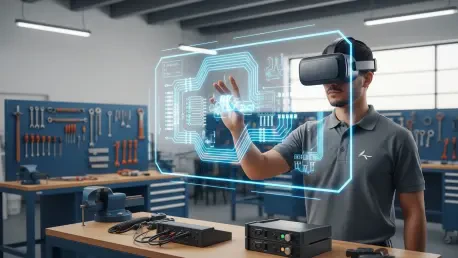
The integration of haptic feedback within these simulations adds a layer of sensory reinforcement that was previously impossible in a classroom setting. When a trainee makes a critical error, such as touching a live wire without the proper precautions, the handheld controllers vibrate sharply to simulate a shock. This immediate physiological response serves as a powerful deterrent, etching the importance of safety protocols into the user’s memory without causing actual physical harm. Beyond the shock simulations, the technology allows for “exploded views” of equipment, where a technician can see the internal components of a furnace or a water heater while it is running. Such visibility is physically impossible in the real world but provides an unparalleled conceptual understanding of thermodynamics and fluid mechanics. As the hardware becomes more sophisticated between 2026 and 2028, the fidelity of these interactions continues to improve, making the transition from the headset to the tool belt more seamless than ever before.
Navigating the Challenges: Evaluating Efficacy and Safety
Despite the impressive capabilities of virtual simulations, industry leaders maintain a cautious stance regarding the total replacement of physical laboratory work. Matt Ellenberg of SHS and Jennifer Hines of Santa Rosa District Schools both advocate for a blended model, asserting that digital tools are best utilized as a supplemental resource rather than a standalone solution. The primary concern lies in the “consequence gap,” a term highlighted by critics like Amanda Bergson-Shilcock, which describes the psychological difference between a digital vibration and a real-world disaster. In a headset, a mistake results in a restart button; in a residential electrical panel, a similar error could be fatal or lead to a catastrophic fire. Therefore, the mastery of skilled trades still fundamentally requires hours of “true hands-on, in-the-field learning” to ensure that the gravity of the work is fully understood. Virtual reality provides the blueprint, but the actual construction of a career still requires the weight of a wrench and the tactile resistance of physical materials.
Another challenge facing the widespread adoption of VR in technical education is the current lack of longitudinal data regarding certification success. While qualitative feedback from students is overwhelmingly positive, there is a distinct absence of rigorous studies comparing the exam pass rates of VR-trained individuals against those who followed traditional pathways. Educators are looking for concrete evidence that the dexterity developed in a virtual space translates directly to the precision required for soldering pipes or wiring complex control boards. Furthermore, the initial investment in hardware and software licenses can be a barrier for smaller vocational schools or independent contractors. For the technology to become a truly universal bridge in the skills gap, it must prove its return on investment not just through engagement metrics, but through the long-term proficiency and safety records of the technicians it produces. As the industry gathers more data throughout the late 2020s, the refinement of these programs will likely focus on closing the gap between simulated success and field-tested expertise.
Career Discovery: Expanding Educational Horizons and Future Growth
In secondary education, virtual reality has emerged as a transformative tool for career discovery, allowing students to explore high-demand vocations before committing to specialized tracks. By simulating diverse environments, such as high-altitude telecommunications towers or high-pressure emergency rooms, students can assess their personal comfort levels and aptitude for specific tasks. This early exposure helps demystify the trades, which are often overlooked by younger generations, and showcases the sophisticated technology now integral to these roles. When a student can virtually walk through a construction site or troubleshoot an industrial motor, the barrier to entry feels less intimidating. This proactive approach to recruitment is essential for long-term workforce stability, as it captures interest at a pivotal stage in educational development. The goal is to create a pipeline where the digital initial experience leads naturally into rigorous, hands-on apprenticeship programs that produce the highly skilled labor force required for the modern economy.
The strategic implementation of virtual reality in the technical sector eventually provided a necessary bridge during a period of intense labor scarcity. Organizations successfully utilized these immersive platforms to democratize access to high-quality instruction, moving beyond the limitations of geography and physical equipment. By blending digital simulations with traditional laboratory exercises, the industry fostered a more adaptable and tech-savvy workforce. Educators recognized that while the headset offered a safe environment for initial learning, the transition to physical mastery remained an indispensable step in professional development. This multifaceted training strategy addressed the immediate need for technicians while laying the groundwork for more innovative pedagogical approaches in the future. As the technology matured, the focus shifted toward refining the synergy between simulated practice and real-world application, ensuring that safety and precision remained paramount. Ultimately, the adoption of VR did not replace the mentor, but rather equipped the apprentice with a more robust set of tools for a complex landscape.