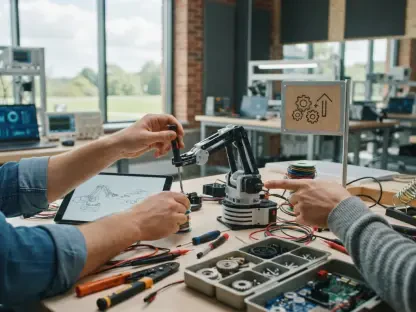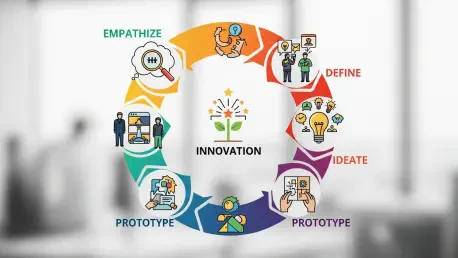

In an academic landscape where traditional brainstorming often reaches a plateau of predictable outcomes, the University of West Georgia has introduced a tactile methodology that transforms abstract problem-solving into a tangible physical reality. Orchestrated by the Stone Center for Family Business, Entrepreneurship and Innovation, this initiative recently gathered faculty and staff for an intensive workshop designed to disrupt standard cognitive patterns. By integrating the structured phases of design thinking—specifically the iterative cycles of empathizing, defining, ideating, prototyping, and testing—with the kinetic experience of LEGO Serious Play, the institution is fostering a culture of rapid innovation. This hands-on approach serves as a catalyst for breaking down internal silos, allowing educators to explore complex organizational challenges through a lens that combines rigorous analysis with creative play. The primary objective remains clear: to equip the university’s human capital with a functional toolkit that transcends theoretical knowledge and leads to measurable, impactful results in real-world scenarios.
Bridging Theory and Practice through Tactile Engagement
The central theme governing this innovative endeavor is the shift from purely theoretical instruction toward experimental engagement that utilizes the connection between the mind and the hands. Raja Bhattacharya, the director of the Stone Center, pointed out that while a deep conceptual understanding of business logic is necessary, the physical act of building with plastic bricks allows for a more effective visualization of abstract goals. Participants used these tools to construct three-dimensional models of their ideas, which facilitated a level of communication that verbal descriptions often fail to achieve. This method encourages the exteriorization of internal thoughts, making individual perspectives visible and debatable within a group setting. By engaging in this “hand-mind” connection, faculty members were able to articulate sophisticated entrepreneurial mindsets and innovation strategies with greater clarity. This physical representation of ideas prevents the loss of nuance that typically occurs during standard meetings, ensuring that every participant’s voice is literally built into the final collaborative model.
Beyond the simple act of construction, the workshop forced participants to navigate the inherent tension between creative vision and the reality of resource constraints. Faculty members, such as Dr. Kim Green, observed that working with a limited set of physical materials served as a powerful simulation for the challenges faced by modern entrepreneurs. In the business world, success often depends on the ability to find alternative paths and innovative solutions when traditional resources are unavailable or depleted. By improvising with specific LEGO elements to represent complex organizational structures or market forces, the attendees developed a sharper intuition for lean methodology. This exercise in constrained creativity demonstrated that high-level innovation does not always require an abundance of capital or tools; rather, it requires the agility to repurpose existing assets in novel ways. This realization shifted the internal dialogue from what the university lacks to what can be achieved through the strategic reconfiguration of current strengths. Consequently, the physical limitations of the bricks became a metaphor for strategic resilience in a competitive academic environment.
Strategic Implementation and Institutional Scaling
The consensus among the university staff was that this methodology provided a structured yet flexible roadmap for addressing multifaceted institutional and instructional issues. By applying the design thinking framework to their daily workflows, participants identified clearer paths for career development and long-term department planning. One of the most significant takeaways from the session was the permission to start small with large-scale ideas, an approach that emphasizes incremental progress over immediate, massive implementation. This philosophy allows for rigorous testing and refinement of ideas before significant financial or temporal commitments are made, thereby reducing the institutional risk of failure. This focus on prototyping ensures that final solutions are deeply rooted in the actual needs of the students and faculty rather than being based on top-down assumptions. As the university moves forward from 2026 to 2028, this iterative process will likely become a standard component of committee work and strategic planning. The ability to test a concept in a low-stakes environment like a workshop ensures that only the most robust and well-researched initiatives move toward full integration.
Ultimately, the workshop successfully transformed the pedagogical outlook of the faculty involved, reinforcing the idea that the manner in which information is delivered is just as critical as the information itself. By adopting these dynamic and hands-on strategies, the university leadership set a precedent for allowing students to experiment and define complex problems within their own specialized coursework. The synthesis of LEGO Serious Play and design thinking represented a major shift toward an interactive academic environment where imaginative collaboration led to actionable and well-researched outcomes. This event proved that moving from conceptualization to physical realization broke down long-standing communication barriers and sparked breakthroughs across various professional contexts. Moving forward, the institution prepared to integrate these workshops into broader faculty development programs to ensure that innovation remained a continuous practice rather than a one-time event. Leaders encouraged the permanent adoption of these tactile tools to solve future departmental challenges and recommended that educators prioritize the design thinking stages in every curriculum redesign. These efforts ensured that the university remained at the forefront of experiential learning and organizational efficiency.