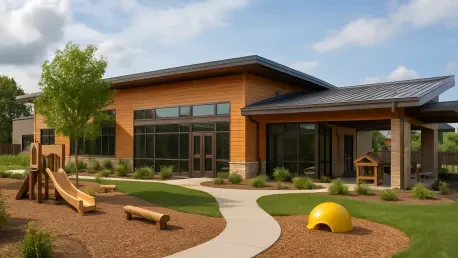

When educational institutions and philanthropic leaders align their visions, the resulting impact can fundamentally reshape the developmental trajectory of an entire community for generations to come. The University of Virginia recently announced a landmark $43.4 million gift from alumni Kathleen and David LaCross, representing the largest single donation in the history of the School of Education and Human Development. This transformative contribution is intended to establish a state-of-the-art early childhood learning center in Charlottesville that serves as both a high-quality preschool and a hub for academic excellence. By integrating university expertise with local childcare needs, the initiative aims to provide a sustainable solution to regional shortages that have long hindered family stability. Kathleen and David LaCross, both dedicated graduates, have a rich history of high-impact philanthropy at the university, including previous support for the Darden School of Business. Their newest investment reflects a deep personal commitment to early-age instruction, drawing on Kathleen’s background in psychology and her experience as a volunteer teacher.
Strategic Investment in Local Development
Mitigating Regional Challenges: The Role of Mixed-Enrollment Models
Data from the Virginia Kindergarten Readiness Program reveals a pressing need for early intervention, as over 35% of children in the Charlottesville area enter school below expected proficiency levels. The new center is specifically designed to mitigate these socioeconomic gaps by offering a mixed-enrollment model that balances diverse community needs. By providing tuition-free slots for low-income families alongside tuition-paying spots for higher-income households, the facility ensures that high-quality developmental care is accessible to the most vulnerable members of the community. This approach moves beyond the traditional daycare model, focusing instead on a holistic environment where social and cognitive growth are prioritized for every child regardless of their family’s financial status. The physical space will be designed to encourage exploration and safety, providing a sanctuary for learning that bridges the gap between early childhood and formal primary education. This model serves as a necessary intervention to break cycles of educational inequity that often begin before a child even enters a classroom.
Collaborative Policy: Aligning University Resources with City Needs
The project is the direct result of a university-community working group formed in recent years to identify ways the institution could better support the surrounding region. University leaders and local government officials identified the expansion of pre-K capacity as a top priority for improving long-term resident success and economic mobility. The LaCross gift serves as the essential funding engine for these recommendations, turning a long-standing community goal into a tangible resource that will eventually serve more than 100 children. This partnership underscores a shift in how higher education institutions view their roles within their host cities, moving toward a model of shared responsibility and mutual growth. By addressing the childcare crisis, the university is not only helping children but also enabling parents to participate more fully in the local workforce. The center represents a physical manifestation of this collaborative spirit, demonstrating that significant progress is possible when institutional research capabilities are harnessed to solve practical, local problems that affect the daily lives of thousands of residents.
A Blueprint for Academic and Social Progress
Interdisciplinary Research: Advancing Developmental Science and Training
The learning center will operate as a collaborative environment where various university departments, such as neuroscience, clinical psychology, and speech pathology, can study early brain development and behavioral health. This interdisciplinary approach allows faculty to conduct cutting-edge research while providing children with specialized support for communication and developmental needs in real time. Faculty members can observe classroom interactions to gain insights into how pedagogical methods influence cognitive retention and emotional regulation in toddlers. Additionally, the facility offers a clinical setting for university students to gain hands-on career experience, strengthening the regional workforce of future educators and advocates. These students will graduate with a unique perspective on early childhood education, having worked in a setting that merges theoretical research with daily practice. This pipeline of talent is crucial for the long-term health of the educational sector, ensuring that the next generation of teachers is equipped with evidence-based strategies to support diverse learners.
Faculty Excellence: Securing the Future through Endowed Leadership
To ensure the center maintains its high pedagogical standards, a separate $5 million endowment was established for the LaCross University Professorship in Early Childhood Education. When combined with university matching funds, this $10 million endowment will attract top-tier faculty to lead the center’s mission and drive its research agenda. Recruiting a world-class scholar to fill this position ensures that the curriculum remains at the forefront of the field and that the center’s operations are grounded in the latest scientific findings. President Scott Beardsley noted that the initiative is intended to serve as a national blueprint, demonstrating how research universities can effectively partner with their home cities to solve systemic challenges and foster lifelong success. The presence of high-level academic leadership also provides a beacon for additional funding and partnerships, as other organizations look to the center for guidance on best practices. This focus on leadership excellence ensures that the initial gift creates a legacy of quality that persists well beyond the construction of the physical building.
Implementing Scalable Solutions for Future Generations
The establishment of the early childhood center provided a clear roadmap for how large-scale philanthropy could be successfully integrated into municipal infrastructure. Decision-makers within the university focused on creating a self-sustaining ecosystem that balanced research objectives with the immediate practical needs of the Charlottesville community. This dual-purpose strategy successfully addressed the local childcare shortage while simultaneously advancing the field of developmental psychology through continuous on-site observation. For other institutions looking to replicate this success, the primary takeaway involved the early formation of community-led working groups to ensure that the facility met actual neighborhood demands. By the time the funding was finalized, a comprehensive plan for mixed-income enrollment was already in place, which streamlined the transition from conceptualization to operation. Future initiatives in other regions benefited from observing how UVA utilized endowed professorships to maintain academic rigor within a local service facility, ensuring that the quality of care remained consistently high across all demographics.