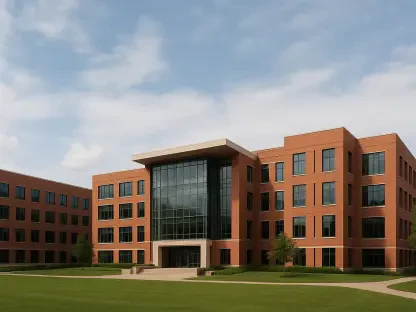

The traditional ivory tower model of secluded financial decision-making is rapidly giving way to a new era of radical transparency at the University of Saskatchewan as leadership seeks to involve the entire community. On April 23, 2026, the institution convened its spring Financial Town Hall at Convocation Hall, serving as a critical touchpoint for aligning administrative goals with the expectations of faculty, staff, and students. Chief Financial Officer Deidre Henne and Interim Provost Dr. Patti McDougall spearheaded the presentation, offering a deep dive into the university’s fiscal health amidst a shifting global economy. This specific event marked the fourth iteration of a series designed to demystify complex budgetary processes and foster a culture of shared accountability. The participation of the new President, Vince Bruni-Bossio, further signaled a high-level commitment to navigating inflationary pressures and evolving educational demands through open, honest dialogue.
Cultivating Transparency Through Active Engagement
A defining characteristic of this administrative approach is the explicit invitation for the campus community to challenge the status quo through rigorous inquiry. CFO Deidre Henne argued that a community that has stopped asking difficult questions is one that has lost its vital connection to the institutional mission, viewing skepticism as a tool for sharpening administrative logic. Instead of shielding the budget from scrutiny, the leadership team characterizes granular concerns as essential feedback loops that improve the efficacy of long-term financial planning. This philosophy suggests that true transparency is not merely about presenting data but about being prepared to defend the rationale behind every dollar allocated. By embracing this level of engagement, the university aims to build a foundation of trust that can withstand the inevitable tensions of resource distribution in a modern academic setting.
To ensure that this transparency is felt at every level of the institution, the university has implemented a multi-tiered communication strategy that extends far beyond the centralized town hall format. While the large-scale meetings provide a macro-level view of the university’s fiscal trajectory, the Provost and CFO also engage in smaller, unit-level sessions with individual deans and college departments. These focused interactions allow for a more nuanced examination of specific data points that impact local environments, providing faculty and staff with the context required to manage their own portfolios effectively. This decentralized approach to communication ensures that stakeholders are not just passive recipients of financial news but are equipped with the precise information needed to align their departmental activities with the broader strategic goals of the entire institution.
Prioritizing the Academic Mission in Budgetary Decisions
Dr. Patti McDougall emphasized a fundamental organizational hierarchy where academic excellence remains the primary driver of all financial strategies rather than a byproduct of them. This ensures that the university’s core mandates of research and education dictate resource allocation through the guidance of the Strategic Finance Committee. This body, which includes all vice-presidents, utilizes an evidence-informed framework to evaluate how every expenditure contributes to the long-term success of students and the advancement of knowledge. By centering the budget on the academic mission, the university avoids the trap of making short-sighted cuts that could undermine its reputation or educational quality. This strategic alignment turns the budget into a supportive mechanism that empowers the institution to pursue its most ambitious intellectual goals even during periods of fiscal restraint.
This mission-driven framework is operationalized through a model of entrusted leadership, where deans and executive directors are granted the authority to manage their own budgets with a high degree of discipline. The administration believes that those closest to the academic and operational front lines are best positioned to make informed decisions about their specific resource needs. This decentralization is balanced by a robust system of accountability, ensuring that local autonomy does not come at the expense of institutional stability. By fostering a culture where leaders take ownership of their financial outcomes, the university demonstrates to both public and private stakeholders that it is a responsible steward of funding. This balance between high-level strategic oversight and localized decision-making creates a flexible financial environment capable of adapting to the unique challenges of different colleges.
Strengthening the University’s Economic Value Proposition
The university’s financial strategy is increasingly framed as a vital contribution to the regional economy, linking institutional health to the broader prosperity of the province. Leadership highlighted the direct correlation between the university’s output—ranging from highly skilled graduates to groundbreaking research—and the growth of the provincial Gross Domestic Product. By positioning the university as an indispensable engine for economic development and social well-being, the administration creates a compelling narrative for continued public investment. This value proposition shifts the perception of university funding from a simple expenditure to a strategic investment that yields significant dividends for the community. Such a perspective is essential for building a broad coalition of support among taxpayers and policymakers who seek tangible evidence of the institution’s impact.
Recognizing that provincial grants alone cannot sustain the university’s growth in an inflationary environment, USask is proactively pursuing a strategy of revenue diversification. This involves a more aggressive focus on donor contributions and the development of alternative revenue streams to supplement traditional funding sources. A key component of this diversification is a carefully calibrated tuition strategy that seeks to balance the necessity of program sustainability with the crucial goal of student affordability. Dr. McDougall clarified that tuition adjustments are never made in isolation but are part of a wider effort to maintain the high quality of program delivery across various platforms. By diversifying its financial base, the university reduces its vulnerability to fluctuations in government support while ensuring it has the resources to meet the changing needs of its diverse student body.
Modernization and Long-Term Fiscal Stability
A major pillar of the university’s path to stability is the significant investment in the “Systems Project,” a comprehensive overhaul of the institution’s aging operational infrastructure. This initiative addresses critical functions such as payroll, financial reporting, and student enrollment systems, which are the fundamental building blocks of a modern university. Although the project requires substantial capital and specialized financing, administrators argued that maintaining outdated systems would pose a greater risk to the university’s efficiency and accountability. In an era where students and employees expect seamless digital experiences, upgrading these core technologies is seen as a non-negotiable step toward future-proofing the campus. This modernization effort also supports the university’s reporting obligations to the government, ensuring that data is both accurate and accessible.
While many peer institutions across North America are currently struggling with severe deficits and program closures, the University of Saskatchewan has maintained a relatively stable fiscal position. This resilience is attributed to a precise, unit-level approach to fiscal management that avoids the blunt force of mass layoffs or across-the-board hiring freezes. Instead, the university focuses on addressing structural deficits within specific colleges through targeted financial balancing strategies and the strategic use of reserve funds. By encouraging departments to utilize their reserves for initiatives that align with institutional priorities, the university ensures that existing wealth is put to work for the benefit of the community. This proactive and disciplined management style has allowed the institution to navigate modern economic headwinds without sacrificing its commitment to academic excellence or the well-being of its workforce.
Strategic Next Steps: Moving Beyond Fiscal Resilience
The Financial Town Hall concluded that the university must transition from a mindset of simple resilience to one of intentional and strategic growth. Stakeholders recognized that while the current fiscal position remained stable, the ongoing pressure of inflation necessitated a more creative approach to resource management. Administrators focused on the importance of sustaining the momentum of the Systems Project, ensuring that the technological foundation remained robust enough to support future innovations in teaching and research. The dialogue emphasized that the next phase of planning involved deeper collaboration between central administration and local units to identify further efficiencies that did not compromise quality. This move toward a more integrated financial model was seen as essential for maintaining the university’s competitive edge in the global higher education market.
Moving forward, the university prioritized the expansion of its donor engagement programs and the pursuit of new public-private partnerships to fuel its research enterprise. It was determined that the most successful departments were those that leveraged their unique strengths to attract external funding, and this model was held up as a template for the rest of the institution. Leadership also stressed that the insights gained from the town hall sessions would be integrated into the upcoming multi-year budget cycle, ensuring that the community’s voice directly influenced policy. By focusing on these actionable steps, the University of Saskatchewan aimed to solidify its role as a premier research institution while providing a stable and predictable environment for its faculty and students. The collective commitment to this path suggested that the institution was well-prepared for the complexities of the years ahead.