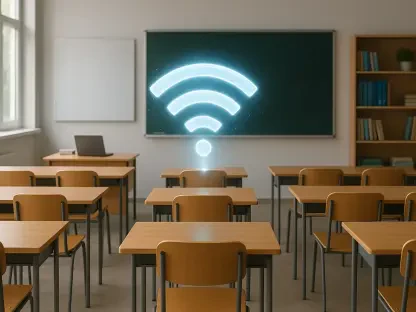

The sudden transition of the United Arab Emirates’ entire educational ecosystem to a digital-first model in early May serves as a masterclass in national crisis management and technological agility. When regional tensions necessitated a pause in physical gatherings from May 5 to May 8, the Ministry of Education enacted a swift mandate affecting every level of schooling from nurseries to private academies. This was not a move born of panic but rather a calculated deployment of a permanent readiness strategy that the country has been refining for several years. By shifting thousands of students and faculty members to virtual classrooms overnight, the UAE effectively demonstrated that geopolitical uncertainty does not have to result in a loss of academic momentum. This specific period highlighted the maturity of the nation’s digital infrastructure, proving that the local education sector is no longer tethered to physical locations when faced with external challenges. The seamlessness of the pivot ensured that parental anxiety was minimized while instructional integrity remained the primary focus for administrators.
Strategic Deployment: The Mechanics of Rapid Transition
The speed with which schools across Dubai and Abu Dhabi moved to virtual platforms highlights the country’s commitment to maintaining a state of constant operational flexibility. Leading institutions, such as Jumeirah College, reported achieving full digital deployment within mere hours of the official announcement, illustrating that the infrastructure was already in a warm state. This efficiency was a direct result of treating remote learning as a modular component of standard operations rather than a speculative fallback plan. Because the necessary hardware and software were already integrated into the daily curriculum, the transition did not require the steep learning curve that typically hampers sudden administrative changes. Teachers and students simply logged into familiar environments, ensuring that the first day of the mandate was productive rather than preparatory. This rapid deployment confirmed that the investment in high-speed connectivity and cloud-based educational tools has fundamentally altered the resilience of the national school system.
Furthermore, the logistical success of this shift was underpinned by a culture of proactive preparation that extended down to the individual staff member level. Schools had already established protocols where educators were required to take their primary computing devices home every evening, effectively neutralizing the risk of being locked out of their resources by a sudden campus closure. This simple but effective policy meant that when the remote learning mandate was issued, every teacher was already equipped to host live sessions from their own residences without needing to return to the school grounds. This level of foresight allowed for a unified narrative across the education sector, where the focus remained on the continuity of the syllabus rather than the troubleshooting of technical glitches. By removing the physical barriers to education, the UAE has created a precedent for how a modern state can protect its intellectual capital during times of regional instability, ensuring that the progress of the youth remains a non-negotiable priority.
Academic Excellence: Maintaining Standards in Virtual Spaces
A significant evolution observed during this transition was the strategic focus on active student engagement to prevent the pitfalls of passive content consumption. Educators across the country prioritized a sophisticated mix of live interactive sessions, collaborative breakout groups, and real-time digital feedback loops to replicate the social energy and intellectual rigor of a physical classroom. This dynamic approach ensured that instructional quality remained high, as teachers moved beyond simple broadcasting to foster an environment where students stayed active and involved throughout the school day. By utilizing advanced learning management systems, schools were able to track participation and comprehension in real time, allowing for immediate intervention if a student began to struggle with the remote format. This mature understanding of digital pedagogy suggests that technology is being used not just as a substitute for the classroom, but as a tool to enhance the individualized nature of contemporary education.
Managing formal assessments and the academic calendar posed a complex logistical challenge that schools met with high levels of flexibility and precision. For high-stakes evaluations and specialized exams, such as the GL assessments, institutions like The British International School Abu Dhabi developed multi-tiered contingency plans that balanced safety with rigorous academic standards. Some assessments remained scheduled for in-person attendance depending on the specific nature of the exam and evolving safety guidelines, while others were migrated to secure digital platforms with remote proctoring capabilities. This nuanced management of the examination cycle ensured that the integrity of student progress was maintained and that the school year remained on track despite the temporary physical closure of campus facilities. Such flexibility demonstrates that the UAE educational sector has moved toward a hybrid model where the validity of academic achievements is protected by a robust framework of technological and administrative safeguards.
Institutional Memory: The Human Element of Educational Continuity
Beyond the technical tools and digital platforms, the success of the shift relied heavily on the institutional memory and the expertise of seasoned educators. High staff retention within the UAE’s top schools allowed administrators to draw on a wealth of experience from previous disruptions, with veteran teachers providing a stabilizing presence for the entire community. At schools like Horizon English School, the human-centric approach ensured that the transition was not just technically sound but also emotionally supportive for families navigating the stress of regional tensions. Teachers who had managed similar shifts in the past brought a level of calm and expertise that stabilized the environment, allowing younger staff and students to follow a clear and confident lead. This reliance on human capital proves that while technology provides the medium, it is the experience and dedication of the faculty that ultimately determines the effectiveness of the learning experience during a crisis.
Finally, the education sector recognized its role as a source of emotional and social stability during a potentially stressful period for students and their families. By integrating virtual co-curricular activities and routine wellbeing check-ins into the daily remote schedule, schools provided holistic support that extended far beyond the core curriculum. This approach reinforced the idea that the school remains a vital community hub dedicated to the overall welfare of its members, even when physical access is restricted. By maintaining these social connections, schools served as a stabilizing force, ensuring that students felt known and supported despite the distance. Moving forward, the focus must remain on refining these hybrid models to ensure that emotional intelligence is as prioritized as technical proficiency. Educational leaders are now encouraged to formalize these wellbeing protocols into their standard disaster recovery plans, ensuring that future disruptions are met with a strategy that values human connection as much as academic throughput.