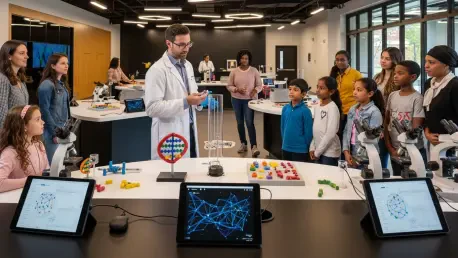

Navigating the complexities of the human genome often feels like deciphering an ancient, coded language that remains inaccessible to the general public despite its profound impact on health and personal identity. To bridge this knowledge gap, graduate students from the University of Alabama at Birmingham have pioneered an initiative designed to transform abstract biological theories into tangible, community-based learning experiences. This collaborative effort, known as the Hands-on Exploration, Analysis, Learning, Technology and Health (H.E.A.L.T.H.) Lab, recently transformed the Albert L. Scott Library in Alabaster into a vibrant center for scientific discovery. By engaging families directly where they live and play, the program addresses the critical need for health literacy outside of clinical environments. This movement represents a shift in how specialized medical knowledge is shared, ensuring that foundational genetic concepts are no longer confined to academic halls but are instead made available to every citizen across the state.
Bridging the Gap: The Role of Translators in Healthcare
The modern genetic counselor serves a dual role, acting not only as a clinical expert but also as a vital bridge between high-level laboratory data and the lived experiences of patients. Participants in the UAB Genetic Counseling program, including Emily Sandlin and Caroline Nelson, emphasized that these community events are an essential component of their professional development. The ability to distill complex inheritance patterns and molecular biology into relatable narratives is a skill that requires practice and empathy, far beyond the constraints of a textbook. By interacting with children and parents, these students refine their capacity to explain how genetic variations influence health outcomes without relying on intimidating jargon. This educational philosophy posits that true medical expertise is measured by how well one can communicate that knowledge to a lay audience. Consequently, these outreach efforts prepare future healthcare providers to advocate for their patients more effectively in an increasingly personalized medical landscape.
Addressing the disparities in healthcare access requires a deep understanding of the unique challenges faced by rural and underserved communities throughout Alabama. Sandra DeMaria, a recent graduate of the program, brought a personal dimension to the initiative, drawing from her own background witnessing the impact of birth differences in rural settings. Her journey highlights a broader consensus among UAB participants regarding the necessity of bringing advanced health education to areas that lack consistent access to specialized medical facilities. When families are equipped with a basic understanding of genetics, they are better positioned to seek appropriate care and ask informed questions during medical consultations. This empowerment is particularly crucial in regions where geographical barriers often lead to delayed diagnoses or a lack of preventative health measures. By fostering a culture of scientific curiosity and health awareness today, the program builds a foundation for more equitable healthcare delivery from 2026 to 2030, ensuring that every family has the tools to navigate their unique biological heritage.
Interactive Learning: Making Genetics Tangible for Youth
Transforming a quiet library space into a high-energy scientific laboratory required a strategic approach to curriculum design that favored tactile engagement over passive observation. The H.E.A.L.T.H. Lab utilized four distinct interactive stations that allowed participants to physically manipulate models of biological structures, such as the double helix of DNA. For instance, children used vibrant pompoms to simulate the inheritance of physical traits, such as eye color and hair texture, providing a visual representation of how genetic information is passed down through generations. These activities demystified the concept of genes as invisible blueprints, turning them into something concrete that could be sorted and analyzed. By focusing on physical characteristics that children could observe in themselves and their parents, the instructors successfully grounded high-level science in the reality of human diversity. This hands-on methodology not only captured the imagination of the young participants but also encouraged parents to engage in meaningful dialogue about family history and the biological factors that shape their common identity.
Maintaining a high level of engagement among diverse age groups necessitated the integration of imaginative elements alongside traditional scientific data. To sustain interest, the curriculum cleverly incorporated “superpower” traits, blending fictional concepts with genuine biological principles to illustrate how genetics determines specific capabilities and variations. This playful approach served as a gateway to deeper discussions about the variability of the human genome and the importance of scientific literacy in the modern era. Furthermore, the collaboration with Megan Bell, a UAB assistant professor and librarian, ensured that the event was supported by curated reading materials and digital resources. These resources allowed families to continue their exploration of STEM topics long after the physical event had concluded, promoting a cycle of lifelong learning. By pairing experiential activities with literary resources, the initiative leveraged the unique strengths of both the university and the public library system. This synergy created a comprehensive educational environment that prioritized accessibility, fun, and the rigorous standards of scientific inquiry for all participants.
Future Directions: Strengthening Community Health Resilience
To ensure the long-term success of community-based genetic education, healthcare organizations must prioritize the creation of permanent partnerships between academic institutions and local civic hubs like public libraries. Establishing a revolving schedule of outreach events can provide consistent exposure to evolving medical technologies, preventing the information gap from widening as science advances. Furthermore, developing standardized, portable educational kits would allow smaller, resource-limited libraries to host similar programs without requiring the direct presence of university staff. Investing in the training of local librarians to act as health information navigators represents another critical step toward sustainable community wellness. These individuals can guide families toward reputable genomic resources, helping to counteract the spread of medical misinformation. By integrating health literacy into the fabric of community life, stakeholders can create a more informed public that is ready to engage with the future of personalized medicine. This proactive strategy shifts the burden of education from the patient to the system, fostering a more inclusive and resilient health environment.
The initiative led by the UAB students demonstrated that public interest in complex science was high when the material was presented in an accessible and engaging format. It became clear that the success of the H.E.A.L.T.H. Lab rested on the ability of future practitioners to view community service as an integral part of their clinical identity. Educators and public health officials recognized that bridging the divide between rural populations and advanced medical knowledge required more than just digital resources; it demanded face-to-face interaction and shared discovery. The collaboration between the Lister Hill Library and the Genetic Counseling program provided a scalable model for how specialized programs could impact local literacy rates. As participants moved through the various stations, they gained more than just facts about DNA; they developed a sense of agency over their own health narratives. Ultimately, the program functioned as a catalyst for ongoing dialogue regarding the role of genetics in society, setting a precedent for how academic expertise should be utilized to serve the broader public good. This effort established a new benchmark for community engagement that prioritized the democratization of scientific knowledge.