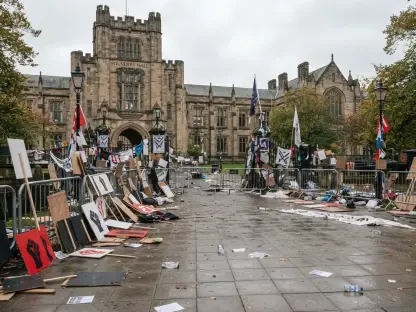

The goal of fostering “virtuous citizens” requires colleges to move beyond passive observation and actively create environments where students are forced to interact with and recognize the humanity of their ideological opponents. In the current academic climate, the traditional role of the university as a marketplace of ideas is under significant strain, as political polarization shifts from intellectual disagreement to a more visceral, personal animosity. This phenomenon, known as affective polarization, has fundamentally altered the social and educational landscape for undergraduates across the United States. Rather than viewing an opponent as someone with a different set of priorities, many students now perceive those on the other side of the political aisle as fundamentally immoral or even dangerous. This shift has not occurred in a vacuum; it is the result of years of mounting social pressure and the erosion of common cultural touchstones. While much of the public discourse focuses on the influence of faculty members or administrative policies, a closer examination of campus life reveals that the students themselves are often the primary drivers of this ideological hardening. Through their choices in social circles, academic pursuits, and even their physical presence on campus, they are inadvertently constructing barriers that prevent meaningful engagement with diverse viewpoints. This trend suggests that the internal dynamics of student life are just as critical to the health of the institution as the formal curriculum itself.
The Mechanics of Student Self-Isolation
Pre-Campus Sorting: The Impact of Institutional Reputation
The process of ideological insulation often begins before a student even arrives on campus, as the political reputation of a university plays an increasingly decisive role in the application and enrollment process. In 2026, high school seniors frequently vet prospective institutions not just for their academic rigor or career outcomes, but for their perceived “fit” within a specific political identity. This initial sorting ensures that many students enter environments where their worldviews are rarely challenged, as they purposefully seek out campuses where they will be surrounded by like-minded peers. This self-selection has turned many universities into demographic and ideological monoliths, where the student body arrives with a set of shared assumptions that are reinforced by the institutional culture.
Consequently, the collegiate experience, which was once intended to be a period of intellectual exploration and friction, has for many become a process of confirmation. By selecting schools that mirror their existing beliefs, students effectively curate their four-year experience to avoid the discomfort of disagreement, setting the stage for a lifetime of reinforced bias and social fragmentation. This trend is exacerbated by the availability of detailed data regarding campus climates, which allows applicants to filter out any institution that might challenge their preconceived notions. As a result, the student body becomes more homogeneous over time, making it even more difficult for the few dissenting voices on campus to speak up without fear of social ostracization.
Curated Social Environments: Filtering Disagreement in Daily Life
Once settled at a university, students continue to curate their social and academic lives to minimize contact with opposing viewpoints. This curation manifests in various ways, from the choice of roommates to the selection of romantic partners and social organizations. The rise of roommate-matching apps has allowed students to filter out potential conflicts, including political ones, before they ever share a living space. Furthermore, the selection of academic majors has become increasingly stratified along ideological lines, with certain disciplines attracting overwhelmingly liberal cohorts while others remain more conservative. This academic siloing limits the opportunities for cross-disciplinary and cross-partisan interaction in the classroom and beyond.
Even in casual social settings, the pressure to conform to a dominant group identity can lead to self-censorship, where students avoid discussing sensitive topics to maintain social harmony. This persistent avoidance of intellectual friction prevents the development of critical thinking skills and the empathy required to understand complex societal issues from multiple angles. When the majority of one’s social circle shares the same political perspective, the “other side” becomes an abstract caricature rather than a collection of real people with valid concerns. This social isolation reinforces the belief that those who disagree are not merely wrong but are fundamentally disconnected from reality or lacking in basic moral decency, further entrenching the divide.
Statistical Trends in Student Identity
The Erosion of the Political Center: A Shrinking Demographic
Data from the current academic cycle highlight a stark shift in the ideological makeup of the American student body, reflecting a broader national trend toward radicalization. While the percentage of students who identify as conservative has remained relatively steady over the past few years, there has been a massive surge in the number of individuals identifying as liberal or far-left. Most notably, the demographic of students who once described themselves as “middle-of-the-road” has shrunk significantly, leaving a hollowed-out center that makes civil compromise increasingly difficult to achieve. This disappearance of the political center has created a vacuum where moderate voices are often drowned out by more extreme perspectives.
This environment leads to a campus culture that feels perpetually on the brink of conflict, as the lack of a stabilizing middle ground removes the buffer between opposing factions. The polarization is not just about policy preferences but has extended into the very core of identity, where a student’s political affiliation dictates their social status and moral standing within the campus community. As the moderate faction continues to dwindle, the remaining students are often forced into a binary choice, further entrenching the divide and making it nearly impossible to find common ground. This statistical shift suggests that the “silent majority” of moderates may no longer exist in the university setting, leaving a landscape defined by partisan competition.
Affective Polarization: Moving from Disagreement to Animosity
The consequences of this statistical shift are most visible in how students perceive their peers who hold opposing views, particularly regarding moral judgment. Research indicates that affective polarization has reached record highs, with a growing number of students reporting that they would be uncomfortable even having a conversation with someone from the opposite political party. This animosity is fueled by the perception that political differences are not merely disagreements over policy, but reflections of a person’s fundamental character. When students view their peers as morally deficient due to their political beliefs, the possibility of constructive dialogue or collaborative learning vanishes almost entirely.
Instead, the campus becomes a series of isolated bubbles where each group views the other with a mixture of suspicion and deep-seated contempt. This environment is further exacerbated by social media algorithms that amplify the most extreme voices and reward performative outrage, creating a feedback loop of negativity. The result is a campus culture where students are more concerned with demonstrating their ideological purity to their own group than with learning from those outside of it. This dynamic not only stifles intellectual growth but also contributes to a sense of exhaustion and anxiety among the student body, as the pressure to navigate these social minefields becomes a constant and draining burden.
Strategies for Institutional Reform
Diversifying the Student Body: Beyond Traditional Metrics
To combat this deepening divide, universities must take proactive steps to foster a more balanced environment by rethinking their admissions and recruitment strategies. This involves more than just pursuing traditional demographic diversity; it requires a concerted effort to recruit students from a wider range of geographic and cultural backgrounds. Admissions offices could significantly alter the campus climate by actively reaching out to rural areas and religious networks that are currently underrepresented in many elite or urban institutions. By bringing together students from vastly different life experiences, universities can reintroduce the social friction that is necessary for a healthy academic environment.
This geographic diversification serves to break the ideological monopolies that define many modern campuses, as it forces students to encounter perspectives that are not filtered through the same cultural or political lenses. Implementing these strategies requires a commitment to looking beyond standard metrics and recognizing that a truly diverse campus must include a variety of worldviews. Furthermore, institutions must develop support systems that encourage students from underrepresented ideological backgrounds to thrive once they arrive. It is not enough to simply admit students from diverse backgrounds; the university must also ensure that these students feel safe and valued enough to share their unique perspectives without facing immediate social backlash.
Faculty and Curricular Broadening: Encouraging Intellectual Diversity
Diversification must also extend to the faculty level, though this requires a nuanced approach that avoids the implementation of rigid quotas or political tests. Instead of focusing on the personal politics of individual professors, universities can achieve greater intellectual diversity by supporting academic fields and research areas that naturally attract a broader range of political views. For instance, expanding departments related to rural sociology, traditional political theory, or military history can create a faculty body that is more representative of the national landscape. When students are exposed to professors who approach their subjects from different philosophical foundations, they learn that there is rarely a single “correct” way to understand complex issues.
Moreover, a diverse faculty can serve as a model for students, demonstrating how professionals can engage in rigorous intellectual debate while maintaining mutual respect. By prioritizing the expansion of research agendas to include overlooked or unpopular topics, institutions can create a more robust and intellectually vibrant environment for both students and staff. Long-term change also requires investing in mentorship programs that encourage students from all backgrounds to pursue graduate studies and academic careers. These programs can provide undergraduate students with the guidance they need to navigate the world of academia, particularly if they feel that their views are not represented in the current faculty, ensuring a more balanced future.
The Path to De-Polarization
Balancing Civic Activism and Humility: The Role of the Virtuous Citizen
The rise of campus activism presents a unique challenge to the goal of fostering civil discourse and mutual respect among the undergraduate population. While activism is often a healthy sign of civic engagement, it becomes problematic when it replaces the ability to listen and learn from those with differing perspectives. Many students now equate political passion with a refusal to acknowledge the legitimacy of opposing arguments, creating an environment where any attempt at dialogue is seen as a betrayal of one’s principles. To address this, institutions must strive to create a space where students can be passionate advocates for their causes while remaining respectful of the humanity of their opponents.
Developing a culture of constructive disagreement requires universities to actively design curricula and extracurricular activities that promote the value of intellectual risk-taking. This might include mandatory seminars on the history of free speech or competitive debate programs that require participants to argue for positions they do not personally hold. These exercises are essential for building the resilience needed to engage with difficult ideas without feeling personally threatened. When students learn that they can survive a difficult conversation without having their identity destroyed, they become more open to the complexities of the world around them. This resilience is the foundation of a healthy democratic society, where citizens must work together despite deep-seated differences.
Future Implications and Conclusions: A Retrospective on Institutional Success
The implementation of these diverse reform strategies across several pilot campuses provided a clear roadmap for broader institutional change. Administrators observed that when students were incentivized to engage in cross-partisan dialogue, the intensity of affective polarization began to dissipate significantly. These programs prioritized shared humanity over ideological purity, which allowed for the development of a more resilient and intellectually curious academic community. Data showed that these efforts resulted in a measurable increase in students’ willingness to work with those of differing viewpoints, demonstrating that the trend of self-isolation could be reversed with intentional effort.
Universities that prioritized these interventions found that they could maintain high levels of civic engagement without sacrificing the sense of belonging for any particular group. The shift toward a more pluralistic model of education offered a path forward for an institution that had previously seemed irreparably divided. These actions eventually bridged the gap between academic theory and the practical requirements of a functioning democracy, ensuring that the next generation of leaders possessed the skills necessary to navigate a complex and often fractured social landscape. Ultimately, the success of these programs showed that the university’s greatest contribution to society was its ability to bring disparate people together in the shared and rigorous pursuit of truth.