
The educational landscape in North St. Louis County is currently navigating a period of unprecedented volatility as local leaders grapple with the systemic collapse of traditional district boundaries and funding models. At the heart of this turmoil is the St. Louis Region Future of Public Education Task Force, a body established to confront a perfect storm of rapidly declining student enrollment, severe budget shortfalls, and a looming accreditation deadline for the Normandy Schools Collaborative. With the state’s intervention clock ticking toward a January 2027 cutoff, the task force is under immense pressure to overhaul a fragmented system that has historically failed to provide adequate resources to its most vulnerable populations. This structural fragmentation has left many students, particularly those within minority communities, caught in a cycle of academic stagnation and fiscal instability. The ongoing discussions represent a pivotal moment for the region, as the success or failure of these deliberations will likely dictate the quality of public education for generations to come.
Regional Challenges: The Financial and Demographic Landscape
Systemic Pressures: Shrinking Enrollment and Budget Shortfalls
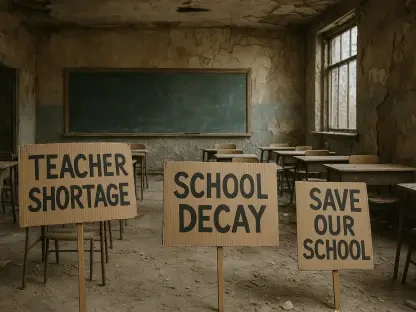
The situation in the Normandy district has become a stark warning for the entire state, illustrating the devastating effects of long-term academic and financial decline. After losing its accreditation over a decade ago, the district experienced a massive exodus of students, which triggered a recursive loop of funding losses tied directly to enrollment numbers. Today, the district operates with an academic performance score of just 51%, and its student body has shrunk by nearly half since the 1990s. Task force members frequently refer to Normandy as a “canary in the coal mine,” suggesting that its struggles are indicative of a broader regional failure. Without significant structural intervention, the potential collapse of this district could create a vacuum that destabilizes the surrounding educational ecosystem. The urgency of the situation is compounded by the fact that the current trajectory points toward total insolvency if a radical change is not implemented before the upcoming accreditation review.
Educational Disparities: The Impact of Geographic Fragmentation
These struggles are not confined to a single district but reflect a wider trend of demographic shifts and operational strain across the North County area. Neighboring districts like Riverview Gardens and Ferguson-Florissant are already grappling with the reality of shrinking footprints, leading to difficult conversations regarding school closures and boundary adjustments. Even St. Louis Public Schools has had to consider shuttering nearly a third of its existing facilities to maintain some level of fiscal health. There is a growing consensus among regional stakeholders that maintaining nearly two dozen independent school districts in St. Louis County is a logistical and financial impossibility in the modern era. The current fragmentation leads to redundant administrative costs and a dilution of essential academic resources that could otherwise be consolidated to improve student outcomes. This lack of coordination has created a system where geography often determines the quality of a child’s education, regardless of their potential.
Strategic Interventions: Redefining Educational Boundaries
Social Equity: Protecting Vulnerable Student Populations
As the task force weighs various merger scenarios, the conversation has increasingly shifted toward issues of social equity and civil rights. Because the districts most affected by potential consolidation, such as Normandy and Riverview Gardens, primarily serve African American and brown students, the educational decline is viewed through the lens of systemic divestment. Leadership remains acutely aware that any proposed merger must be meticulously designed to avoid further marginalizing at-risk students. The goal is to create a framework that ensures a more equitable distribution of resources, rather than simply moving students from one struggling environment to another. This requires a deep understanding of the historical context that led to the current state of affairs, including decades of housing policy and economic shifts that isolated these communities. Ensuring that student voices and community needs remain central to the reform process is essential for building trust in any new regional structure.
Financial Sustainability: Overcoming Local and State Constraints
The structural instability of North County schools is further exacerbated by a tightening financial vice caused by state-level policy decisions and shifting local tax bases. Recent funding gaps from the state, combined with a 2024 senior tax freeze that significantly restricted the local tax base, have left many districts in a precarious financial position. Educational leaders warn that even currently stable districts could face insolvency within a few years if the region continues on its current trajectory of high overhead and declining revenue. The task force is utilizing these financial hurdles as a clear indicator that the status quo is no longer a viable option for the region. By consolidating administrative functions and streamlining operations, districts could potentially redirect millions of dollars back into the classroom. This shift is necessary to ensure that schools can afford to attract and retain high-quality educators, who are currently being lured away by wealthier neighboring districts.
Future Directions: Implementing Sustainable Solutions
The task force finalized a community-led proposal for the Missouri Department of Elementary and Secondary Education by late 2026 to preempt state-mandated intervention. This comprehensive plan focused on actionable steps such as establishing a regional oversight board and implementing a unified curriculum across newly merged boundaries. Stakeholders prioritized the creation of specialized magnet programs to draw students back into the public system, while also addressing the immediate need for facility upgrades. The initiative sought to stabilize the fiscal health of the region by creating a shared tax pool that reduced the disparity between wealthy and under-resourced areas. Future considerations emphasized the need for continuous community engagement to ensure that the transition remained transparent and accountable to the families it served. By moving toward a consolidated model, the region aimed to provide every student with access to a high-quality education, regardless of their zip code, ensuring a more sustainable and equitable future for all.