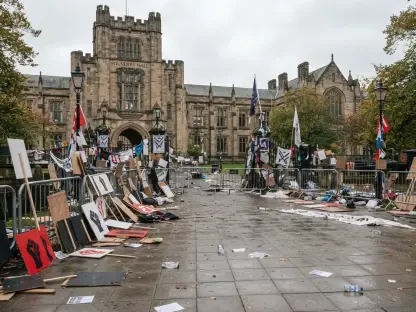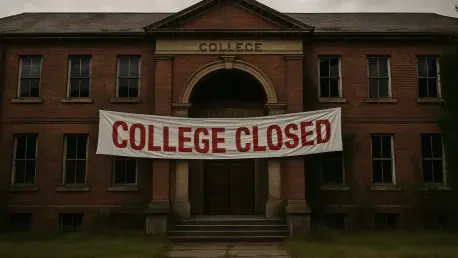

The haunting silence echoing through the halls of Wheeler Hall marks more than the end of a semester; it signals the quiet collapse of a century-old dream that once promised to heal the very land it occupied. This historic building, a red-brown sandstone sentinel overlooking the Chequamegon Bay of Lake Superior, has stood for over 130 years as a beacon of academic resilience. Yet, as the final academic cycles concluded, the structural integrity of the institution proved far more fragile than the ancient bedrock of the Wisconsin Northwoods. The story of Northland College is not merely a localized tragedy for the small town of Ashland; it is a profound narrative about the collision between idealistic educational missions and the unforgiving economic realities of the modern era.
This transition from a bustling campus to a quiet monument of educational history serves as a critical nut graph for the state of small, private liberal arts colleges. For decades, Northland defied the odds by specializing in environmental studies long before “green” became a corporate buzzword. However, the unique identity that once drew students from across the globe eventually became a gilded cage. As operating costs surged and student demographics shifted toward urban centers, the college found itself isolated both geographically and financially. The resulting closure in 2025 has left a void in the regional landscape, sparking a desperate but innovative bid to preserve the school’s environmental legacy through a radical new educational framework.
Why Does a Century of Academic Innovation Suddenly Collapse Under a $12 Million Ultimatum?
The demise of Northland College arrived not as a slow, predictable decline, but as a jarring, high-stakes crisis that felt to many like a sudden betrayal of trust. In the early months of 2024, the administration issued what many observers described as a “ransom note”—a public plea for $12 million to be raised in just one month to keep the doors open. This ultimatum sent shockwaves through the student body, faculty, and the local Ashland community. While the institution had navigated financial storms before, the scale of this emergency suggested that the underlying foundation had been eroded far more deeply than anyone had realized. The immediate result was not a surge of donations, but a wave of panic that saw prospective and current students looking for the nearest exit to avoid being left with “orphaned” degrees.
The financial arithmetic behind the $12 million figure was as stark as the winter winds off Lake Superior. Despite sitting on a 100-acre “candy store” of geological and ecological wonders, the college lacked the liquid capital necessary to sustain its specialized programs. The fundraising campaign ultimately failed to meet its ambitious target, securing only a fraction of the required funds. This failure was not just about the money; it was a symptom of a deeper loss of confidence among donors who feared their contributions would simply be swallowed by an insatiable deficit. When the board of trustees finally announced the closure, they pointed toward the inability of tuition revenue to cover the skyrocketing costs of maintaining a remote, infrastructure-heavy campus in a time of dwindling enrollment.
Furthermore, the impact on the surrounding community cannot be overstated. Ashland, a town of roughly 8,000 people, had grown around the college, benefiting from its cultural contributions, employment opportunities, and the youthful energy of its students. The closure meant more than just empty classrooms; it signaled the loss of a regional intellectual hub. As the 2025 academic year wound down, the realization set in that the “Northland experiment” had reached its breaking point. The college’s specialized mission, which had been its greatest strength for half a century, could not provide a sufficient shield against the demographic cliff and the rising tide of institutional debt that has plagued small colleges across the Midwest.
The Evolution of an Environmental Pioneer in the Wisconsin Cutover
To understand why Northland’s fall is so significant, one must look back to its origin in a landscape defined by industrial exhaustion. Founded in 1892 by Christian missionaries, the school was originally intended to bring education to “the Cutover”—a region of Northern Wisconsin that had been stripped of its old-growth timber and left as a scarred, stump-filled wasteland. For its first 80 years, Northland functioned as a traditional liberal arts school, focusing on teacher training and music. It was a humble institution that prided itself on a “personalistic” culture, where faculty often accepted delayed paychecks during the Great Depression to ensure the school’s survival. This early history of resilience established a deep bond between the faculty and the mission of the college.
The radical pivot that defined Northland’s modern identity occurred in the 1970s, a decade marked by the birth of the modern environmental movement. Under the leadership of President Robert Cramer and the influence of visionary alum Sigurd Olson, the college underwent a complete curricular overhaul. They did not just add an environmental science major; they integrated ecological consciousness into every single department. A student studying business would analyze ecotourism, while a philosophy student would grapple with environmental ethics. This unique approach aligned the college with the conservation legacy of Wisconsin giants like Aldo Leopold. It transformed the school into a pioneer, attracting students who wanted to learn in a “living laboratory” where the classroom extended into the nearby Kakagon Sloughs and the Penokee Range.
This environmental focus allowed Northland to thrive for decades, carving out a niche that set it apart from larger, more generic universities. The Sigurd Olson Environmental Institute became a regional powerhouse for conservation research and community outreach, bridging the gap between academic theory and practical land management. The college’s location near several Native American reservations also fostered a robust Native American Studies program, which emphasized the traditional ecological knowledge of the Ojibwe people. For a long time, this specialization was enough to keep the institution afloat, proving that a sharp focus could overcome the challenges of a remote location. However, as the 21st century progressed, the very specificity that created Northland’s brand began to limit its flexibility in a rapidly changing educational market.
A Perfect Storm of Administrative Churn and Financial Erosion
The path to the 2025 closure was paved with a decade of incremental financial decisions that eventually hollowed out the college’s stability. Between 2015 and 2024, the institution was forced to make the agonizing choice to dip into its endowment to cover consistent operational deficits. In total, nearly $22 million was moved from long-term investments to keep the lights on and the payroll met. This strategy, while successful in the short term, left the college without a safety net when the COVID-19 pandemic and subsequent inflationary pressures hit. By the time the administration realized the severity of the situation, the endowment had plummeted by more than 40%, leaving the board with very few moves left on the chessboard.
Internal instability further complicated the financial crisis, as a revolving door of leadership made long-term strategic planning nearly impossible. In the final seven years of the college’s operation, four different presidents attempted to steer the ship, each bringing a different vision for how to solve the enrollment puzzle. This lack of continuity led to administrative friction and a loss of institutional memory. When a botched fundraising campaign was launched in 2024, it lacked the cohesive narrative needed to inspire major donors. Instead of seeing an investment in the future, the public saw an institution in a state of chaotic retreat. The resulting 41% collapse in enrollment for the fall of 2024 served as the final blow, as the tuition-dependent model finally ran out of students to sustain it.
External demographic shifts also played a ruthless role in Northland’s erosion. The “demographic cliff”—a sharp decline in the number of college-age individuals in the United States—hit rural Midwestern schools particularly hard. As students increasingly sought out urban institutions with broader career networks and more modern facilities, remote campuses like Northland struggled to justify their rising tuition costs. The sheer physical footprint of the 100-acre campus became a liability rather than an asset. The costs of heating historic buildings through harsh Wisconsin winters and maintaining athletic facilities for a small student body created a fiscal drag that no amount of environmental passion could overcome.
Diverging Perspectives on Mission Creep and the Athletics Wedge
As the financial walls closed in, a deep philosophical divide emerged between the Board of Trustees and the faculty, creating an internal “wedge” that hampered any unified response to the crisis. At the heart of this conflict was the role of athletics in a mission-driven college. The board, desperate to bolster enrollment numbers, pushed for the expansion of sports programs, including a highly controversial bid to restart the football program. Their logic was rooted in traditional recruitment strategies: sports attract students, and students bring tuition dollars. To the board, athletics was a necessary engine for growth that could fund the college’s environmental programs. They viewed the expansion as a practical adaptation to a competitive market.
In contrast, many faculty members and alumni viewed the emphasis on athletics as “mission creep” that diluted the very essence of what made Northland unique. They argued that the funds diverted to support a NCAA Division III athletic department would have been better spent on the college’s signature environmental and social justice programs. Faculty voices pointed toward the college’s most successful eras, noting that those periods were defined by a sharp, singular focus on the Northwoods identity. They feared that by trying to be “all things to all people”—a traditional liberal arts school, a sports powerhouse, and an environmental pioneer—the college was becoming mediocre at everything. This tension fractured the institutional culture, leading to a breakdown in communication between those who managed the books and those who taught the classes.
This internal rift made it nearly impossible to implement the kind of radical restructuring that might have saved the college earlier. Former administrators noted that the “wedge issue” of athletics became a distraction during critical board meetings, siphoning energy away from more pressing concerns like endowment management and curricular innovation. The struggle to balance a specialized mission with the general appeal of college athletics is a challenge faced by many small institutions, but at Northland, the stakes were existential. When the end finally came, both sides were left wondering if a more unified vision could have steered the college toward a different outcome. The lesson remains that for a niche institution, a lack of cultural alignment is often just as fatal as a lack of capital.
Transitioning to the Microcollege Model for Mission Preservation
In the aftermath of the college’s formal closure, a resilient group of former faculty and staff, organized as the “Northland Collaborative,” has begun to map out a potential rebirth that abandons the traditional campus model entirely. This new vision is centered on the “microcollege” framework, a lean and nimble approach to higher education that prioritizes low overhead and high-impact, experiential learning. Rather than attempting to maintain a massive real estate portfolio and a sprawling administrative staff, the microcollege model operates on a “skinny budget” and focuses on a single, interdisciplinary major. The goal is to preserve the core of Northland’s environmental mission while shedding the financial burdens that led to the original institution’s collapse.
The proposed implementation of this rebirth involves a strategic, four-stage rollout designed to build stability before scaling. The collaborative intends to start with non-credit community seminars and summer intensive programs that utilize the region’s natural resources without requiring a permanent campus. As the model proves its financial viability, the organizers plan to transition toward a degree-granting program capped at approximately 150 students. By keeping the enrollment small and the faculty-to-student ratio low, the microcollege aims to replicate the “personalistic” culture of Northland’s early years. This model also allows for geographic flexibility, with the collaborative considering smaller, more affordable spaces in nearby towns like Washburn to house their operations.
Operating on an estimated initial budget of just $300,000, the Northland Collaborative seeks to prove that an educational mission can survive even when the physical real estate is sold off to pay down debts. This transition reflects a broader trend in higher education toward decentralization and specialized, boutique learning environments. While the traditional four-year college model may be broken for many small institutions, the demand for deep, place-based education remains strong among a specific subset of students. The microcollege bid is not just an attempt to save a school; it is an experiment in how to deliver high-quality education in an era of fiscal austerity. If successful, it could provide a blueprint for other mission-driven colleges facing similar existential threats.
The collapse of Northland College provided a stark illustration of how institutional inertia and financial fragility could end even the most storied academic traditions. Stakeholders realized that the reliance on endowment borrowing had created a house of cards that could not withstand the demographic shifts of the 2020s. Community leaders and former educators acknowledged that the failure to reconcile the college’s environmental identity with its athletic ambitions had created a fatal internal division. This realization prompted a shift in perspective, moving the focus away from preserving buildings and toward preserving the pedagogical spirit of the Northwoods.
The path forward was identified as a transition from the macro to the micro, as the Northland Collaborative began its work to ensure the region remained a hub for ecological study. Education experts observed that the lessons learned from the closure informed a new era of agile, mission-heavy instruction that discarded the heavy infrastructure of the past. The community understood that while the physical campus might be sold and repurposed, the intellectual heritage of the school remained a vital asset. This new model emphasized that the true value of an institution was found in its people and its connection to the land, rather than its balance sheet. Through this difficult transformation, the legacy of Northland College was prepared to endure in a leaner, more sustainable form.