
The traditional pursuit of a bachelor’s degree has long been viewed as the definitive gateway to the American middle class, yet a growing disconnect between educational value and skyrocketing tuition costs is forcing a national reevaluation of this academic path. While the allure of the campus experience and the promise of specialized knowledge remain influential, the financial reality for many families has shifted from an investment in the future to a burden that persists for decades. This tension is particularly visible in the way modern households weigh the prestige of a university against the pragmatic outcomes of their financial decisions. In 2026, the conversation is no longer just about whether a degree is valuable in a vacuum, but whether it remains a sustainable choice within the current economic framework. Public sentiment reflects a deep-seated anxiety regarding the transparency of institutional pricing and the actual return on investment provided by four-year programs.
The Growing Crisis: Public Trust and Affordability
Recent data from major research organizations like Gallup and the Lumina Foundation illustrates a stark consensus among Americans that four-year colleges are failing to maintain financial accessibility for the average citizen. A majority of adults surveyed expressed a lack of confidence in the ability of these institutions to manage their operating costs without passing the burden onto the student body. This sentiment represents a major indictment of the traditional university model, as only a small fraction of the population believes that colleges are being transparent or helpful regarding their rising costs. The perception that higher education is an exclusive club for the wealthy has grown stronger, even as universities attempt to market themselves as engines of social mobility. This distrust is not merely about the final bill but also about the perceived inefficiency of administrative structures that prioritize expansion over the core mission of instruction.
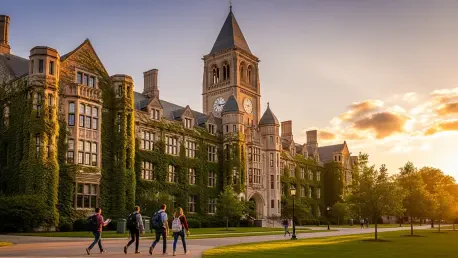
Despite these mounting financial concerns, the public still views four-year universities as the pinnacle of academic achievement and centers for groundbreaking research and intellectual discovery. This creates a complex prestige-versus-price dynamic where individuals respect the knowledge produced by these schools but feel physically and financially locked out of the experience. The result is a society that still values the gold standard of a degree while simultaneously viewing it as an unattainable luxury for the average working family. Many citizens are caught in a cognitive dissonance where they recognize the societal benefits of a highly educated workforce but resent the individual cost required to join that group. This gap between admiration for the institution and frustration with the entry price has led to a growing demand for flexible pathways. Universities are now facing the challenge of proving their worth to a skeptical public that no longer accepts reputation as a substitute for affordability.
Analyzing Shifting Preferences: Demographic and Vocational Divides
The aspiration for a bachelor’s degree remains resilient among parents, even if they are deeply worried about the long-term impact of tuition on their household finances. Nearly three-quarters of parents want their children to pursue postsecondary education immediately after high school, with the four-year university remaining the top choice for many families seeking social and economic advancement. However, for those who are turning away from the traditional path, cost is cited as the single most common deterrent, suggesting that financial pragmatism is beginning to outweigh historical educational goals. This shift indicates that while the cultural desire for higher learning is intact, the economic ceiling has been reached for a significant portion of the middle class. Families are increasingly looking for ways to bypass high-cost years by utilizing advanced placement credits or dual-enrollment programs that allow students to start their college journey earlier.
In contrast to the increasingly negative views surrounding four-year schools, community colleges have seen a massive surge in public approval and enrollment interest over the last two years. These two-year institutions are praised for their relative affordability, diverse student bodies, and ability to prepare students for the workforce quickly and efficiently. This shift is not just about saving money; it reflects a growing preference for career-focused education over the broader, more expensive liberal arts model traditionally offered by major universities. The rise of community colleges as a primary choice suggests a fundamental change in how the public defines educational success. By focusing on tangible skills and local employer partnerships, these institutions have managed to maintain a level of trust that their four-year counterparts are struggling to recover. This movement toward vocational proficiency represents a pragmatic response to a labor market that values specific certifications.
Bridging the Gap: Perception and Economic Reality
A significant hurdle in the current education landscape is the transparency gap between the public sticker price and the net price that students actually end up paying. While the public is often alarmed by the high advertised costs of elite institutions, data suggests that net tuition—the price after grants and scholarships are applied—has actually been declining when adjusted for inflation. Many students, particularly those from low-income backgrounds, might find that a degree is more affordable than they realize, yet they are scared away by the high advertised costs seen in media reports. This failure in communication has led to a situation where potential students opt out of higher education entirely because they lack access to accurate financial forecasting. Bridging this information gap is essential for institutions that wish to diversify their student bodies and ensure that qualified candidates are not discouraged by misleading price tags that do not reflect their aid packages.
To navigate this environment, forward-thinking institutions implemented comprehensive price-lock guarantees and expanded work-study programs to alleviate immediate financial pressure on students. These organizations moved beyond traditional scholarship models to provide personalized financial counseling that addressed the total cost of attendance, including housing and materials. By aligning their curricula more closely with emerging industry needs, universities successfully demonstrated a measurable return on investment that justified their tuition rates to skeptical families. Policymakers also played a role by incentivizing partnerships between four-year universities and community colleges to create seamless transfer pathways that reduced the overall cost of a degree. These steps effectively shifted the focus from the prestige of the institution to the tangible value of the skills acquired during the program, ensuring that students felt the financial sacrifice was balanced by stability.
Stakeholders eventually realized that the survival of the traditional degree depended on its ability to evolve from an ivory tower model into a transparent and economically viable engine of prosperity. By adopting more flexible learning schedules and integrating professional certifications into standard academic tracks, schools provided graduates with immediate marketability alongside their broader theoretical knowledge. This hybrid approach allowed the higher education sector to regain public trust by proving that intellectual discovery and vocational preparation were not mutually exclusive goals. Future students benefited from a system that prioritized data-driven outcomes over historical reputation, forcing colleges to compete on the basis of affordability and student success. As these reforms took hold, the narrative surrounding the four-year degree transformed from a story of debt and uncertainty into one of calculated investment and sustainable growth for the modern workforce.