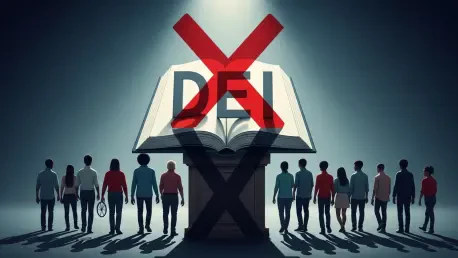

Camille Faivre has navigated the complexities of education management during and after the global pandemic, witnessing firsthand how institutional structures adapt to shifting political and social landscapes. As an expert in e-learning and program implementation, she provides a unique perspective on the intersection of administrative mandates and academic freedom. In this discussion, we explore the seismic shifts occurring in North Carolina’s higher education system following the recent ban on diversity, equity, and inclusion initiatives, analyzing how these changes redefine the role of university leadership and the student experience.
The following conversation examines the immediate dismantling of specialized administrative offices and the prohibition of specific ideological frameworks within public colleges. We touch upon the legal constraints placed on graduation requirements and the tension between protecting free speech and eliminating what legislators have termed “divisive concepts.” Additionally, the dialogue addresses the broader national trend of legislative oversight in academia and what this move signifies for the future of institutional diversity and student engagement in a polarized environment.
The North Carolina Legislature recently enacted a ban on DEI efforts, overriding a veto to ensure the law took effect immediately on June 24. From an education management perspective, how do you see universities handling the logistical and emotional weight of dismantling these offices and reassigning staff so abruptly?
The atmosphere on campuses across the state is currently one of profound uncertainty and rapid restructuring. Since 2023, we have seen 17 states enact at least 33 laws to restrict these initiatives, but the immediacy of this North Carolina mandate forces administrators to act without the typical transition periods seen in academic policy. University leaders are now required to certify their compliance with the law annually, a task that involves not just closing doors but carefully auditing every department to ensure no “divisive concepts” are being endorsed. This isn’t just a paperwork shuffle; it’s a sensory shift in the campus environment where staff members who once provided specific support roles are now navigating a landscape where their previous work is legally prohibited. The emotional toll on the workforce is significant as they transition away from programs that were once heralded as essential to the university’s mission.
A central pillar of this law is the prohibition of “divisive concepts,” such as the idea that certain individuals are inherently privileged or that the U.S. was created to oppress specific groups. How will this restriction on “compelled belief” change the way faculty design their curricula and interact with students in a classroom setting?
Faculty members are now walking a very narrow tightrope, particularly those in the humanities and social sciences who tackle complex historical narratives. The law is quite specific, pulling heavily from model policies published by the Goldwater Institute to prevent students from being forced to affirm that a series of power struggles has replaced the rule of law. When designing a syllabus, an instructor must now be hyper-aware that they cannot make a course related to these concepts a graduation requirement unless a chancellor specifically deems it necessary and reports that decision to the governing board. This creates a classroom environment where the focus shifts toward “diversity of thought” as defined by the legislature, intentionally moving away from what critics like Tim Minella describe as lectures on “so-called oppression.” The challenge for educators is to maintain academic rigor and encourage independent thought while strictly adhering to a legal framework that labels certain sociological perspectives as off-limits.
Governor Josh Stein voiced strong opposition, stating that we should not “whitewash history” or “police dorm room conversations.” How do you anticipate these new rules will affect the daily social lives of students and their ability to engage in difficult conversations outside of the classroom?
The law actually includes an interesting protection for the First Amendment, explicitly prohibiting colleges from investigating speech labeled as “microaggressions” if it is protected as satire or unwanted speech. This creates a complex social dynamic where students might feel more emboldened to speak their minds without fear of administrative reprisal, yet the university itself is banned from endorsing the very frameworks—like DEI—that previously moderated these interactions. In his July 2025 veto message, Stein argued that students should learn from diverse perspectives to form their own opinions, but the new reality is a campus where the institution must remain officially neutral on these “divisive” topics. We are seeing a move away from the “compelled profession of belief” that some conservatives, and even the January 2025 executive order from the federal level, have criticized as being commonplace. For students, the sensory experience of campus life will feel less structured by administrative DEI goals and more influenced by the raw, unmediated exchange of ideas, for better or worse.
Given the legislative focus on K-12 and higher education alike, what is your forecast for the future of diversity and inclusion initiatives in public institutions across the country?
I expect we will see a continuing and sharpening divide between states based on their legislative approach to these initiatives, leading to a fragmented national landscape for higher education. As North Carolina joins the growing list of states restricting these programs, we will likely see a “brain drain” or a “brain gain” depending on which side of the ideological aisle a student or faculty member stands on. Universities will likely pivot toward “neutrality” offices or broader “student success” centers that offer support without the specific DEI labeling, attempting to comply with the letter of the law while still trying to serve a diverse population. The next few years will be defined by constant litigation and administrative rebranding as institutions try to survive in an era where the Goldwater Institute’s model policies and executive orders are becoming the new standard for public education governance. Ultimately, the survival of these institutions depends on their ability to remain relevant and welcoming to all students while operating under the strict, watchful eye of state legislatures that are increasingly willing to override executive vetoes to implement their vision.