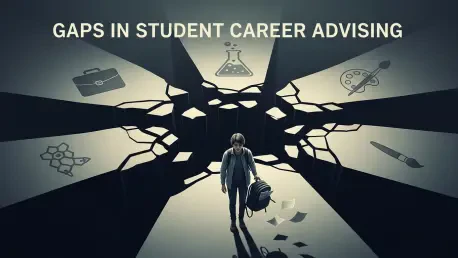

The age-old inquiry regarding what a child aspires to become when they grow up is rapidly losing its relevance in a modern economy where professional stability is no longer guaranteed by a single linear path. Today’s labor market is increasingly defined by non-linear transitions, rapid technological shifts, and the necessity for lifelong learning, making a single, static career choice an insufficient foundation for long-term success. Recognizing this evolution, educators across North Carolina are pivoting toward a continuous system of guidance that prioritizes exposure to a wide array of industries rather than just a one-time selection of a major or trade. A recent and comprehensive report by EdNC has provided a critical look at how the state’s 92 school districts are navigating these changes, examining everything from staffing ratios and digital infrastructure to the depth of community partnerships. The findings highlight a state in the midst of a significant cultural shift, where the goal of education is expanding to include the development of career-navigation skills. While legislative efforts like Career Development Plans have laid a foundation for this work, the actual experience of a student often depends heavily on the local resources available in their specific district. National trends continue to show a gap between what students expect from their education and their actual readiness to enter the workforce, with many graduating feeling ill-equipped to make high-stakes decisions about their futures despite having access to more information than any previous generation.
The Strategy: Staffing Dynamics and the Power of Partnerships
Component 1: Overcoming the Shortage of School Counselors
School counselors have long been the primary architects of student career planning, but as of 2026, they are being stretched thinner than ever before. Across North Carolina, the average ratio of students to counselors remains well above the recommended standards set by the American School Counselor Association, creating a scenario where individualized attention is a luxury rather than a guarantee. This strain is compounded by a dramatic increase in the demand for mental health support, which has become a primary focus for school staff following the societal shifts of the past several years. When a counselor is responsible for managing hundreds of students while also responding to immediate emotional crises and administrative scheduling duties, long-term career advising often falls to the bottom of the priority list. This institutional bottleneck means that many students only receive superficial guidance that focuses on graduation requirements rather than deep exploration of their personal strengths or potential professional pathways. Educational leaders have pointed out that expecting a single staff member to be an expert in both clinical mental health and the rapidly changing intricacies of the global job market is an increasingly unrealistic demand that requires a structural rethink of the counseling office’s role.
The current atmosphere in North Carolina public schools suggests that without a significant increase in specialized personnel, the quality of individual career advising will continue to struggle against the tide of competing academic and emotional needs. Many districts have reported that their counselors spend less than twenty percent of their time on career-related activities, a statistic that underscores the difficulty of implementing meaningful state mandates at the local level. This tension between immediate well-being and future preparation has led to a call for “career-specific” staffing that can operate independently of the traditional counseling framework. In districts where additional funding has been secured for dedicated career advisers, the results have been immediate and measurable, showing higher rates of internship participation and a more refined sense of direction among graduating seniors. However, for the majority of the state, the traditional counselor remains the only source of professional guidance, leaving a gap that often results in students choosing paths based on limited exposure or parental pressure rather than a calculated understanding of the market. To address this, some innovative districts are experimenting with decentralized advising models where every teacher is trained to incorporate career-readiness conversations into their standard curriculum, though this approach requires a level of professional development that is not yet universal.
Component 2: Expanding Capacity through External Collaborations
To bridge the gap created by staffing shortages, North Carolina has increasingly leaned on external organizations and “near-peer” mentoring models to provide the intensive support students require. One of the most successful examples is Advise NC, a program that recruits recent college graduates to serve as full-time advisers in high-need high schools across the state. These advisers are often closer in age to the students they serve, which helps in building high-trust relationships that feel more like mentorship than traditional authority-based counseling. This relatability is a key factor in encouraging students to share their true interests and anxieties about the future, allowing for more authentic career exploration. These near-peer mentors do not replace school counselors but rather act as a force multiplier, handling the time-intensive tasks of helping students research specialized training programs, draft resumes, and navigate the complexities of modern job applications. By focusing exclusively on the transition from school to work or further education, these external partners ensure that the career-readiness mission remains a daily priority rather than an occasional workshop or assembly.
In addition to near-peer models, the state has forged a deep integration with the North Carolina Community College System to deploy specialized career coaches directly into high school classrooms. These coaches bring a wealth of knowledge regarding vocational paths, technical certifications, and local economic needs that a generalist school counselor might not possess. This partnership has been particularly effective in rural districts where access to diverse professional networks is often limited by geography. By connecting high school students with community college resources before they even graduate, the state is creating a seamless pipeline that reduces the friction often associated with post-secondary transitions. Furthermore, the use of digital advising platforms and targeted programs for underrepresented demographics has rounded out this ecosystem, providing a multi-layered support network. Instead of relying on a single point of contact, students now interact with a team of specialists who each offer a different perspective on the professional world. This collaborative approach has proven essential for creating a robust advising infrastructure that can withstand the fluctuations of public school budgets and the ongoing challenges of staff retention.
Regional Challenges: Addressing Inequities in Timing and Geography
Strategy 1: Strengthening the Middle School Foundation
A critical realization among North Carolina educators is that waiting until high school to begin serious career advising is often too late to be truly effective. Current data suggests that while almost every district provides robust advising for high school upperclassmen, only a small fraction offers structured exploration in the sixth and seventh grades. This delay forces students to make high-stakes decisions about their high school course selections and vocational tracks without a solid foundation of self-awareness or industry knowledge. When career exploration starts in middle school, it allows students the freedom to “try on” different identities and interests in a low-pressure environment, fostering a sense of curiosity that can drive their academic engagement for years to come. Without this early intervention, the mandatory Career Development Plans often required by the state can become viewed as bureaucratic hurdles—mere checkboxes on a list of graduation requirements—rather than meaningful roadmaps for personal growth. Integrating career-related content into the middle school curriculum helps students see the direct connection between their current studies and their future aspirations, which has been shown to reduce dropout rates and improve overall classroom performance.
Closing the gap in middle school advising requires more than just adding a few career days to the school calendar; it demands a systematic shift in how younger students are taught to think about their futures. Innovative districts have begun implementing “career clusters” in eighth grade, allowing students to explore broad fields like healthcare, technology, or the arts through project-based learning. This early exposure helps demystify the professional world and challenges stereotypes about certain types of work, ensuring that students from all backgrounds feel empowered to pursue high-growth, high-wage fields. When students enter high school with a preliminary understanding of their interests, they are much better positioned to take advantage of specialized academies, dual-enrollment programs, and advanced placement courses. However, the lack of dedicated funding for middle school career coordinators remains a significant obstacle, as most districts are forced to prioritize their limited resources for students who are closer to graduation. Advocacy groups are now pushing for state-level policy changes that would mandate and fund career exploration starting no later than the sixth grade, recognizing that the seeds of professional success are often sown long before a student ever sets foot on a high school campus.
Strategy 2: Supporting Students Through the Graduation Transition
One of the most persistent challenges in the North Carolina educational system is the “summer melt,” a phenomenon where students who have clear post-graduation plans lose their momentum during the months following commencement. This period is incredibly vulnerable because the support system of the school district essentially vanishes the moment a student crosses the stage, leaving them to navigate the final steps of college enrollment or job onboarding entirely on their own. As of 2026, only a handful of districts have established formal programs to provide guidance during this critical transition window, often leading to a drop-off in enrollment for low-income and first-generation students who may lack the social capital to troubleshoot unexpected financial or administrative issues. To counter this, some forward-thinking regions have extended the contracts of their career advisers through the summer months, allowing them to maintain contact with graduates and provide the “last-mile” support necessary to ensure they actually show up on their first day of work or school. This continuity of care is proving to be a game-changer for student outcomes, turning a period of uncertainty into a bridge toward a successful career.
The philosophy behind these transition programs is simple: no student should graduate without a clear, supported plan for the following autumn. This shift toward a “graduation plus” mindset has encouraged districts to place a much higher emphasis on work-based learning, apprenticeships, and internships well before the final bell rings. When a student has already spent time in a professional environment through a structured internship, they develop a sense of belonging and a concrete understanding of what is expected of them in the workforce. These experiences provide a practical anchor that keeps them focused during the transition period, as they often have a mentor or employer waiting for them on the other side. Some districts have even partnered with local businesses to create “signing days” for students entering the trades or local industry, giving these paths the same level of prestige and celebration as traditional college commitments. By ensuring that students have both a plan and a connection to the professional community, North Carolina is working to eliminate the cliff that many graduates feel they are walking off. The long-term goal is to move away from a model where the school’s responsibility ends at graduation and toward one where success is measured by where a student is six months into their post-secondary journey.
Systematic Growth: Evolving from Compliance to Quality Navigation
Objective 1: Moving Beyond Foundational Tasks
While North Carolina school districts have become highly efficient at managing the technical aspects of the college and career process, such as FAFSA completion and transcript delivery, there is a growing recognition that “paperwork proficiency” does not equal “career readiness.” Completing a financial aid form is a vital step, but it does not teach a student how to navigate the complexities of a modern labor market or how to pivot when an industry undergoes a sudden disruption. Many students still lack access to real-world labor market data that could inform their choices about which degrees or certifications offer the best return on investment in their specific region. Furthermore, the concept of “social capital”—the professional networks and mentorships that often dictate career success—remains a major area of inequity. Students from affluent backgrounds often have built-in networks through their families, while those in marginalized communities must rely entirely on the school system to provide these connections. Shifting the focus from mere compliance to “quality navigation” means teaching students how to network, how to find mentors, and how to utilize data to make informed decisions throughout their lives.
To address these deeper needs, the state is moving toward a proactive model of advising where the burden of seeking help is shifted away from the student. Historically, the most proactive students—often those with the most existing support—have been the ones to utilize career services, while those who need help the most have stayed under the radar. A proactive approach involves advisers reaching out to every student, ensuring that even those who are not “college-bound” in the traditional sense have access to high-quality information about technical training and professional certifications. This includes providing bilingual services and culturally relevant materials to ensure that all families can participate in the career-planning process. By emphasizing navigation skills, educators are preparing students for a lifetime of work rather than just their first job out of school. This involves teaching adaptability, professional communication, and the ability to self-advocate in a corporate or technical environment. When students leave the K-12 system with these skills, they are not just placed in a position; they are equipped to navigate the entire landscape of their chosen industry, ensuring they can remain employed and upwardly mobile even as the economy continues to shift.
Objective 2: Establishing Long-Term Strategic Consistency
The final hurdle in North Carolina’s journey toward comprehensive career advising is the lack of consistency across its diverse geography. Currently, the level of support a student receives can vary wildly depending on which side of a county line they live on or which specific staff member they happen to be assigned. A student in a resource-rich urban district may have access to multiple career centers and industry-specific advisers, while a student in a rural coastal district might only see a generalist counselor once a semester. To solve this, educational leaders are advocating for a unified, district-wide framework that standardizes the quality and frequency of career advising for every learner. This does not mean a one-size-fits-all curriculum, but rather a set of guaranteed services and experiences—such as at least one professional internship and a personalized digital career portfolio—that every North Carolina student can expect regardless of their location. Building this level of consistency requires a shift away from short-term grants and toward sustainable, long-term funding models that prioritize career readiness as a core academic function rather than an elective add-on.
Establishing this consistency also involves a better alignment of data systems between K-12 schools, community colleges, and the Department of Commerce. When these agencies share information effectively, the state can identify gaps in real-time and redirect resources to areas where student outcomes are lagging. This data-driven approach allows for a more integrated career pathway model where a student’s journey is tracked and supported from middle school all the way into the workforce. Leaders are increasingly pushing for a model where the ultimate goal of high school is not just a diploma, but a strong sense of identity and professional purpose. By aligning the state’s economic development goals with its educational standards, North Carolina can ensure that its graduates are prepared to fill the high-demand roles of the future. This strategic alignment turned career exploration from a peripheral activity into a central pillar of the state’s economic strategy. Stakeholders recognized that the evolution of career advising required more than just updated software or increased funding; it demanded a fundamental shift in how the state viewed the transition into adulthood. The resulting reforms ensured that every young person had a clear path to follow, backed by a system that stayed with them until they reached their destination.