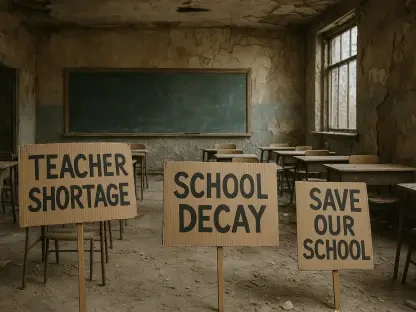
The educational landscape in Palm Beach County is currently undergoing a profound transformation as a high volume of veteran instructional staff chooses to exit the system, citing a widening gap between their professional compensation and the actual costs of basic survival. According to district records and detailed exit surveys collected from the beginning of the 2026 academic year, over 110 teachers have specifically identified inadequate pay as the primary catalyst for their resignation. This trend signifies a critical instability within the local school system, as talented educators transition to the private sector or relocate to states with more competitive salary structures. While some departing professionals indicated a willingness to return if financial conditions improved, nearly half of the respondents expressed significant disillusionment with their career path. This lack of job satisfaction is not merely a seasonal fluctuation but reflects a deep-seated frustration with the valuation of the teaching profession in the state today.
The Economic Burden of a Dedicated Career
The financial pressure placed on South Florida educators has reached a critical threshold where a single teaching salary is often insufficient to cover essential housing costs, utilities, and grocery bills. Many departing staff members have provided testimonials illustrating a “brain drain” that is effectively siphoning local talent toward northern regions where the pay-to-cost ratio is more favorable. For instance, some educators reported receiving immediate salary increases of up to twenty-five thousand dollars by accepting positions in New Hampshire or Massachusetts, highlighting the massive compensation disparity that exists for Florida-based teachers. This geographic migration of talent leaves local schools struggling to find qualified replacements for specialized subjects. The reality of being unable to live independently within the same community where one teaches has created a sense of alienation among the workforce, leading many to view their departure not as a choice but as a financial necessity for survival in a high-demand market.
Beyond the immediate struggle for physical survival, the current salary structure has fostered a sense of demoralization among veteran educators who find their decades of classroom experience financially undervalued. It is common for teachers with over forty years of expertise to discover that their compensation is nearly identical to that of a first-year hire, a reality that strips away the incentive for long-term commitment to the district. To compensate for stagnant wages, many teachers who remain in the classroom are forced to balance three separate jobs simultaneously, sacrificing personal well-being and family time to maintain their professional roles. While some mission-driven educators continue to stay because of their commitment to student impact, the cumulative stress of extreme workloads and a lack of financial support is becoming increasingly unsustainable. This systemic failure to reward institutional knowledge and professional growth threatens the very foundation of the instructional quality that students deserve in their formative years.
Budgetary Conflict and the Impasse of 2026
Tensions have escalated between the school district administration and the teachers’ union following a year-long negotiation process that has ultimately ended in a complete stalemate. Although a special magistrate recently reviewed the economic data and recommended a 3.5% salary increase to mitigate the teacher exodus, the district superintendent rejected this proposal in favor of a more conservative 1.5% recurring raise. This rejection has paved the way for a decisive impasse hearing scheduled for May 2026, which is expected to determine the financial trajectory for thousands of local educators for the coming academic years. Union representatives argue that the district’s offer fails to address the inflationary pressures that have eroded teacher purchasing power over the last several cycles. The disagreement highlights a fundamental philosophical divide regarding how to prioritize limited resources, with the labor side emphasizing the human cost of turnover and the administration focusing on long-term fiscal solvency in an uncertain state-level economic climate.
District officials have defended their conservative financial stance by pointing to a significant sixty-six million dollar revenue shortfall and a perceived lack of adequate funding from the state government. They noted that the state only provided allocations for a minimal 0.6% raise this year, making the district’s current 1.5% proposal technically higher than what state formulas would typically support without local intervention. Furthermore, administration leaders have dismissed the idea of using funds from current teaching vacancies to supplement raises, explaining that the budget already accounts for a 2% vacancy rate. Redirecting those specific funds would, according to their analysis, create a deficit in other essential operational areas. This budgetary defense relies on the premise that the district must maintain a lean operation to avoid more drastic measures, such as large-scale layoffs or the cutting of specialized programs. However, this mathematical approach often clashes with the lived experience of teachers who see empty classrooms and increasing student-to-teacher ratios as evidence of a system in distress.
Operational Stability and the Path Forward
Maintaining a balance between competitive compensation and operational stability remains a primary challenge for the district as it prepares for a projected decline in student enrollment. The administration has warned that adopting the magistrate’s recommended salary increase would create a financial burden necessitating the elimination of at least 250 positions, including nearly 200 classroom teachers. While the district has already successfully removed over seven hundred roles through natural attrition, officials argue that any further budgetary strain would lead to direct layoffs that could compromise student services. This creates a difficult environment where the retention of current talent is weighed against the literal number of staff members required to keep schools functioning safely and legally. Furthermore, vacancies in specialized fields such as Exceptional Student Education cannot be easily filled by shifting staff from other departments, meaning the district must continue to spend resources on recruitment even while cutting positions in other areas to stay within their shrinking financial boundaries.
Addressing the labor crisis required the district to look beyond traditional salary negotiations and consider more innovative retention strategies that prioritized long-term professional stability. Stakeholders suggested that implementing tiered retention bonuses for veteran staff and exploring public-private housing partnerships could have offered an alternative to the binary choice between raises and layoffs. The resolution of the 2026 impasse served as a pivot point, forcing a reconsideration of how local tax revenues were diverted to support the human infrastructure of the educational system. Leaders recognized that failing to bridge the compensation gap threatened to turn Palm Beach County into a temporary training ground for educators who would inevitably seek more sustainable careers elsewhere. By focusing on career ladders that rewarded specialization and tenure, the community moved toward a model that valued teachers as essential civic pillars rather than interchangeable labor units. Ultimately, the lessons learned from this period of intense exodus provided a roadmap for building a more resilient and financially viable environment for the next generation of educators.