
Modern educational institutions have transformed into sophisticated hubs of interconnected technology where the physical architecture is now inseparable from the digital network. As school districts across the country strive for improved energy efficiency and more streamlined operational processes, they have deployed a vast array of Internet of Things devices, ranging from smart lighting and automated climate controls to advanced biometric entry points. However, this rapid modernization has frequently outpaced the security measures necessary to protect such sprawling and complex infrastructures. While information technology administrators focus heavily on securing servers and student databases, the operational technology that controls the actual building itself often exists in a shadow environment. These systems, frequently managed by facilities teams rather than cybersecurity professionals, utilize specialized communication protocols that often lack basic encryption or robust authentication. Consequently, a single unpatched controller in a remote elementary school gymnasium can serve as a persistent backdoor for cybercriminals aiming to pivot into the main district network.
The Vulnerability of Connected Educational Infrastructure
Identifying the Risks of Building Management Systems
The convergence of Information Technology and Operational Technology has created a unique set of challenges that many school districts are only beginning to address in a comprehensive manner. Building Management Systems often rely on aging protocols such as BACnet or Modbus, which were originally developed for isolated environments where security was maintained through physical restricted access rather than digital defense. In the current landscape, these controllers are frequently connected to the same broad network as the administrative computers, creating a bridge that attackers can easily cross. When a building automation system is exposed to the internet for remote maintenance purposes, it becomes a beacon for automated scanning tools used by malicious actors. These attackers do not necessarily want to change the temperature in a classroom; instead, they seek to exploit the administrative credentials often stored within these systems to gain a foothold. Once inside the building management layer, a cybercriminal can conduct reconnaissance, identify high-value targets like financial records, and deploy ransomware with little resistance from traditional antivirus software.
The Dangers of Remote Access and Contractor Portals
A significant portion of the risk associated with modern school buildings stems from the necessity of providing third-party vendors with remote access to facility hardware. Maintenance contractors for elevators, fire suppression systems, and large-scale heating units often require persistent connections to monitor performance and perform necessary software updates. These entry points are frequently secured with weak passwords or lack multi-factor authentication, making them the weakest link in the entire security chain. If a contractor’s own network is compromised, their credentials can be used to infiltrate dozens of school districts simultaneously without triggering traditional perimeter alarms. Furthermore, many of these industrial control systems remain in place for decades, far outlasting the typical five-year lifecycle of standard office hardware. This creates a situation where critical building components are running on firmware that is no longer supported by the original manufacturer, leaving them permanently vulnerable to known exploits that are trivial for even novice hackers to execute via public repositories.
Strengthening the Digital Architecture
Network Segmentation and Zero Trust Architecture
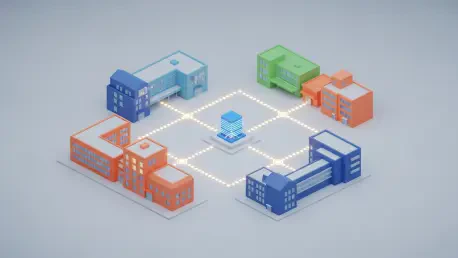
To effectively defend against the exploitation of building systems, educational institutions must move away from flat network topologies toward a rigorous model of micro-segmentation. This strategy involves placing every piece of facility hardware on a dedicated, isolated virtual local area network that is strictly separated from the primary data environment. By implementing a Zero Trust framework, administrators ensure that no device is trusted by default, regardless of its location within the physical school building. Every communication request between a smart thermostat and a central server must be verified and encrypted, preventing lateral movement if one endpoint is compromised. Additionally, deploying specialized industrial firewalls that are capable of deep packet inspection for building protocols allows the IT team to monitor for unusual commands or unauthorized data transfers. This level of visibility is essential for detecting the early stages of an intrusion, such as an HVAC controller suddenly attempting to communicate with a database server, which is a clear indicator of malicious activity within the network.
Strategic Advancements and Long-Term Resilience
The most successful districts established a protocol where every new facilities device was vetted by the IT security team prior to any physical installation. They moved toward a model of constant validation, where the physical safety of students was no longer treated as a separate entity from the protection of their digital data. These organizations prioritized the decommissioning of legacy hardware that could not support modern encryption, effectively closing the most common backdoors used by opportunistic cybercriminals. Furthermore, the integration of facilities management into the broader incident response plan ensured that building anomalies were treated with the same urgency as server outages. Administrators discovered that investing in staff training for maintenance personnel was just as critical as technical controls, as it reduced the likelihood of unauthorized hardware being added to the network. By treating the building itself as a critical piece of the IT infrastructure, schools shifted from a reactive stance to a proactive defense that safeguarded both the learning environment and the sensitive information stored within it.