
The historical focus on physical barriers like reinforced locks and surveillance cameras has rapidly evolved into a comprehensive digital mandate where wireless connectivity serves as the invisible backbone of modern campus security protocols. In previous years, facility managers prioritized the structural integrity of roofs and the efficiency of HVAC systems, leaving cellular coverage and Wi-Fi to the discretion of IT departments. However, the shift in 2026 toward a holistic view of life safety has elevated signal strength to the same level of importance as running water or reliable electricity. When students or faculty members find themselves in a subterranean laboratory or a high-density lecture hall, the ability to transmit an emergency alert or receive a mass notification becomes a matter of institutional resilience. This transition necessitates a proactive approach from facility leaders who must now view the internal radio frequency environment as a core utility that requires deliberate engineering, constant monitoring, and strategic investment to protect the community.
Navigating the Complexities of Modern Building Materials
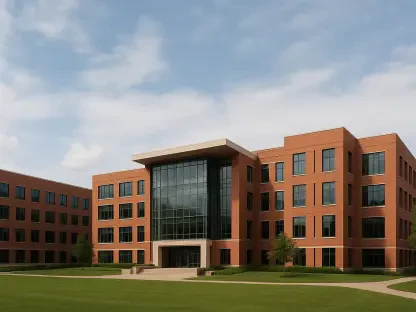
Architectural advancements in sustainability and energy efficiency have inadvertently created significant barriers to wireless signal penetration across modern educational campuses. The widespread use of low-emissivity glass, which is designed to reflect infrared light and reduce cooling costs, also acts as a highly effective shield against the radio frequencies used by cellular carriers and emergency responders. Furthermore, the reliance on steel-reinforced concrete and dense masonry in high-rise dormitories and research facilities further isolates the interior of these buildings from the outside macro-network. These materials create “Faraday cages” that trap residents in communication voids, making it nearly impossible for mobile devices to maintain a stable connection. Facility managers must recognize that the very features making a building environmentally friendly are often the same ones that compromise its digital accessibility, requiring a sophisticated understanding of how physical structures interact with wireless waves to ensure that safety is never sacrificed for the sake of energy efficiency.
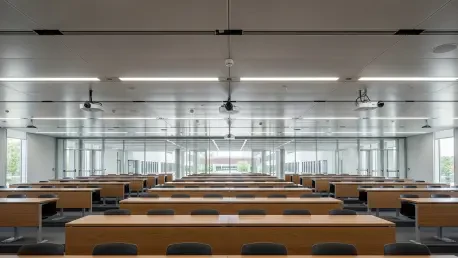
The presence of communication dead zones within a campus footprint represents a critical operational vulnerability that extends far beyond a simple inconvenience for the student population. In high-risk areas such as massive athletic arenas, library stacks, or mechanical rooms located deep within building cores, the absence of a reliable signal can stall the coordination of first responders during a crisis. If a building’s shell prevents exterior signals from entering, the internal safety network essentially fails, leaving occupants isolated from real-time instructions or help. Addressing these gaps requires a meticulous assessment of the physical environment to identify where specific materials are obstructing signal flow. By mapping these obstructions, facilities teams can design targeted indoor coverage solutions that effectively bypass architectural barriers. This proactive management ensures that the physical campus remains a connected environment where communication is guaranteed regardless of whether an individual is standing in an open quad or deep inside a reinforced laboratory.
The Technical Infrastructure of Campus Life Safety
To effectively bridge the gap between exterior networks and interior spaces, facility managers are increasingly implementing the Public Safety Emergency Responder Communication Enhancement System. These systems are specifically engineered to provide dedicated pathways for the two-way radios used by fire departments, police officers, and medical personnel during an emergency response. Unlike standard cellular networks, which may become congested during a large-scale incident, an enhancement system provides a hardened, reliable signal that penetrates the most isolated areas of a facility. Compliance with local fire codes and national standards has made these installations a non-negotiable aspect of building operations. By ensuring that responders can communicate clearly from a stairwell or a basement, facility managers provide the essential infrastructure that allows for a rapid and coordinated reaction to any threat. This dedicated layer of connectivity is a fundamental component of the facility’s broader life-safety ecosystem.
Complementing the public safety infrastructure is the Cellular Distributed Antenna System, which serves the broader communication needs of students, faculty, and administrative staff. In 2026, the reliance on mobile applications for mass notification systems means that a student’s ability to receive a text message in a dormitory basement is a vital link in the safety chain. A cellular system functions by distributing carrier signals through a network of small antennas placed strategically throughout a building, ensuring uniform coverage even in high-capacity zones. This technology not only supports everyday academic activities but also ensures that the entire community remains reachable during a crisis. When integrated with emergency responder systems, a robust cellular network creates a comprehensive communication canopy. Facilities leaders who prioritize this dual-system approach demonstrate a commitment to institutional resilience, recognizing that reliable connectivity is the primary vehicle through which safety information is disseminated and acted upon in a modern educational setting.
Ensuring Long-Term Reliability and Regulatory Compliance
The implementation of advanced wireless infrastructure is only the first step in a broader strategy focused on long-term maintenance and rigorous lifecycle management. Facilities managers must initiate this process with comprehensive benchmark surveys and signal heatmaps to pinpoint exactly where coverage is lacking before any hardware is installed. This data-driven methodology prevents the common pitfalls of over-engineering or leaving critical safety corridors unprotected by providing an accurate visualization of the radio frequency landscape. Once a system is operational, it requires ongoing calibration to account for changes in the surrounding environment, such as new construction nearby or internal renovations that alter the building’s layout. By treating wireless systems as dynamic assets rather than static installations, campus leaders can ensure that the investment remains effective as the campus evolves. Regular performance audits provide the necessary insights to optimize signal distribution and maintain peak operational readiness.
Beyond functional reliability, ongoing compliance with evolving safety regulations is a mandatory responsibility for those overseeing campus facilities. Public safety communication systems are subject to strict annual inspections to verify that they continue to meet the requirements set forth by organizations like the National Fire Protection Association. Failure to maintain these systems not only invites the risk of heavy financial penalties but also creates a significant liability should a communication failure occur during an actual emergency. A structured plan for regular testing, battery replacement, and signal recertification ensures that the campus remains in a state of constant preparedness. Engaging with specialized engineering partners who understand the nuances of these legal codes allows facility managers to navigate the complexities of compliance with confidence. This commitment to rigorous upkeep transforms a building’s wireless infrastructure from a basic utility into a permanent and dependable pillar of the institution’s overall safety and security strategy.
Strategic Integration into Facility Management Workflows
Integrating wireless infrastructure during the initial design and construction phases of a new project emerged as the most cost-effective method for achieving total campus coverage. Retrofitting an existing structure with the necessary cabling and antennas often proved to be significantly more expensive and disruptive than including these systems in the original architectural blueprints. Facility managers who collaborated with architects and engineers early in the process successfully avoided the aesthetic and structural challenges associated with post-construction additions. By treating wireless connectivity as a standard part of the building’s mechanical and electrical systems, campuses achieved a seamless integration that favored both form and function. This forward-thinking strategy allowed for the placement of hardware in optimized locations that provided maximum coverage while remaining discreet. The resulting infrastructure was better equipped to handle the high-bandwidth demands of the latest technological standards, ensuring a longer operational lifespan.
The transition toward viewing in-building wireless as a primary facility priority redefined the standards for campus safety and operational excellence. Facility leaders moved beyond reactive troubleshooting and instead adopted a proactive stance that included regular system updates and cross-departmental coordination. By fostering partnerships between IT, security, and facility departments, institutions created a unified front against communication barriers. These collaborative efforts ensured that every square foot of the campus was covered by a reliable signal, providing peace of mind to students and staff alike. The implementation of robust monitoring tools allowed for the immediate detection of signal degradation, which empowered teams to address issues before they impacted the community. Ultimately, the focus on sophisticated wireless infrastructure provided a more resilient environment where information flowed without interruption. These strategic actions solidified the role of facility management as a central player in the ongoing evolution of the smart and secure modern campus.