
The approach of the United States’ 250th anniversary in the current year of 2026 has prompted a profound re-examination of how foundational national narratives are introduced to children aged birth through eight. For decades, the standard pedagogical model for early childhood social studies centered on celebratory, simplified accounts that focused almost exclusively on a handful of iconic figures and a linear progression toward liberty. However, as the semi-quincentennial arrives, educators are increasingly recognizing that these sanitized versions of history often omit the lived experiences of marginalized groups and the complex realities of the nation’s origins. The challenge lies in moving beyond the “myth of America”—a narrative of perfection and inevitable progress—toward a more honest and inclusive framework. This shift is not merely an academic exercise but a response to the growing realization that young children are fully capable of engaging with concepts of fairness, justice, and historical truth when presented in a manner that respects their cognitive and emotional development. By rooting these lessons in reality rather than folklore, educators aim to foster a generation of critical thinkers who understand that the story of their country is a complex, ongoing project rather than a finished or flawless masterpiece.
Re-evaluating the Ethical Mandate: Truth-Telling as Care
The traditional impulse to shield young children from the more difficult aspects of American history, such as chattel slavery and settler colonialism, has long been framed as a protective measure intended to preserve childhood innocence. Yet, a growing consensus among early childhood professionals suggests that withholding historical truths can actually lead to a “betrayal of trust” when children eventually encounter more accurate information later in their education. When an educator presents the founders as infallible heroes without mentioning their roles as enslavers, they are essentially providing a form of propaganda that children must later painfully unlearn. This process of unlearning often causes significant intellectual and emotional distress, leading many to question the credibility of their early teachers and the institutions they represented. By contrast, an ethical approach to the 250th anniversary involves holding the line against simplified hero narratives and instead offering a balanced perspective that acknowledges both the ideals of the revolution and the contradictions of the period. This form of truth-telling is increasingly viewed as an act of democratic empowerment, providing children with the tools they need to navigate a complicated world with honesty and resilience.
Fostering an environment where historical honesty is prioritized requires educators to leverage a child’s innate sense of fairness as a primary pedagogical tool. Even at a very young age, children are highly sensitive to who gets to play with a certain toy or who is being left out of a group activity, making the concept of “fairness” an ideal bridge to complex historical discussions. For instance, explaining that the rules of the early United States were written by a small group of people while excluding many others resonates deeply with a child’s social understanding. Instead of lecturing about the intricacies of 18th-century law, teachers can facilitate discussions about the impact of these exclusions on families and communities of the time. This approach does not seek to overwhelm young minds with trauma but rather to accompany them through the process of discovery, providing emotional support as they grapple with the reality that the world has not always been fair. By validating their questions and supporting their “big feelings,” educators create a safe space for inquiry that respects the child’s intelligence while preparing them to participate in a diverse and multiracial democracy that values truth over comfort.
The Role of Educator Self-Reflection: Navigating Personal and Professional Identities
Successfully navigating the complexities of the 250th anniversary requires educators to engage in a rigorous process of self-reflection before they even enter the classroom. Because many teachers were themselves raised on nationalistic myths, they must first confront their own intellectual and emotional disequilibrium when faced with the unvarnished truths of the nation’s founding. This “unlearning” process is a necessary prerequisite for authentic teaching, as it allows educators to identify their own biases and ancestral connections to the history they are presenting. For some, this might mean reconciling their admiration for certain historical figures with the knowledge of those figures’ participation in systemic oppression. For others, it might involve uncovering personal family histories that were previously ignored or suppressed. By bringing their full selves to this work, educators can move away from being dispensers of static facts and instead become co-learners who model the curiosity and honesty they hope to instill in their students. This vulnerability humanizes the educational process, making it a collaborative journey of discovery rather than a top-down instruction.
Authenticity in the classroom also serves to build trust with families who may be wary of moving away from traditional historical narratives. When a teacher is transparent about their own ongoing learning and the ethical reasons for choosing a more inclusive curriculum, it signals to parents and guardians that the classroom is a space of integrity and growth. This openness is particularly important in the current socio-political climate of 2026, where discussions about race and history are often heavily scrutinized. By framing the shift toward truth-telling as a professional responsibility and a commitment to child development, educators can ease concerns that their goal is political indoctrination. Instead, they demonstrate that they are providing children with the critical thinking skills necessary to evaluate information for themselves. This reflective practice also encourages teachers to acknowledge the power they hold in shaping young minds, leading to more intentional choices about which stories are centered and whose voices are elevated. Ultimately, the educator’s willingness to do the internal work of unlearning is what enables the creation of a “brave space” where the next generation can explore the full complexity of their national identity.
Navigating the Contemporary Socio-Political Landscape: Challenges and Responsibilities
Teaching the 250th anniversary in 2026 occurs within a highly charged atmosphere marked by significant political polarization and increased surveillance of educational content. Many educators find themselves navigating what is known as the “limitation effect,” a phenomenon where the fear of potential backlash or professional reprisal leads to self-censorship, even in the absence of explicit bans or legislation. This climate of apprehension often discourages teachers from addressing topics like systemic racism or the impact of colonization, which are essential for a comprehensive understanding of the nation’s history. However, early childhood educators often possess a unique degree of pedagogical freedom compared to their counterparts in the K-12 system, who are frequently bound by state-mandated testing and rigid curricular standards. This relative autonomy carries with it a profound responsibility to resist “compliance in advance” and to continue providing an education that is grounded in equity and historical accuracy. By utilizing this freedom, early childhood professionals can serve as a vital vanguard, protecting the integrity of the educational experience for the youngest learners and ensuring they are not subjected to sanitized or weaponized history.
The current national initiative for the 250th anniversary is influenced by a diverse array of stakeholders, some of whom advocate for a strictly nationalist or celebratory agenda that avoids critical inquiry. In this context, solidarity among educators becomes a crucial mechanism for maintaining professional standards and resisting external pressures. When teachers share resources, strategies, and success stories, they build a collective resilience that makes it easier to stand firm against attempts to narrow the scope of classroom discussions. This collaboration also extends across grade levels, as early childhood educators lay the conceptual and emotional groundwork that allows later teachers to build upon a truthful foundation. By fostering a community of practice that prioritizes ethical truth-telling, the profession can push back against the weaponization of history for political ends. This proactive stance is not about being contrarian for its own sake but about ensuring that the educational system fulfills its democratic purpose of preparing informed and engaged citizens. In 2026, the commitment to teaching the world as it truly is remains the most effective defense against the spread of propaganda and the erosion of critical literacy in the classroom.
Identifying Foundational Realities: Centering Inclusion and Resistance
To provide a truthful account of the 250th anniversary, educators must identify and center specific historical realities that are often marginalized in traditional curricula. One such foundational truth is the dual nature of the American Revolution, which was simultaneously a struggle for independence from British rule and a catalyst for the expansion of a settler-colonial empire at the expense of Indigenous nations. Acknowledging this complexity allows children to understand that the quest for liberty for some often resulted in the loss of land and sovereignty for others. Similarly, it is essential to discuss how the United States Constitution was designed to protect the institution of chattel slavery, a fact evidenced by the identities of the majority of its signers and early political leaders. Rather than dismissing the ideals of the founding documents, this approach highlights the profound gap between the stated principles of freedom and the lived experiences of enslaved people. By presenting these facts as the baseline for historical understanding, educators move away from a “great men” theory of history and toward a more integrated story of struggle, contradiction, and human movement.
Another vital historical reality is the recognition that fundamental rights and social progress were not benevolent gifts handed down by political elites but were the hard-won results of tireless organizing and resistance by marginalized communities. When history is taught as a series of concessions from the powerful, it disempowers children by suggesting that change only comes from the top. However, by highlighting the stories of those who fought for abolition, voting rights, and labor protections, educators help children see themselves as potential agents of history. Furthermore, it is important to include the diverse intellectual influences that shaped the American government, such as the democratic practices of the Haudenosaunee Confederacy, which served as a model for the U.S. federal system. This inclusive approach demonstrates that the concepts of democracy and collective decision-making have deep roots on this continent that predate European arrival. By centering these foundational truths, teachers provide children with a more robust and accurate “why” behind the current state of the world, fostering a deeper understanding of how past choices continue to shape contemporary society and the ongoing struggle for justice.
Redefining Developmentally Appropriate Practice: Complexity and Fairness
A common argument against teaching difficult history to young children is the claim that such topics are not “developmentally appropriate” (DAP) due to their complexity or potential for emotional distress. However, a modern and inclusive interpretation of DAP suggests that professional judgment should be based on the child’s social context and cognitive capacity for understanding fairness, rather than a rigid set of age-based exclusions. In fact, many traditional classroom activities, such as making cotton-ball crafts of historical figures who were enslavers, are increasingly seen as developmentally inappropriate because they discourage critical inquiry and force children into a singular, nationalistic narrative. These activities often replace a child’s natural curiosity with a pre-packaged version of the past that leaves no room for questions or contradictions. True developmental practice, by contrast, encourages children to observe, analyze, and notice discrepancies in the world around them. When an educator frames historical events through the lens of fairness—a concept even toddlers grasp—they are meeting the child exactly where they are cognitively and emotionally.
Prioritizing emotional safety in the classroom does not require the use of half-truths or historical omissions; rather, it involves the presence of a supportive adult who can help children process the “big feelings” that inevitably arise when learning about injustice. The goal of this pedagogical approach is to build emotional resilience by showing children that while the world has often been unfair, there have always been people working together to make it better. Educators can translate complex political issues, such as the 3/5ths Compromise or the limitations on voting, into the language of social exclusion and community rules. This allows children to engage with the moral core of the historical narrative without becoming lost in academic jargon or legal technicalities. By accompanying children through these difficult realizations, teachers provide a model for how to handle uncomfortable truths with grace and determination. This redefined DAP ensures that children are not just passive recipients of a sanitized past but active participants in an ongoing dialogue about what it means to build a community where everyone’s voice is heard and valued.
Practical Classroom Strategies: Inquiry and Visual Literacy in Action
Moving from theoretical frameworks to practical classroom application involves the use of specific, inquiry-based strategies that allow children to explore the 250th anniversary through their own observations and experiences. One effective method is to frame the anniversary as a “big party” for the country, which naturally prompts a series of investigations into the nature of invitations and celebrations. Teachers can ask children to consider who was invited to the “party” at the nation’s start, who was already living on the land before the celebration began, and why some people might not have felt like celebrating. This inquiry-based approach turns a static date into a dynamic investigation of power, belonging, and historical memory. By using the familiar metaphor of a party, educators make abstract historical concepts tangible and relatable to a child’s daily life. This method also encourages children to think about the founders as real people who made choices about their community, rather than as mythic figures whose actions were inevitable or beyond question.
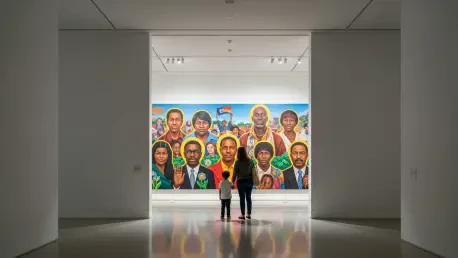
Visual literacy serves as another powerful tool for engaging young learners, who are often highly skilled at “reading” images and noticing details that adults might overlook. By analyzing famous paintings of historical events, such as the signing of the Declaration of Independence, educators can prompt critical thinking with simple but profound questions regarding who is present in the room and who is missing. Children are quick to notice the absence of women, people of color, and young people, leading to rich discussions about the fairness of a system where only one group gets to make the rules for everyone. Similarly, the use of primary source maps can spark deep conversations about land and origins. Comparing a map of Indigenous territories with a modern political map of the United States helps children understand that the land has a history that extends far beyond the last 250 years. These visual aids make the concept of “founding” more concrete and inclusive, allowing children to see the layers of history that exist beneath the surface of contemporary borders. Through these practical strategies, the classroom becomes a laboratory for democracy where children learn to look critically at the world and imagine more inclusive ways of being together.
Cultivating the Future: Democracy as an Ongoing Practice
As the nation marks its 250th anniversary in 2026, the way history is taught in early childhood is fundamentally about the future of a multiracial democracy. By rejecting the “myth of linear progress”—the idea that society naturally and inevitably becomes more just over time—educators teach children that a better world is something that must be intentionally and collectively built. This perspective shifts the role of the child from a passive observer of history to an active participant who understands that their choices and actions matter. When children are encouraged to question unfairness in historical narratives, they are developing the neurological and social-emotional pathways necessary to challenge systemic injustice in their own lives and communities. These skills—critical literacy, empathy, and the ability to navigate complexity—are the foundational requirements for maintaining a healthy and inclusive society. The 250th anniversary thus serves as a pivotal opportunity to foster a new generation of citizens who are equipped with the tools to write the next chapters of the American story with greater honesty and respect.
The ultimate goal of this pedagogical shift is to ensure that every child, regardless of their background, feels a sense of belonging and agency within the national narrative. When educators prioritize truth-telling and critical inquiry, they model the qualities of leadership and ethical responsibility that the future demands. This approach turns the semi-quincentennial into a living lesson on what it means to coexist on this land with a commitment to justice and mutual recognition. By providing children with a more complete and honest foundation, teachers empower them to imagine a future that is more equitable than the past. The story of the United States is not a finished book but an ongoing dialogue, and the children currently in early childhood programs will eventually become the voices that shape that conversation. In 2026, the most patriotic act an educator can perform is to teach the truth, fostering the critical thinking and compassionate action necessary for the survival and flourishing of a truly democratic society.
Reflecting on Pedagogical Progress and Future Directions
The collective efforts to transform early childhood education during the 250th anniversary of the United States were characterized by a significant move away from static, nationalistic narratives and toward a more dynamic, inquiry-based model of historical learning. Educators across the country recognized that the “myth of America” served neither the intellectual nor the emotional needs of their students, and they proactively sought out resources and strategies that centered the experiences of marginalized groups. This shift was supported by a widespread commitment to professional self-reflection, where teachers investigated their own unexamined biases and personal histories to ensure their classroom practices were grounded in authenticity and integrity. By prioritizing fairness as a central theme, the educational community successfully introduced complex topics such as settler colonialism and chattel slavery in ways that respected the developmental stages of young children. This work demonstrated that historical honesty is not only possible in early childhood settings but is an essential component of ethical care and democratic preparation.
The legacy of these pedagogical choices provided a robust framework for future curriculum development and established a new standard for how national milestones should be observed in schools. Moving forward, the focus was placed on maintaining the solidarity and community of practice that emerged during the semi-quincentennial, ensuring that the progress made toward inclusive history was not eroded by shifting political winds. Actionable next steps for the field included the continued creation and distribution of diverse primary source materials and the integration of Indigenous and Black histories as foundational elements of all early childhood social studies. Educators were encouraged to view the classroom as a permanent laboratory for democracy, where children could practice collective decision-making and critical analysis on a daily basis. This forward-looking approach ensured that the lessons of 2026 were not viewed as a one-time event but as a permanent shift in how the nation’s youngest citizens were prepared to understand their past and shape their future. The commitment to truth-telling became the cornerstone of a more resilient and inclusive educational system, fostering a generation of learners who were ready to contribute to a more just and representative society.