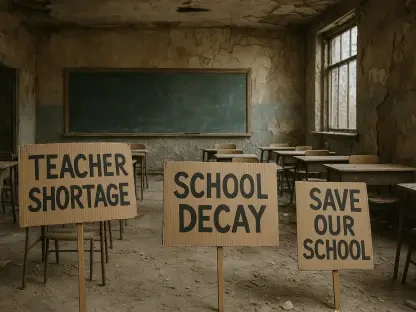

The quiet halls of Michigan’s public schools tell a story of demographic contraction that is fundamentally altering the state’s educational landscape. Over the last fifteen years, approximately 80% of districts have seen a steady decline in student numbers, a trend that experts believe has been brewing for nearly three decades. This is not merely a crisis for urban centers like Detroit or Saginaw; it is a systemic shift affecting suburban and rural communities with equal intensity. As the state moves forward in 2026, administrators are grappling with the reality that the post-expansion era of the 20th century has ended, replaced by a need for leaner, more efficient operations. The challenge lies in balancing the emotional weight of school closures against the fiscal necessity of maintaining viable learning environments. With per-pupil funding tied directly to enrollment, every missing student creates a vacuum in the budget that threatens the quality of services for those who remain.
Driving Forces: Economic and Demographic Realities
As birth rates continue to fall across the Great Lakes region, the most significant driver of this enrollment crisis remains the state’s shifting demographic profile. There are simply fewer children entering the K-12 pipeline than in previous generations, a fact exacerbated by a general aging of the Michigan workforce. This natural decline is compounded by regional economic pressures that force young families to seek opportunities in other states or more affordable regions. In cities such as Saginaw, the historical departure of industrial giants like General Motors left a void that has never been fully filled, leading to a migration of families that once formed the backbone of the local school system. When the economic foundation of a community erodes, the school-age population is often the first demographic to vanish, leaving behind infrastructure designed for a much larger student body.
In metropolitan hubs like Grand Rapids, the decline is influenced by different but equally potent factors, specifically the rising cost of living and a lack of affordable housing for young families. Even as local economies diversify, the inability of young parents to find attainable housing within city limits pushes them toward outlying areas or out of the district entirely. Furthermore, the modern educational landscape is defined by an increase in school choice and alternative learning institutions, which creates a competitive environment for traditional public schools. This competition for a dwindling pool of customers means that districts can no longer take their enrollment numbers for granted. Every family that chooses a charter school or a private institution represents a direct reduction in the state aid that supports the remaining public infrastructure.
The Fiscal Cliff: Funding and Infrastructure Costs
Michigan’s school funding model is built on a per-pupil state aid system, which currently allocates approximately $10,050 for every enrolled student. This structure means that revenue is incredibly sensitive to population shifts, causing immediate financial strain when enrollment dips even slightly. However, the costs of maintaining physical assets—ranging from heating and electricity to roof repairs and general custodial services—do not scale down in proportion to the student body. A building designed for a thousand students still requires significant investment even if only five hundred are walking through the doors each morning. Many districts report that their facilities are operating at roughly half their intended capacity, which forces administrators to spend a disproportionate share of their budgets on empty square footage rather than on direct classroom instruction or teacher salaries.
The financial pressure on Michigan districts was temporarily masked by federal relief funds distributed during recent global health challenges, but these resources have now been largely exhausted. As these one-time dollars disappear in 2026, districts are finding themselves at a fiscal cliff that necessitates difficult decisions regarding facility management. Maintaining the status quo is no longer a viable option for most boards of education, as the cost of keeping underutilized buildings open threatens the long-term solvency of the entire system. Strategic consolidation has become the primary tool for survival, allowing districts to shed the burden of aging, inefficient properties and redirect those funds toward modernizing the remaining sites. By closing redundant facilities, administrators can ensure that their limited state aid is used to enhance the student experience rather than simply paying utility bills.
Strategic Consolidation: Modernizing the School Footprint
Major districts across the state are currently implementing aggressive restructuring plans aimed at rightsizing their footprints for a smaller but more modern student population. In Detroit, the public school community district is moving forward with plans to close several facilities to generate general revenue and reduce the massive overhead associated with maintaining historic but crumbling infrastructure. Similarly, Grand Rapids is deep into a multi-year initiative to close ten schools while utilizing hundreds of millions in bond funding to renovate the buildings that remain. These renovations are not just cosmetic; they represent a fundamental shift toward creating technologically advanced spaces that can support 21st-century learning. By concentrating efforts on fewer, higher-quality locations, these districts are turning a demographic crisis into an opportunity for structural renewal.
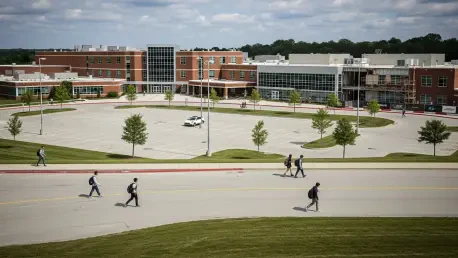
Saginaw provides a compelling example of how consolidation can lead to superior facilities through the creation of the newly constructed Saginaw United High School. By merging two older high schools into a single, state-of-the-art campus, the district has been able to offer amenities and technological resources that were previously financially out of reach. This move was supported by a significant local millage, demonstrating that while communities are often resistant to losing neighborhood schools, they are willing to invest in a centralized model that promises better outcomes. The success of such projects hinges on the ability of administrators to communicate that a single, well-resourced building provides more value than two underfunded ones. This strategic consolidation allows districts to create a critical mass of students that justifies investments in specialized labs.
Academic Gains: Optimizing Resources and Staffing
Beyond the financial benefits, the push toward consolidation offers significant pedagogical advantages by allowing districts to pool their limited resources. Small, underpopulated schools often struggle to maintain a diverse curriculum, frequently cutting specialized electives or advanced placement courses due to low interest or lack of funding. When students are brought together under one roof, districts can leverage their economies of scale to offer a much broader range of academic opportunities. For instance, consolidated schools can now provide specialized STEM programs, advanced robotics, and foreign languages like Mandarin that were previously impossible to sustain in smaller settings. In Grand Rapids, middle school students now have access to high-end media production studios and vocational equipment that were formerly reserved for a few elite programs and specialized academies.
Consolidation also serves as a vital strategy for addressing the persistent shortage of certified educators by centralizing the professional workforce. In a fragmented system, districts often find themselves spreading their best teachers too thin or relying on long-term substitutes to fill gaps in understaffed buildings. By consolidating the student body, administrators can ensure that every classroom is led by a qualified expert in their specific subject matter, rather than a generalist covering multiple roles. This optimization of human capital is essential for maintaining high academic standards and providing the specialized support that many students require. Furthermore, a centralized staff allows for better professional collaboration and mentorship, which improves teacher retention and morale. As Michigan navigates these changes in 2026, the focus has shifted toward instructional quality.
Next Steps: Navigating the Future of Michigan Education
The transition toward a more concentrated educational model in Michigan required a fundamental shift in how communities perceived the role of the neighborhood school. Successful districts prioritized transparent communication and data-driven decision-making to demonstrate that consolidation was a tool for empowerment rather than a sign of defeat. Administrators worked closely with urban planners to ensure that closed facilities did not become blighted landmarks but were instead repurposed for community housing or small business incubators. This holistic approach ensured that the rightsizing process supported the broader economic health of the region. Furthermore, state policymakers explored new funding formulas that moved away from a strictly per-pupil model to provide more stability for districts facing rapid demographic changes. By embracing these structural reforms, Michigan’s educational leadership transformed a period of contraction into a catalyst for long-term sustainability.