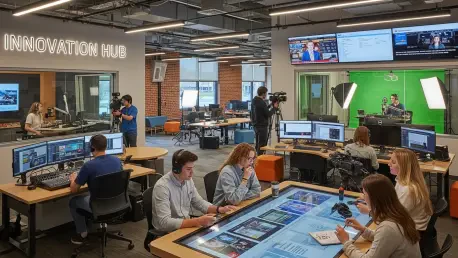

The traditional boundary between collegiate instruction and professional broadcast journalism has effectively collapsed with the launch of high-tech production facilities designed for student immersion. At Seton Hall University, the recent recording of the program Campus Nightly serves as a definitive milestone in this evolution, representing the first time a student organization has fully harnessed the specialized capabilities of the Innovation Hub Production Studio. This event was far more than a routine taping; it functioned as a sophisticated demonstration of an educational philosophy that prioritizes hands-on experience over passive classroom learning. By integrating professional-grade technical resources with the creative drive of the student body, the university has successfully validated the Hub as a central pillar of its digital infrastructure. This shift ensures that media education is no longer confined to theoretical discussions but is practiced in an environment that demands excellence.
Bridging Technology and Practice
Creating a Professional Environment: Real-World Standards
The integration of professional-grade equipment within a university setting fundamentally alters the educational trajectory of aspiring media professionals by removing the safety net of simulated environments. When students step into a studio that mirrors the technical complexity of a major network newsroom, the stakes of their education are immediately elevated from academic exercise to professional responsibility. This transition is essential because it prepares the next generation of creators to navigate the high-pressure demands of a workforce that increasingly values immediate technical proficiency and adaptability. By working with top-tier cameras, lighting rigs, and digital switchers, students move beyond the basics of media production, learning to manage the intricate workflows required for high-quality broadcasts. This environment fosters a level of competence that is difficult to replicate in a standard classroom setting, ensuring that every graduate enters the industry with a portfolio of work that meets professional standards.
Furthermore, the presence of such a high-tech facility encourages a culture of continuous learning and technical mastery that extends well beyond the requirements of a single course or project. Students who utilize the Innovation Hub find themselves immersed in a culture that rewards precision and technical curiosity, which are hallmarks of successful media careers in the year 2026. This pedagogical model recognizes that the tools of the trade are constantly evolving, and by providing access to current industry standards, the university bridges the gap between graduation and employment. The result is a cohort of students who are not only familiar with the equipment but are also capable of troubleshooting and innovating within a complex digital ecosystem. This deep level of engagement ensures that the transition from a university studio to a professional media house is seamless, as students have already spent their formative years operating at a high level of technical and creative sophistication.
Mastering Complex Media Logistics: A Dual-Site Approach
The logistical execution of recent student broadcasts has demonstrated a remarkable degree of technical coordination, particularly through the use of synchronized, multi-site production strategies. During the production of Campus Nightly, the student crew successfully managed a cross-campus effort that required one team to be stationed at the Innovation Hub while another captured essential content at the established University Center. This dual-site approach is a significant departure from traditional single-room productions, forcing students to master the complexities of remote communication and synchronized digital feeds. Navigating such a demanding environment requires more than just technical knowledge; it demands clear leadership and the ability to maintain composure under the pressure of a live-style recording. Such experiences are invaluable, as they replicate the multifaceted nature of contemporary news broadcasting, where segments are often pulled from various locations in real-time.
Developing these logistical skills is a critical component of the university’s commitment to experiential learning, ensuring that students are prepared for the realities of modern media distribution. The ability to coordinate between two distinct production environments requires a high level of technical proficiency and a thorough understanding of the underlying network infrastructure. Students must ensure that audio and video signals are perfectly aligned, that cues are transmitted without delay, and that the creative vision remains consistent across different physical spaces. This level of complexity pushes the student body to think critically about the mechanics of broadcasting, fostering a mindset that is both analytical and creative. By successfully executing these multi-site productions, the student media organizations have proven that they possess the discipline and the technical aptitude necessary to thrive in an industry where agility and technical synchronization are paramount to success.
Empowering the Next Generation of Creators
Fostering Creativity and Career Readiness: Tools for Growth
Technological empowerment acts as a primary catalyst for student growth, providing the necessary tools to transform abstract ideas into compelling digital narratives that resonate with modern audiences. For many student correspondents and journalists, the availability of advanced studio amenities offers a unique platform to refine specialized skills that are directly transferable to the competitive broadcast market. Access to high-definition recording equipment and sophisticated editing suites allows students to experiment with new storytelling techniques, pushing the boundaries of what is possible in a campus-based production. This environment functions as a professional development lab where the focus is on experimentation and the pursuit of excellence. By providing a space where students can fail safely and learn quickly, the university builds the confidence required for these individuals to lead in their future careers, ensuring they are ready for any challenge.
Moreover, the psychological impact of working with top-tier technology cannot be overstated, as it encourages students to take greater ownership of their creative output and professional journey. When a student sees their work produced with the same quality as a professional news segment, it validates their efforts and motivates them to achieve even higher standards of performance. This cycle of achievement and validation is crucial for building a professional identity, allowing students to see themselves not just as learners, but as practitioners of their craft. The Innovation Hub provides the physical and technical foundation for this shift, acting as a beacon for creative exploration across diverse media formats. As students engage with these tools, they develop a portfolio that serves as a testament to their readiness for the global job market, characterized by a blend of technical mastery and innovative thinking that is highly sought after by employers today.
Expanding Creative Horizons Through Leadership: Visionary Ambition
From a leadership perspective, the expanded capabilities provided by a state-of-the-art studio environment allow student directors to execute creative visions that were previously impossible within traditional constraints. The physical infrastructure of the Innovation Hub serves as a driver for editorial ambition, challenging student leaders to elevate the quality of their programming and set a high bar for their peers. By taking on the responsibility of managing a production in such a prestigious space, student directors and producers develop a deep sense of accountability for the final product. This visionary expansion ensures that student media remains at the forefront of campus life, constantly evolving to match the speed and sophistication of the professional world. The opportunity to lead a team in a high-stakes environment prepares these students for the administrative and creative challenges they will face as they move into senior roles within the media industry.
This commitment to leadership development through technical immersion is a cornerstone of the university’s broader mission to produce graduates who are capable of driving innovation in their respective fields. By placing students in charge of complex production workflows, the university fosters a culture of independence and problem-solving that is essential for long-term career success. Student leaders must learn to balance the technical limitations of their equipment with the creative desires of their team, a delicate act that requires both empathy and authority. The Innovation Hub facilitates this growth by providing a professional-grade sandbox where leadership skills can be tested and refined in real-time. The result is a generation of media professionals who are not only technically proficient but also possess the strategic vision and interpersonal skills necessary to lead teams in the fast-paced, ever-changing landscape of digital media and broadcast journalism.
Cultivating a Culture of Professionalism
Shifting Mindsets Through Experiential Learning: Professional Mode
The most profound impact of the new production facilities is the immediate psychological shift it triggers within the student body, moving them from a mindset of academic compliance to one of professional dedication. Being in a workspace that mirrors a top-tier professional studio naturally encourages students to adopt the disciplines, behaviors, and standards expected in a high-stakes workforce environment. This transition into “professional mode” is a critical element of the experiential learning model, where the physical environment acts as a silent instructor in the nuances of industry conduct. When students are surrounded by professional-grade equipment, they tend to treat their assignments with greater gravity, recognizing that their work has the potential to reach a much wider audience. This sense of professionalism is not something that can be taught through a textbook; it must be experienced through the daily practice of managing high-quality media productions.
Furthermore, this evolution in student mindset is supported by the university’s commitment to creating spaces that prioritize active engagement and interdisciplinary collaboration over traditional lecture formats. The Innovation Hub is a physical manifestation of a philosophy that views education as an ongoing conversation between theory and practice, where students are given the agency to apply what they have learned. By requiring students to adapt to new technologies and work under the pressure of production deadlines, the university fosters a culture of resilience and adaptability. These traits are essential for navigating the complexities of the modern job market, where the ability to pivot and learn new skills is often more valuable than specific static knowledge. This shift in perspective ensures that students are not merely observers of their field but are active participants who are capable of contributing meaningful insights and high-quality work from the very start of their careers.
Building Adaptability for the Modern Market: Future Competency
In the current landscape of 2026, the demand for media professionals who can seamlessly navigate multiple digital platforms and technical environments has never been higher. The university’s focus on providing a versatile production space like the Innovation Hub addresses this need by preparing students to work across various disciplines, including communication, digital media, and broadcast education. This interdisciplinary approach ensures that students are not pigeonholed into a single role but possess a broad set of skills that can be applied to many different professional contexts. By working in a facility that supports everything from podcasting to high-definition video production, students learn to be agile and versatile, which are key requirements for long-term success in the digital age. This training goes beyond simple technical instruction; it builds a foundation of practical competency that allows graduates to thrive in an ever-shifting economic landscape.
The cultivation of these essential traits is further enhanced by the university’s emphasis on real-world application, ensuring that every project undertaken in the Hub has a tangible outcome. Whether it is a student-led news program or a collaborative documentary project, the focus remains on producing work that meets a high standard of professional excellence. This focus on output helps students understand the value of their contributions and the importance of meeting the expectations of an audience. As they navigate the challenges of production, they develop the problem-solving skills and technical fluency needed to overcome obstacles and deliver results. This commitment to practical, results-oriented education ensures that the university remains a leader in media training, producing graduates who are not only prepared for the jobs of today but are also equipped to shape the media landscape of the future through their creativity and technical expertise.
Sustaining Success Through Technical Support
The Importance of Mentorship: Supported Independence
A critical factor in the success of high-level student productions is the deep-seated partnership between the creators and the technical experts who manage the university’s digital infrastructure. While the students lead the creative and operational aspects of their projects, they do so with the support of the Teaching, Learning and Technology Center, which provides the necessary guidance to navigate complex systems. This model of “supported independence” is vital because it allows students to take calculated risks and push the boundaries of their craft while knowing they have a safety net of professional expertise. Mentors provide the technical scaffolding that allows student ambitions to take flight, ensuring that technical hurdles do not stifle creative exploration. This collaboration fosters a rich learning environment where technical skills are transferred through direct mentorship, creating a bridge between student curiosity and professional mastery.
Moreover, this relationship between students and technical staff highlights the importance of institutional support in fostering a culture of innovation and excellence within the campus media landscape. The presence of professional staff who are dedicated to supporting student projects ensures that the facilities are utilized to their full potential and that the quality of production remains consistently high. This support system is not just about fixing equipment or troubleshooting software; it is about providing the strategic advice and technical insights that help students elevate their work from good to exceptional. By working closely with technical experts, students gain a deeper understanding of the professional standards and workflows that govern the media industry. This partnership ensures that the university’s investment in high-tech infrastructure yields maximum benefits for the student body, resulting in productions that are both technically flawless and creatively inspired, setting a new standard for campus media.
Implementing Actionable Standards: Future-Ready Media
The milestone production of Campus Nightly in the Innovation Hub provided a definitive blueprint for how modern universities can successfully integrate professional technology into the student experience. By providing a facility that demands logistical competency and encourages a professional demeanor, the institution ensured its graduates moved into the workforce with a significant competitive advantage. The students who participated in these early broadcasts effectively transformed theoretical classroom knowledge into practical, high-stakes expertise, proving that they could handle the complexities of a multi-site production under pressure. These initiatives were essential for establishing a culture where student-led media was no longer viewed as a hobby but as a rigorous professional training ground. The success of this model was rooted in the seamless blend of advanced infrastructure, professional mentorship, and the unwavering creative ambition of the student body.
Moving forward, the focus for student media organizations should be on maintaining this momentum by consistently seeking out new ways to utilize the Hub’s evolving technological capabilities. Future projects ought to prioritize interdisciplinary collaboration, bringing together students from diverse academic backgrounds to solve complex storytelling challenges and explore emerging digital formats. By continuing to set high standards for technical and creative output, the university will reinforce its position as a leader in media education and technological integration. The actionable takeaway from this era of development is that the quality of the environment directly influences the quality of the student’s work and their professional identity. As more student groups adopt these professional standards, the Innovation Hub will continue to serve as a vital catalyst for innovation, ensuring that every student who passes through its doors is fully prepared to lead and excel in the global media landscape.