
The Stony Brook Robotics Team utilizes the fair as its primary recruitment tool, often filling subsequent meetings to capacity with students interested in PCB design. This enthusiasm highlights the critical role of the College of Engineering and Applied Sciences involvement fair as a catalyst for professional growth and community integration. Held annually, the event serves nearly seven hundred students who are eager to bridge the gap between theoretical coursework and the practical demands of the modern engineering landscape. By hosting twenty-one distinct student organizations, the administration creates an environment where incoming freshmen and experienced upperclassmen can interface with peers and mentors. This gathering is designed to transform the university experience from a solitary academic endeavor into a collaborative professional journey. It acts as a cornerstone for student success, providing a centralized venue for those looking to apply their skills in competitive and research-oriented settings. Through this initiative, the university fosters a culture of readiness that extends well beyond the boundaries of the campus.
Bridging the Gap: From Academic Theory to Professional Practice
Cultivating Professional Skills and Hands-On Experience
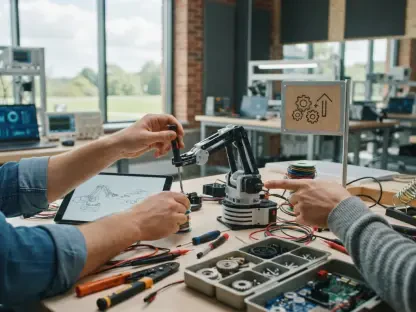
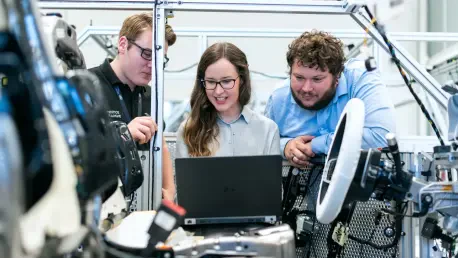
The fair serves as a vital platform for experiential learning by showcasing organizations that challenge students to solve complex, real-world technical problems. Participants are introduced to diverse projects, ranging from autonomous robotics to the construction of high-performance off-road vehicles and renewable energy systems for solar boats. These activities are essential because they allow students to move past the abstract nature of textbook equations and engage with the physical realities of engineering. By applying mathematical and physical principles to tangible products, students solidify their understanding of classroom concepts and develop a deeper appreciation for the iterative nature of design and testing. This hands-on approach ensures that graduates possess the technical dexterity required to navigate the sophisticated engineering environments of today. The fair successfully translates academic potential into practical capability, preparing individuals for the rigors of industrial design and technical troubleshooting.
Beyond the acquisition of technical mastery, the event serves as a crucial junction for developing non-technical skills that are frequently overlooked in standard engineering curricula. Students who join these organizations quickly learn the nuances of project management, including the ability to handle strict deadlines and complex logistics. They are often tasked with managing budgets, sourcing materials, and coordinating large teams, all of which are essential skills for any professional engineer. Furthermore, the fair provides an immediate opportunity for professional networking, as students interact with organization leaders and potential industry recruiters who attend the event. This exposure helps participants understand that successful engineering is not just about calculations; it involves clear communication, administrative precision, and the ability to collaborate effectively within a multifaceted team structure. Consequently, the fair functions as a comprehensive training ground for the diverse challenges of the modern professional workforce.
Enhancing the Student Experience Through Community
A central objective of the involvement fair is to increase the sense of belonging among the student body, which is a documented factor in academic retention and long-term success. To lower the barrier of entry for newcomers, the event integrates informal social elements that transform a professional recruitment drive into a welcoming community mixer. Activities such as lawn games, the presence of the university mascot, and ice cream socials create a relaxed atmosphere that encourages students to step out of their comfort zones. This approachable setting is particularly important for STEM students, who often face high levels of stress and academic isolation due to the demanding nature of their programs. By fostering these early social connections, the university helps students build a support network that will sustain them throughout their college years. The fair effectively humanizes the academic experience, making the transition into a high-pressure engineering environment feel more manageable and inclusive.
The informal nature of the fair also facilitates unique levels of accessibility between the student body and the university hierarchy. In this setting, students can interact not only with their peers but also with faculty and staff in a way that is rarely possible in a traditional lecture hall. This interaction helps to break down the perceived distance between students and administrators, fostering a more collaborative and supportive educational environment. By engaging with mentors over snacks or during a game, students feel more empowered to seek guidance and participate in the various resources offered by the college. This sense of community is vital for maintaining student motivation and ensuring that the college remains a place where innovation is driven by collective effort rather than individual competition. Ultimately, the fair succeeds in building a cohesive social fabric that supports both the academic and emotional needs of every student, paving the way for a more resilient and connected engineering community.
Specialized Pathways: Strategic Development and Technical Innovation
Professional Development and Industry Connectivity
Many of the societies represented at the fair, such as the American Institute of Aeronautics and Astronautics and the American Society of Mechanical Engineers, focus heavily on professional branding. These organizations offer specialized services like resume reviews, guest speaker events, and industry workshops that provide students with a direct link to the professional world. By participating in these groups, students gain a competitive edge in the job market as they learn how to present their technical skills to high-stakes recruiters. The focus on professional development ensures that members are not only technically proficient but also market-ready. For students interested in the aerospace or mechanical sectors, these societies act as a bridge to internships and career opportunities that might otherwise be inaccessible. This strategic emphasis on industry connectivity helps students build a professional network long before they graduate, securing their future in a highly competitive global economy.
Honor societies like Pi Tau Sigma further elevate the academic standard of the college by recognizing leadership and excellence among high-achieving students. While these organizations maintain rigorous entry requirements, they often remain inclusive by opening their professional development workshops to the broader student population. This approach allows a wider range of students to benefit from the high-level networking and leadership training that these societies provide. By spreading a culture of excellence across the entire department, honor societies help raise the collective performance of the student body. This inclusivity ensures that every student, regardless of their current academic standing, has access to the tools and mentorship needed for professional growth. The fair serves as the primary stage for these societies to promote their mission, ensuring that academic success is celebrated and that the resources for achieving it are transparent and accessible to everyone within the engineering college.
Interdisciplinary Collaboration and Technical Innovation
The fair provides an essential platform for teams that demonstrate the complete product lifecycle, such as the motorsports and solar racing teams. These organizations require intense interdisciplinary collaboration, bringing together designers, builders, and project managers to create highly complex systems. For instance, building an off-road vehicle for competition requires input from mechanical engineers, electrical specialists, and those focused on logistics and budgeting. This environment allows students to specialize in cutting-edge fields like PCB design and computer vision, both of which are in high demand across the technology sector. By working on these multifaceted projects, students learn how different engineering disciplines must integrate to achieve a successful outcome. This experience is a microcosm of the professional world, where interdisciplinary cooperation is the standard for innovation. The fair ensures that students are exposed to these collaborative dynamics early in their academic careers.
Reflecting the global shift toward environmental responsibility, the inclusion of groups like the Solar Racing Team provides a chance for students to engage directly with sustainability research. By designing and building solar-electric race boats, students explore the intersection of high-performance engineering and green technology. This exposure is critical as it prepares the next generation of engineers to address the environmental challenges of the future through innovative design and renewable energy solutions. The fair acts as a showcase for these forward-thinking projects, attracting students who are passionate about making a positive impact on the planet. Participation in such teams fosters a mindset of responsible innovation, ensuring that students are not only technically capable but also conscious of the broader social and environmental implications of their work. Through these specialized pathways, the involvement fair helps shape a workforce that is equipped to lead the transition toward a more sustainable and technologically advanced future.
Integrating Practical Experience for Future Innovation
The 2026 involvement fair successfully demonstrated that the strength of an engineering program lies in its ability to merge community engagement with technical rigor. The event provided a clear roadmap for student success by emphasizing the importance of involvement beyond the classroom. It was through these interactions that students established the connections necessary for both academic retention and professional advancement. The administration observed a significant increase in student participation across all twenty-one organizations, confirming that the centralized nature of the fair was the most effective method for recruitment. This success reinforced the university’s commitment to providing experiential learning opportunities that mirrored the complexities of the industrial world. By prioritizing social cohesion alongside technical development, the college ensured that its students were prepared for the multifaceted demands of their future careers.
The long-term impact of the event was evident as student leaders took on roles that required managing significant budgets and executing long-term goals. These experiences allowed participants to develop a robust portfolio of hands-on work that served as a powerful testimonial to their capabilities during job interviews. Moving forward, students should continue to seek out these interdisciplinary roles to refine their specialized knowledge while building a broad base of collaborative skills. The fair established a benchmark for how academic institutions can cultivate the next generation of innovators by providing a space for both technical exploration and professional networking. It is recommended that students remain proactive in their involvement, as the leadership and technical skills gained during these projects are the primary qualities sought by international recruiters. The event ultimately proved that a holistic approach to engineering education is essential for producing well-rounded and successful professionals.