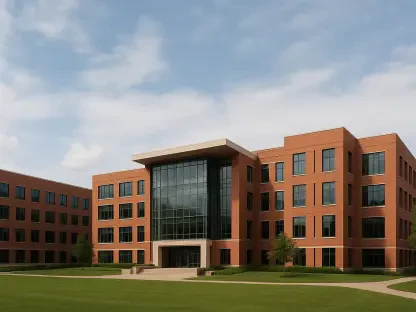

Since 2022, the college has achieved an 11% increase in enrollment despite the broader systemic challenges currently facing the higher education sector. This growth stems from a unique organizational structure as an affiliate of Penn State University that retains its own 501(c)(3) nonprofit status and independent accreditation. By operating with this level of autonomy, the Pennsylvania College of Technology successfully bridges the gap between the prestige of a large-scale land-grant institution and the nimble, responsive nature of a technical college. This specific structural independence allows the college to deliver highly practical, hands-on education that is specifically tailored to the immediate and evolving needs of modern industry. While many traditional universities struggle to adapt their academic models to the fast-paced shifts in the global economy, this institution remains deeply committed to the individual success of the Commonwealth’s residents through a model that prioritizes applied science over abstract theory alone.
Strengthening the Commonwealth’s Workforce and Infrastructure
Economic Impact: Fueling Local Growth and Retention
The institution functions as a primary driver for the regional economy, maintaining an impressive 98% graduate placement rate that translates into nearly every student moving directly into a professional career or pursuing advanced study. Statistics show that 87% of the student body originates from within Pennsylvania, and perhaps more importantly, 81% of alumni choose to remain in the state long after their graduation. This high retention rate effectively counters the brain drain that plagues many other regions, ensuring that the investment in education results in long-term local prosperity. By focusing on high-demand fields, the college provides a steady stream of qualified professionals who fill essential roles in local industries, thereby stabilizing the workforce and encouraging businesses to expand within the Commonwealth. This symbiotic relationship between the campus and the regional economy creates a resilient financial ecosystem that benefits both the students and the taxpayers who support public education.
Beyond the traditional degree-seeking population, the college extends its influence deep into the professional pipeline by offering robust dual enrollment programs for high school students. These initiatives allow younger learners to gain technical skills and college credits simultaneously, reducing the time and cost associated with obtaining a degree while sparking interest in high-tech careers. Furthermore, the college prioritizes the development of the existing workforce through comprehensive upskilling opportunities for thousands of incumbent workers. In the period from 2026 to 2028, these programs are expected to expand significantly as industries demand faster transitions to new technological standards. By providing these specialized training modules, the institution ensures that veteran employees can remain competitive in an increasingly automated environment. This multi-tiered approach to education addresses the workforce needs at every stage, from the high school junior to the seasoned professional.
Curricular Agility: Alignment with Industry Standards
To keep the educational offerings relevant, the college maintains a radical commitment to industry alignment through the use of active advisory committees. These groups are composed of seasoned professionals and industry leaders who collaborate directly with faculty to review and update the curricula. This partnership resulted in over 150 program changes in a single academic year, a level of agility that is rarely seen in traditional academic settings. Because these committees provide real-time feedback on the skills and tools required in the field, the college can pivot its instructional focus to match the current market demand. This ensures that when students graduate, they are not just knowledgeable in theory but are proficient in the exact methodologies used by top-tier employers. This constant state of evolution prevents the curriculum from becoming stagnant and guarantees that every degree remains a valuable asset for the graduate in the competitive labor market.
This nimble approach allows for the rapid integration of cutting-edge subjects such as Artificial Intelligence and advanced Project Management into existing degree paths. By embedding these modern technological trends into the core coursework, the institution prepares its students for the high-stakes environments of advanced manufacturing and digital infrastructure. Faculty members are encouraged to experiment with new pedagogical techniques that reflect the collaborative and tech-heavy nature of the modern workplace. Consequently, graduates emerge with a diverse skill set that includes both technical mastery and the soft skills necessary for leadership and complex problem-solving. As industry requirements shift from 2026 to 2027, the college remains positioned to lead the way in workforce readiness by anticipating these changes before they become mainstream. This proactive stance ensures that the workforce of Pennsylvania remains at the forefront of the global technological revolution.
Laboratory Excellence: Infrastructure and Holistic Support
The physical campus serves as a massive laboratory where students gain hands-on expertise using equipment that is often rare even in high-end industrial settings. With over 150 specialized labs, including the Gene Haas Center for Innovation, the college prioritizes bench-ready training over purely theoretical study. This immersion in real-world environments allows students to master complex tasks in a controlled, educational setting before they ever step foot on a job site. For instance, the college houses the largest welding and fabrication engineering teaching center in North America, offering students access to machinery like electron beam and robotic welders. By providing access to such sophisticated tools across the schools of Engineering Technologies and Nursing and Health Sciences, the college ensures graduates possess the technical proficiency required for critical roles. This infrastructure represents a significant capital investment that directly translates into superior student readiness and a distinct competitive advantage.
The institution established a framework that successfully integrated data-driven academic intervention with comprehensive student advocacy. It served as a model for how colleges could utilize systems like Starfish to raise digital alerts the moment a student showed signs of academic or personal struggle. These interventions were vital in fostering a culture of belonging and ensuring that no student fell through the cracks due to a lack of timely support. Furthermore, stakeholders recognized that addressing essential needs, such as mental health and veteran services, was paramount for long-term persistence and social mobility. Moving forward, other institutions should consider adopting similar tiered support strategies to improve retention rates. The college demonstrated that when technical training was paired with compassionate advocacy, the result was a more resilient and capable workforce. These established practices provided a definitive blueprint for future educational policy and a clear path toward sustained economic and student success.