
Public school districts across the United States are currently grappling with a demographic reality that many administrators initially perceived as a terminal crisis for their institutions. However, the steady downward trend in student numbers, particularly noticeable along major metropolitan corridors like Colorado’s Front Range, is increasingly being reframed by educational leaders as a strategic inflection point for long-term growth. Rather than simply reacting to a loss of per-pupil funding with austerity measures, districts now have a unique window to transition away from inefficient, outdated infrastructure toward more nimble, right-sized facilities. This shift represents an opportunity to realign physical school buildings with modern pedagogical needs and contemporary fiscal realities. By proactively managing this transition, administrators can transform what looks like a decline into a foundational advantage for their communities, ensuring that the remaining student population benefits from high-quality, sustainable, and properly equipped learning environments.
Analyzing the Drivers of Enrollment Loss
The current reduction in student populations is not a temporary dip but is instead fueled by a persistent combination of demographic shifts and changing family behaviors. Birth rates have remained at historic lows for years, a trend that is now directly impacting kindergarten rosters and trickling upward through the secondary grade levels. Furthermore, the economic reality of the current decade has introduced high housing costs that frequently prevent young families from entering or remaining in traditional school zones, effectively pricing out the very demographic needed to sustain local campuses. As these neighborhoods age, the lack of new residents creates a stagnant population pool, leaving older schools with vast amounts of unused space. This demographic contraction is coupled with slower rates of immigration and a general aging of the national workforce, creating a situation where districts must find ways to operate more efficiently within a smaller footprint while still providing comprehensive services for all students.
Alongside demographic headwinds, the educational landscape has become markedly more competitive, with families exercising greater choice in how and where their children are educated. A significant segment of the parent population is now opting for specialized private institutions, homeschooling, or robust online programs that offer flexibility not always found in traditional brick-and-mortar schools. This year alone, public schools reported an enrollment loss exceeding 10,000 students across various high-growth regions, marking a notable acceleration in the shift toward alternative learning models. For many families, the decision to leave a local district is driven by a desire for more personalized instruction or technical facilities that aging public buildings cannot provide. This competitive environment puts immense pressure on districts that rely heavily on per-pupil funding, as every departing student represents a direct reduction in the operating budget, making it vital for districts to enhance their value proposition to retain local families.
Implementing Data-Driven Strategic Planning
To successfully navigate this complex landscape, school districts are moving beyond reactive decision-making and adopting disciplined, long-range planning based on empirical evidence. This process involves the meticulous integration of diverse data sets, including local migration patterns, regional housing development trends, and current birth certificates, to create a roadmap for the next several years. By synthesizing this information, planners can identify which specific neighborhoods are likely to see continued decline and which might experience a resurgence in the coming decade. This level of foresight allows districts to develop flexible strategies that anticipate future needs rather than merely responding to the immediate pressures of a current budget cycle. Integrating educational adequacy assessments with these projections ensures that school buildings are not just large enough for the population, but are also designed to support the collaborative and technology-intensive learning styles that are now standard.
Robust financial modeling acts as the backbone of these strategic plans, allowing administrators to weigh the long-term costs of maintaining aging, underutilized spaces against the capital investment required for consolidation or modernization. Districts must evaluate these scenarios through the lens of per-pupil revenue forecasts to determine the most sustainable path forward without compromising the quality of instruction. When these data-driven insights are combined with transparent community engagement, school boards can build the public trust necessary to implement significant changes, such as facility closures or the repurposing of existing campuses. Clear communication about why certain buildings are being consolidated helps residents understand that these decisions are not simply cost-cutting measures, but are designed to reallocate resources toward programs and facilities that better serve the modern student. This collaborative approach ensures that the final configuration of the district aligns with the values of the local taxpayers.
Addressing Infrastructure Imbalance and Reconfiguration
A primary challenge for modern school districts is the geographic imbalance within their current property portfolios, where legacy neighborhoods often house underutilized, aging schools. Many of these buildings, constructed during the post-war building booms of the mid-twentieth century, are now reaching the end of their functional lifespans and require significant capital for safety upgrades and system maintenance. At the same time, newer residential developments on the urban fringe frequently face an acute shortage of classroom space, leading to overcrowded facilities in some areas while others sit nearly empty. Rather than defaulting to the expensive construction of entirely new buildings, many forward-thinking districts are finding success through adaptive reuse and strategic renovation of their existing footprint. This methodology optimizes existing assets, significantly reduces maintenance overhead, and ensures that schools remain a vital part of the social fabric of their original neighborhoods, even as the functions evolve.
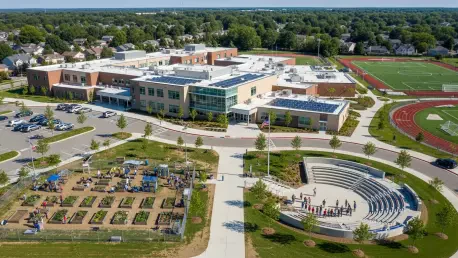
One of the most effective reconfiguration strategies currently being utilized involves consolidating underutilized elementary and middle schools into a singular, unified PK-8 campus model. By housing a broader range of grade levels in one modernized facility, districts can better align their staffing, shared services, and specialized programming while maintaining essential community access. The Thompson School District recently provided a clear example of this by merging a middle school with two elementary schools to create the Peakview Academy at Conrad Ball, a move that addressed declining enrollment while upgrading the learning environment. This type of consolidation allows districts to transform multiple inefficient buildings into a singular, future-ready space that is more attractive to families in a competitive market. These unified campuses often support evolving instructional methods, such as project-based learning and inter-age mentoring, which are difficult to implement in traditional structures, creating a more vibrant community.
Prioritizing Long-Term Quality and Sustainability
The ultimate goal of right-sizing is to achieve a critical balance between fiscal responsibility and the delivery of high-quality educational experiences. By prioritizing sophisticated renovations and data-informed consolidations, districts can move away from the sunk cost fallacy of maintaining decaying structures simply because they exist. This evolution does more than just balance a budget; it ensures that every square foot of school property actively supports the highest standards of modern instruction. When resources are concentrated into fewer, better-maintained facilities, districts can invest more heavily in advanced technology, specialized laboratories, and student support services that would have been financially impossible to distribute across a larger, under-enrolled network of schools. In an environment defined by rapid demographic shifts and rising costs, the ability to view enrollment challenges as a catalyst for modernization has become the key to maintaining a district’s long-term competitive edge.
Looking back at the shifts that occurred, districts that successfully turned enrollment decline into opportunity did so by embracing transparency and data over tradition and inertia. These leaders recognized that maintaining the status quo was no longer a viable path to excellence and instead pursued bold strategies to modernize their educational landscapes. By implementing PK-8 configurations and investing in adaptive reuse, these organizations built resilient systems that were capable of weathering economic volatility while providing superior learning outcomes. The focus shifted from merely filling desks to optimizing the environment in which students learned, ensuring that public education remained a top choice for families. As these districts moved forward, the lessons learned from right-sizing provided a blueprint for other public entities facing similar demographic contractions. Ultimately, the transition from aging, disparate schools to streamlined, high-quality campuses proved that strategic contraction led to a higher standard.