
Camille Faivre is a distinguished education expert whose work has become a cornerstone for institutions navigating the modern complexities of early childhood learning. With a deep specialization in education management and the strategic implementation of open and e-learning programs, she has spent the last few years helping schools transition into environments that prioritize the psychological safety of the student. Her approach is rooted in the belief that the physical classroom is not just a backdrop, but a silent partner in the educational process. In an era where young learners are arriving at school with unprecedented levels of stress, her insights into how we structure, light, and decorate our learning spaces provide a vital roadmap for fostering resilience and emotional regulation.
We are seeing a significant shift in the emotional state of children as they enter the classroom, with many arriving already overwhelmed by “big feelings.” How do these emotions typically manifest in a school setting, and why is the physical environment our first line of defense?
When young children walk through the school doors today, they are often carrying a heavy invisible load from the fast-paced world outside, including the fallout of excessive screen time and high-pressure family schedules. These “big feelings” manifest in two primary ways: some students internalize their stress, leading them to withdraw, sit in corners, or simply refuse to join their peers in group activities. Others externalize their anxiety, which we see through chaotic transitions, an inability to follow basic routines, or aggressive struggles during playtime. While we cannot control their lives at home, we can use the classroom to build a physical guard against this outside anxiety. By intentionally designing a predictable and calm environment, we provide these children with a sanctuary where their nervous systems can finally settle, allowing them to shift from a state of survival to a state of learning.
For decades, the standard for early childhood decor was bright primary colors and busy wall displays, but you advocate for a much more muted palette. What is the neurological reasoning behind simplifying the visual backdrop of a classroom?
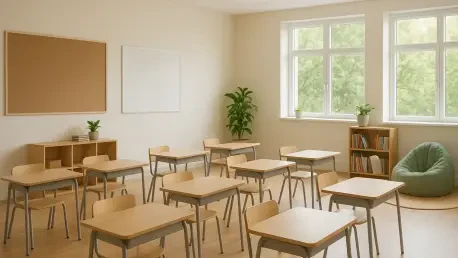
The traditional “fun” classroom filled with neon yellows, bright reds, and rows of colorful plastic bins often creates an immense amount of visual noise that actually hinders a child’s ability to self-regulate. For a student who is already feeling worried or sensory-overloaded, this explosion of color can be incredibly grounding to strip away. By shifting toward neutral tones, utilizing natural baskets, and using clear storage bins, we create an immediate grounding effect that helps children focus on the task at hand rather than the clutter. We also have to consider the biological impact of lighting, as research consistently shows that soft, natural light or lamps can significantly lower cortisol levels compared to harsh overhead fluorescents. When we replace that flickering blue-toned light with a warmer glow, we are physiologically helping children balance their moods before the first lesson even begins.
The layout of a room is often overlooked as a behavioral tool, but you’ve noted that big, open spaces can actually be counterproductive. How can furniture and rugs be used to guide a child’s natural movement?
One of the most common mistakes in classroom design is leaving a large, open space in the middle of the room, which essentially acts as an invitation for a dysregulated child to start running. To counter this, we use low shelving, area rugs, and strategically placed furniture to clearly define specific “zones” and create a natural flow of traffic. This structural clarity helps keep transitions smooth because the physical environment is telling the child exactly how to move through the space without the teacher having to say a word. When a child knows where the block area ends and the reading nook begins, they feel a sense of security and predictability. Defining these boundaries with physical markers reduces the cognitive load on the student, allowing them to navigate their day with far less friction and confusion.
Beyond the general layout, you emphasize designing for a variety of regulation needs. How do tools like flexible seating and dedicated calming corners empower students to manage their own emotional waves?
Every child processes stress differently, so a one-size-fits-all seating arrangement is no longer sufficient for the modern classroom. By offering options like wiggle cushions or wobble stools, we allow children to satisfy their subtle needs for movement during instruction, which prevents that energy from boiling over into a disruption. We also advocate for a dedicated calming corner—a soft, cozy area equipped with tactile materials where a student can go to reset when they feel their emotions becoming unmanageable. It is vital to understand that this is not a “timeout” or a place of punishment, but a sophisticated tool for self-regulation. When combined with visual schedules for non-readers, these design choices give children the autonomy to understand their day and manage their bodies, building a foundation of independence that serves them for years.
There is a rising trend of “hyper-themed” classrooms that look like museums or theme parks. Why do you believe these elaborate designs might actually be more for the adults than the children?
While a classroom with massive wall murals and elaborate, custom-built play structures certainly creates a “wow factor” for visiting parents and administrators, it often fails the children who live in that space every day. These hyper-themed environments add an incredible amount of visual clutter and can actually create dangerous blind spots where a teacher might lose sight of a student. When a room feels more like an amusement park, it leads to overstimulation, which almost always triggers chaotic behavior and high-stress levels in young learners. In early childhood design, the “less is more” philosophy is essential because simple, open-ended arrangements allow a child’s imagination to take the lead. We should be building spaces that support child development and teacher visibility, not spaces that are designed primarily for a social media photo-op.
It’s clear how these designs help the students, but how does a well-organized layout specifically combat teacher burnout and workplace stress?
Teacher burnout is often the direct result of environmental strain and the constant need to manage behavioral disruptions caused by a poorly functioning space. When a classroom is designed to reduce physical friction and empower student independence, the teacher is freed from the role of a constant “manager” and can return to the role of an educator. By using low, accessible shelving and clearly labeled bins, children can retrieve and clean up their own materials, which takes a massive operational load off the teacher’s shoulders. When the sensory overload of the room is dialed back and students are calmer, the teacher spends significantly less energy redirecting behavior. We also have to remember the importance of staff-only zones; having a clean, quiet place outside the classroom to catch a breath is essential for an educator’s long-term mental well-being.
Once a teacher has implemented these physical changes, what is the best way to introduce the new environment to the children to ensure it becomes a stable sanctuary?
The physical tools and beautiful layouts we create only reach their full potential when they are paired with very clear expectations and consistent routines. At the start of the year, teachers should dedicate significant time to teaching students exactly how to navigate each area, from how to choose a flexible seat to when it is appropriate to visit the calming corner. This “environmental literacy” builds the independence that makes a classroom run like a well-oiled machine. Once those patterns are established, it is crucial to keep the layout consistent; while we might make minor tweaks based on observation, avoiding frequent major reconfigurations is key. Children crave predictability, and a stable, unchanging physical environment is what eventually allows them to feel safe enough to take risks in their learning.
What is your forecast for the evolution of early childhood learning environments?
I believe we are moving toward a future where the classroom is treated less like a static container for desks and more like a therapeutic, living environment. We will see a permanent move away from high-stimulus, “theme park” aesthetics in favor of biophilic designs that incorporate more natural textures, greenery, and variable lighting to support the neurological health of both students and staff. As our understanding of emotional regulation grows, the “calming corner” will evolve from an optional accessory into a standard, integrated feature of every early childhood room, as essential as a chalkboard or a bookshelf. Ultimately, the schools that thrive will be those that recognize that a child’s ability to learn is entirely dependent on their feeling of safety, leading to spaces that are quieter, more intentional, and far more focused on the human experience than ever before.