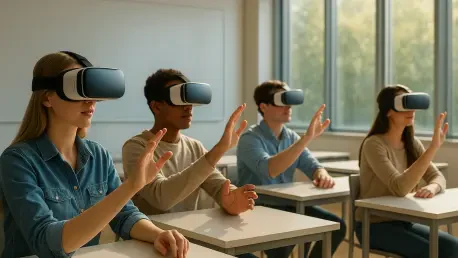

Virtual reality offers a unique pedagogical opportunity to transform abstract concepts into tangible experiences, making academic content more accessible to diverse types of learners. The American education system stands at a pivotal juncture, moving beyond the reactionary phase of banning generative tools toward a more sophisticated integration of immersive and cognitive technologies. Educators are now identifying ways to channel student interest in high-tech environments into productive academic labor. The shift is not merely about convenience but about bridging the gap between theoretical knowledge and practical application. By fostering an environment where technology serves as a partner rather than a substitute for intellectual effort, schools are discovering that the digital distraction can become the most powerful engagement tool in the modern arsenal. The challenge lies in creating a framework where these systems elevate human capabilities without eroding the critical thinking skills that form the bedrock of a democratic society.
Shifting the Educational Paradigm Through Intelligent Interaction
Achieving this shift requires a move toward responsible mastery, where students and teachers alike learn to use technology with a clear and defined purpose. The goal is to move away from the passive consumption of content and toward a model where digital tools act as force multipliers for human intellect. By setting firm boundaries and focusing on how these tools are used, schools can ensure that innovation supports, rather than replaces, the essential struggle of learning. This approach necessitates a cultural change within the classroom, where the machine is viewed as an extension of the student’s own curiosity. When students are taught to see these systems as instruments for deep inquiry rather than shortcuts to completion, the nature of the assignment changes. Instead of seeking the path of least resistance, learners are encouraged to use technology to explore more complex problems that were previously out of reach. This evolution ensures that the human remains the primary architect of their own educational journey.
Redefining the Role of AI as a Personalized Socratic Guide
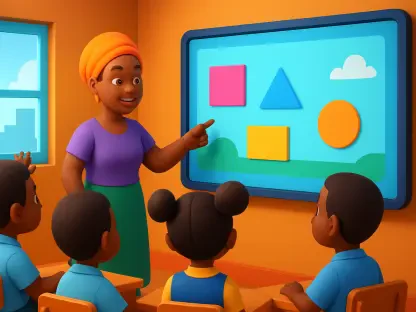
One of the most significant benefits of artificial intelligence in the classroom is its ability to act as a personalized tutor or a Socratic guide. Instead of simply providing answers that allow students to bypass the work, AI can be programmed to ask probing questions that force students to refine their own logic and arguments. This approach transforms the technology from a potential crutch into a sparing partner that challenges the mind and encourages a hyper-personalized learning experience tailored to each student’s specific needs and pace. Because AI makes it easier to generate final products, teachers are shifting their focus from the end result to the actual process of learning. This new emphasis on process-oriented assessment ensures that students are truly grasping the material rather than just using a tool to finish an assignment. By monitoring how a student arrives at a conclusion, educators can maintain high academic standards while using AI to provide the kind of individualized instruction once reserved for privileged students.
Transitioning Toward Process-Oriented Assessment Models
The widespread adoption of generative technology has necessitated a fundamental shift in how academic progress is measured, moving the focus from the final submission to the iterative process of creation. Teachers now emphasize the visible thinking path, utilizing digital logs to document how a student refines their thesis or debugs a complex script over time. This process-oriented assessment prevents the mechanical use of technology to simulate intelligence and instead rewards the intellectual grit required to master a subject. Furthermore, these tools allow educators to provide real-time feedback during the brainstorming and drafting stages, which is often when students are most vulnerable to frustration. By analyzing the interaction between the student and the machine, teachers can identify subtle patterns of misunderstanding that might be missed in a traditional grading cycle. This data-driven insight allows for early intervention and ensures that high academic standards are maintained through a move toward deep literacy.
Creating Tangible Experiences Through Virtual Reality Environments
Virtual reality is fundamentally altering the landscape of experiential learning by allowing students to engage with history or science firsthand. For example, a middle school class studying the industrial revolution can virtually tour a 19th-century textile mill, observing the mechanical complexities and social conditions of the era with a level of detail that no textbook could replicate. This immersive approach leverages the innate digital fluency that current students have developed through gaming, redirecting that intuitive skill set toward rigorous academic inquiry. By situating abstract concepts within a high-fidelity environment, educators are seeing higher rates of information retention and a significant increase in student motivation. When a student can witness a chemical reaction at the molecular level or explore the architectural nuances of ancient Rome, the subject matter moves from being a series of facts to a lived experience that resonates on both a cognitive and emotional level.
Strategic Integration for Meaningful Student Growth
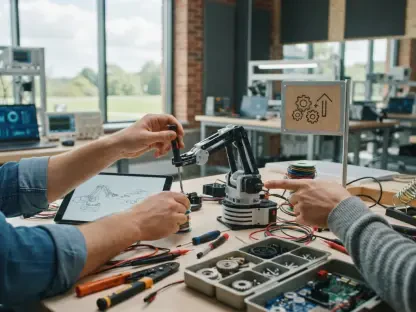
The integration of these advanced systems necessitated a proactive stance from school administrators, who prioritized teacher training over hardware acquisition. Moving forward, the focus shifted toward developing a curriculum that emphasized meta-cognition, which involved teaching students to understand how they learn alongside the machines. Effective strategies included the creation of specialized lab spaces where the ethical implications of automation were discussed alongside technical training. Districts that succeeded were those that established clear academic guardrails and encouraged parents to participate in digital literacy workshops, ensuring a unified approach between home and school environments. By treating artificial intelligence and virtual reality as sophisticated tools for human expansion rather than mere efficiency drivers, educators paved a way for a more resilient and adaptable generation. This transition required a commitment to maintaining the human element of mentorship while leveraging data to ensure no student was left behind.