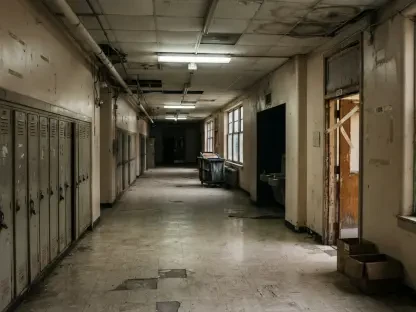

The persistent challenge of maintaining nearly two hundred aging academic facilities has forced the Fairfax County School Board to officially request the authority to implement a one-percent local sales tax aimed at closing a multi-billion dollar funding gap for essential school renovations. This move represents a strategic pivot toward a diversified revenue model that seeks to mitigate the exhaustion of traditional debt-based financing through voter-approved bonds. As current facilities age beyond their expected service lives, the pressure on the annual operating budget has intensified, leading to a cycle where emergency repairs often supersede long-term modernization efforts. School board officials emphasized that a dedicated sales tax would provide a predictable and recurring source of capital that is less sensitive to the fluctuations of the local real estate market. By targeting general retail transactions, the county hopes to distribute the financial responsibility for public infrastructure across a broader demographic, including the thousands of visitors who utilize local services daily.
Legislative Authority: Navigating the General Assembly
Building on this requirement, the proposal hinges on successfully lobbying the Virginia General Assembly to amend current state statutes that restrict local governments from levying such taxes without explicit legislative consent. Under the existing legal framework, known as the Dillon Rule, Virginia counties have limited autonomy regarding taxation, which has historically forced Fairfax to rely almost exclusively on property taxes and state aid for its capital needs. The School Board pointed to several other jurisdictions across the Commonwealth that have already received similar permissions to address their own crumbling infrastructure. By securing this authority, Fairfax County could potentially bypass the constraints of the existing debt ceiling, allowing for more aggressive renovation schedules that keep pace with contemporary technological and environmental standards. This legislative remedy is seen as essential for maintaining the competitive advantage of the region’s public schools.
Moreover, financial analysts within the school system projected that a one-percent increase in the local sales tax could generate hundreds of millions of dollars annually, which would be strictly earmarked for construction and structural improvements. This revenue stream would theoretically allow the district to accelerate its renovation cycle, reducing the time schools spend on the waitlist for critical updates from several decades to a more manageable timeframe. This funding mechanism is viewed as a way to capture revenue from non-residents who shop and dine within the county, effectively exporting a portion of the tax burden. Critics, however, raised concerns about the regressive nature of sales taxes, suggesting that such a measure might disproportionately affect lower-income households. To address these concerns, the board discussed potential exemptions for essential goods like groceries, ensuring that the tax remains focused on discretionary spending while still providing capital.
Infrastructure Modernization: Evaluating the Impact on Learning Environments
This physical reality naturally leads to a growing disparity between newer schools and those built during the mid-twentieth century, with many older buildings suffering from outdated HVAC systems and inadequate insulation. Thousands of students currently attend classes in temporary modular trailers because the primary building envelopes are either over capacity or physically unable to support modern electrical and networking demands. These structural limitations frequently impede the implementation of advanced STEM programs that are standard in more recently constructed facilities. By prioritizing the most critical sites, the proposed tax revenue would fund the replacement of failing mechanical systems and the overhaul of classroom spaces to meet safety and pedagogical standards from 2026 to 2031. The focus is not merely on aesthetic updates but on fundamental integrity, ensuring every school provides a healthy and safe environment free from recurring issues like leaks and poor air quality.
Ultimately, the school board concluded the deliberation process by finalizing a formal resolution to the Board of Supervisors, establishing a clear intent to pursue this funding path through the upcoming legislative cycle. This decision followed months of internal analysis and public feedback sessions where the necessity of a sustainable capital funding source became increasingly evident to stakeholders across the county. Moving forward, the district planned to launch a comprehensive transparency initiative that would track every dollar generated by the tax and report directly to the public on the progress of specific renovation projects. Actionable next steps included the formation of a bipartisan lobbying coalition to represent the county’s interests in Richmond and the development of a prioritized project list to ensure immediate impact. By focusing on accountability, the administration aimed to build the public trust required to transition toward a more resilient future for the entire educational community.