
The traditional college experience often relegates student leadership to policy debates and advisory roles, yet a new paradigm is emerging where students become the literal architects of their campus environment. A unique pedagogical approach at CSB+SJU grants student representatives the autonomy and financial partnership necessary to execute tangible facility improvements. This initiative provides a platform where the student government functions as a project management team rather than a simple advocacy group. By bridging the gap between student needs and institutional operations, the program creates a high-stakes environment for real-world professional growth. Through this collaborative framework, students move beyond the conceptual phase of leadership to confront the practicalities of budgeting, stakeholder negotiation, and administrative logistics. This shift ensures that developments are driven by those who use the facilities most, while equipping graduates with a competitive edge in a demanding labor market.
Strategic Infrastructure and Technical Management
Case Study 1: Implementing Project Johnnies
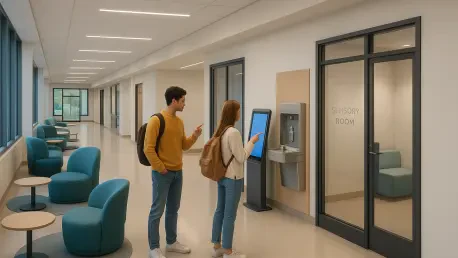
Saint John’s University Student Senate President Kobe Forbes spearheaded “Project Johnnies,” a comprehensive initiative that addressed diverse infrastructure gaps across the campus. Forbes managed the installation of modern hydration stations in key residential halls like Frank House and Greg House, ensuring students had reliable access to filtered water. He also oversaw the addition of athletic support facilities, such as ice dispensers in Sexton Commons, to assist student-athletes who were previously underserved by distant training facilities. This effort required more than just a list of requests; it demanded a deep dive into the logistics of plumbing, facility maintenance schedules, and procurement protocols. By identifying these specific pain points, Forbes demonstrated a keen ability to prioritize essential needs that improve the daily quality of life for the student body. The transition from identifying a problem to coordinating a solution with the physical plant team marked a significant shift in leadership.
Inclusion Efforts: Designing Sensory Spaces
Beyond basic utility, Forbes navigated the complexities of designing and implementing two sensory rooms in the Alcuin Library. These spaces were specifically engineered to support neurodiversity and honor the legacy of figures instrumental to the Bahamian student community. Throughout this process, Forbes was required to act as a professional peer to the administration, managing permits, selecting sites, and working within strict budgetary constraints to see the projects through to completion. The inclusion of these specialized environments reflected a sophisticated understanding of holistic student wellness. By creating quiet, regulated spaces for those with sensory processing needs, the project addressed a gap in traditional library design that often overlooks neurodivergent learners. Forbes had to coordinate with architects and diversity officers to ensure the aesthetic and functional elements of the rooms aligned with the university’s broader mission of inclusivity and academic support.
Modernizing Collaborative and Academic Spaces
Campus Accessibility: The Senate Lounge Project
Parallel to the efforts at SJU, CSB Student Senate President Alex Smith focused on the modernization of the Clemens Library and the Gorecki Center. Her primary objective was to eliminate barriers between the student government and the general student body by establishing a 24-7 accessible Senate Lounge. This project was designed to foster social interaction and make student representatives more approachable to their peers, the “Bennies.” Establishing a round-the-clock facility required careful negotiation regarding security protocols and keycard access systems. Smith argued that physical proximity would lead to better representation, as leaders would be more embedded in the daily environment of their constituents. The resulting space was not merely a meeting room but a symbol of the Senate’s commitment to transparency and accessibility. By securing the necessary funding and administrative approval, she proved that student-led initiatives could successfully advocate for and implement permanent structural changes.
Technical Innovation: The Breezeway Transformation
Smith also led the renovation of the Breezeway, transforming a simple corridor into a high-tech hub featuring personalized sound booths, updated furniture, and integrated power stations. Her work was so rigorous that it was recognized as a formal internship in organizational management. By collaborating with security, dining, and custodial departments, Smith demonstrated how student-led initiatives could meet professional standards of design and functionality while enhancing the campus’s social fabric. This project required balancing the aesthetic desires of the student body with the practical realities of heavy-traffic maintenance. She had to select materials that were both durable and inviting, ensuring that the new hub would remain functional for years to come. The technical aspects of the renovation, including the integration of modern power solutions and acoustic treatment for the sound booths, forced her to develop a working knowledge of interior design and facility operations that few undergraduates ever encounter.
Institutional Philosophy and Professional Readiness
Mentorship Models: Bridging the Governance Gap
The success of these projects is rooted in a culture of trust and a “stakeholder” mentality shared by students and administrators alike. The university views these campus improvements as a laboratory for experiential learning, where students are treated as colleagues rather than subordinates. This relationship-based model allows for a sophisticated transfer of responsibility, ensuring that students develop the patience and strategic communication skills necessary for institutional change. In this environment, failure and success are equally informative, as both provide data on how to navigate complex organizational hierarchies. Administrators act as mentors rather than gatekeepers, guiding students through the nuances of policy and budget management while allowing them the final say on key design decisions. This level of empowerment is rare in higher education and fosters a sense of ownership that extends beyond graduation. It transforms the campus into a living classroom where the curriculum is the infrastructure itself.
Final Outcomes: Preparing Future Industry Leaders
Ultimately, this initiative served as a powerful testament to the value of a liberal arts education in preparing graduates for complex careers. By managing large-scale ventures like library renovations and hydration infrastructure, students gained specialized skills in spatial design and fiscal management. These projects left a dual legacy: a more inclusive and modern campus environment and a cohort of alumni who were exceptionally prepared to lead in their future professional lives. Moving forward, institutions were encouraged to integrate similar project-based tracks within student governance to bridge the gap between academic theory and operational reality. By treating campus facilities as a site for professional development, the university established a sustainable model for continuous improvement. Future leaders realized that the key to effective governance was not just advocacy, but the ability to execute complex projects that served the collective good. This approach redefined leadership as a tangible contribution.